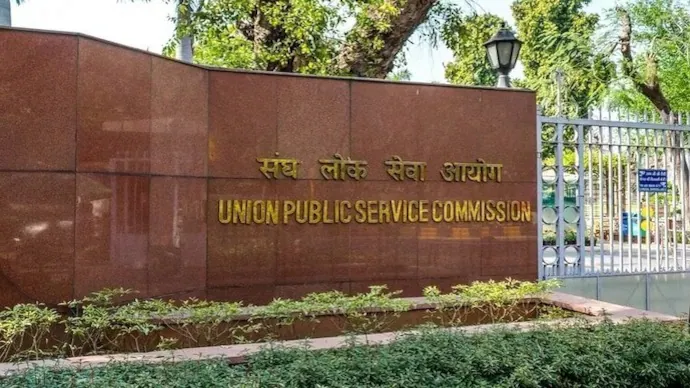
The Union Public Service Commission (UPSC) has recently announced a significant update regarding the Civil Services Examination (CSE) 2026 cycle, signaling a postponement of the official notification release that was originally scheduled for mid-January 2026, affecting tens of thousands of aspirants nationwide. This article explores the reasons behind this postponement, what it means for candidates, and how the revised schedule is expected to unfold as the Commission prepares to issue the new notification in due course.
Understanding the Postponement of UPSC CSE 2026 Notification
In a development that has captured the attention of the entire competitive exam community in India, the UPSC has postponed the release of its notification for the 2026 Civil Services Examination (CSE) as well as the Indian Forest Service (IFS) Examination, both of which were slated to be officially announced on January 14, 2026. This postponement was communicated by the Commission on its official portal, where a brief notice cited “administrative reasons” for the delay. Although the statement provided minimal detail about the underlying causes, it indicated clearly that the notification will not be released on the previously planned date and that aspirants should expect an updated schedule soon. The postponement has implications not only for the release of the notification itself but also for the subsequent timeline for application submission, fee payment, and other procedural milestones that follow the announcement of the notification.
For aspirants who have been preparing rigorously for this prestigious examination — seen as the gateway to roles such as Indian Administrative Service (IAS), Indian Police Service (IPS), Indian Foreign Service (IFS), and other Group A and B services — this news adds an element of uncertainty to an already highly competitive process. The Civil Services Examination is among the most challenging academic tests in the country, drawing lakhs of applicants each year who hope to secure a limited number of positions in the nation’s civil services. Traditionally, the UPSC calendar rolls out well in advance, with the notification release marking the official start of the exam cycle through which eligibility criteria, exam dates, application window, syllabus, fee structure, and other key details are shared with candidates. With this essential document now delayed, aspirants find themselves in a holding pattern, awaiting clarity on when they can formally begin the application process and align their preparation with the official schedule.
This postponement did not indicate a cancellation of the entire examination cycle for 2026 but rather a deferment of the formal announcement. As such, candidates are encouraged to remain vigilant, keep checking the official UPSC website regularly, and avoid relying on unverified information circulating on unofficial platforms, which can add to confusion. The UPSC notification itself is the authoritative source for critical details such as eligibility requirements, age criteria, exam pattern, syllabus, and deadlines, and until it is formally published, candidates will need to exercise patience while continuing their preparation.
The reasons described as “administrative” have not been expanded upon by the Commission, prompting speculation and concern among some applicants. Administrative delays can arise from a variety of internal factors, including finalization of policy decisions, approval processes within government departments, or logistical considerations related to the publication of official documents. While these elements are largely outside the control of candidates, the delay highlights the importance of adaptability and readiness to respond to shifting timelines in the world of competitive examinations.
Impact on Aspirants and Expected Revised Timeline
The postponement of the UPSC CSE 2026 notification has a cascading effect on many aspirants and coaching institutions that structure their academic calendars around the official UPSC timeline. Originally, the notification’s release in mid-January would have opened the window for online registration and submission of application forms, giving candidates a clear picture of the timeframe available to complete these procedural steps. With this initial date now deferred, the registration phase is also on hold until a revised schedule is issued. As things stand, the UPSC has not communicated a new notification date, which means that aspirants must navigate this period with a blend of continued preparation and careful monitoring of official updates.
Despite the postponement of the notification release, key examination dates such as the Preliminary and Main exams are currently expected to remain as per the earlier published UPSC calendar — with the Preliminary Examination typically scheduled in May and the Main Examination later in the year. This implies that while the notification may come somewhat later than planned, the overall cycle could still proceed without significant delay to the examination dates themselves. For instance, the Preliminary Examination for the CSE is expected around late May 2026, followed by the Mains in late summer or early autumn, preserving the rhythm of the traditional UPSC schedule. Therefore, aspirants are advised to carry on with their preparation for the examination itself as though these dates remain intact, even though the notification and application process may start later than usual.
The postponement could also affect the deadlines for application form submission, fee payments, and the window for corrections, all of which are typically specified in the official notification. Candidates must stay alert for announcements detailing these revised timelines so that they do not miss any critical deadlines once the UPSC releases the updated schedule. In the absence of an official release date for the notification, aspirants should ensure that all their necessary documentation — such as academic certificates, photographs, scanned signatures, and eligibility proof — is organized and ready for submission. This proactive approach will help candidates avoid last-minute hurdles once the application process commences.
Educational experts and coaching professionals often counsel aspirants to use periods of uncertainty productively by reinforcing their conceptual understanding, continuing revision cycles, and practicing mock exams, even if the formal notification is delayed. By maintaining a consistent study regimen and focusing on strengths and weaknesses in their preparation, candidates can ensure they remain competitive and ready to perform when the application process and examinations proceed.
The UPSC’s postponement notice has also emphasized that there will be no changes to the examination pattern itself. The Civil Services Examination continues to follow its three-stage format — the Preliminary examination, the Main examination, and the Personality Test (interview) — and each stage tests different skill sets ranging from objective knowledge to descriptive writing and personal suitability for civil service roles. While exact dates are yet to be confirmed, the structure and intent of the examination remain unaltered, offering continuity for those who have been preparing based on past calendars and syllabus outlines.
The delay, while inconvenient, does not diminish the significance or rigor of the UPSC CSE process. Aspirants who began their preparation months or even years in advance have invested significant time and effort developing analytical capabilities, essay skills, general studies knowledge, and ethical reasoning, all of which are essential for success in this examination. As such, the postponement can be viewed as a temporary pause in procedural formalities rather than a disruption to the core objectives of the UPSC CSE cycle.
For those planning to attempt the UPSC CSE for the first time, this postponement serves as a reminder of the dynamic nature of large-scale national recruitment processes and the need for flexibility in preparation strategies. It also underscores the importance of paying close attention to official communication channels, including the UPSC’s own website, where updates and revised notices will be published once decisions are finalized.
Lastly, aspirants should be mindful of the psychological aspects of this postponement. Preparing for the UPSC CSE is as much a mental and emotional journey as it is an academic one, and periods of uncertainty can sometimes lead to stress or distraction. By adopting a balanced approach that includes realistic planning, regular revision, healthy routines, and strategic practice, candidates can navigate this interim period constructively.