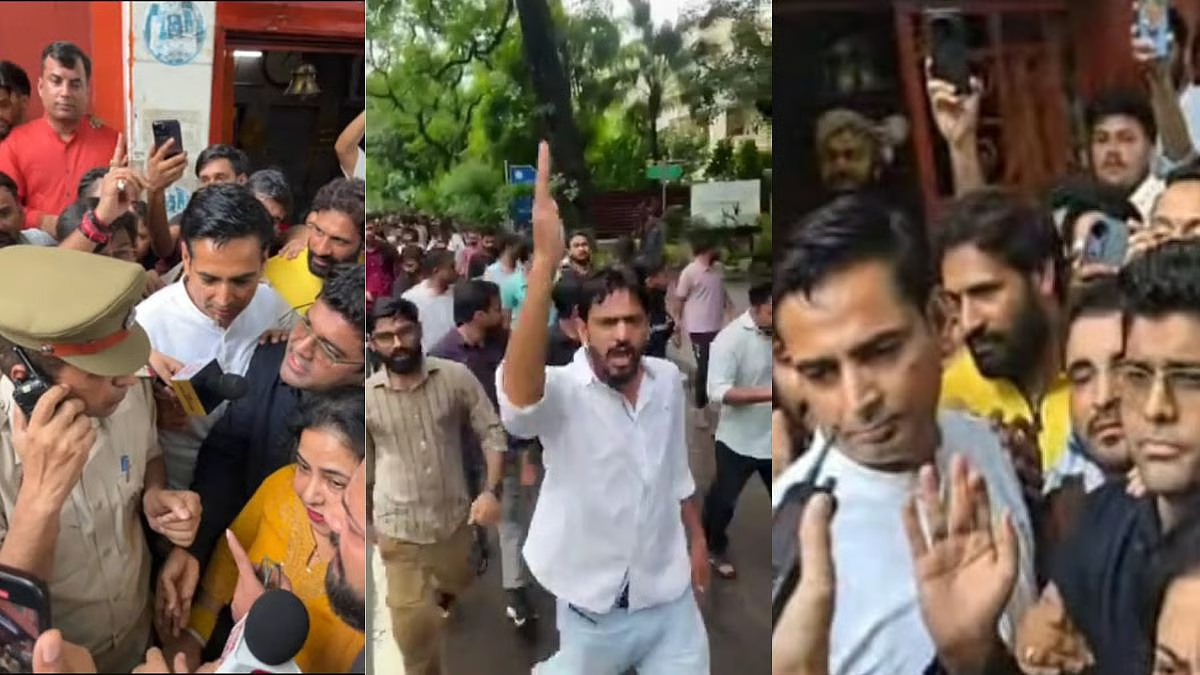
Amid growing unrest among aspirants over alleged irregularities and mismanagement in the Staff Selection Commission (SSC) examinations, Union Minister Jitendra Singh has assured students that those affected will be allowed to reappear for the exam. The announcement came following a series of protests led by students and teachers in New Delhi, demanding fair treatment, resolution of discrepancies, and action against flawed exam procedures. Singh also promised that the Rs 100 challenge fee would be fully refunded if the student’s objection to a disputed question is found to be valid. The SSC CPO results are expected within a week, bringing some hope to thousands of anxious candidates.
Minister Meets Protesters, Responds to Key Demands
The protests began on Friday outside the Department of Personnel and Training (DoPT) office in Delhi, where a large number of aspirants and educators assembled to highlight the chaos surrounding the SSC Selection Post Phase 13 recruitment exam. Many students claimed they faced technical issues during the exam, including system crashes, black screens, and malfunctioning accessories like mice and keyboards. Adding to their frustration were the long travel distances to allotted examination centres, which they said could have been avoided as closer centres were available.
Teachers, many of whom coach students for competitive exams, joined the demonstration to support their students. Union Minister of State for Personnel, Public Grievances and Pensions Jitendra Singh met the protestors on Monday and addressed several concerns. He confirmed that students who faced disruptions at the exam centres would be given another opportunity to sit for the examination. He also assured that if students successfully challenge disputed questions, the Rs 100 fee charged for each objection would be refunded in full.
Among the key voices in the protest was Neetu Singh, a well-known educator widely respected in the competitive exam preparation community. She accused the SSC of mismanaging the examination process, including using question papers that contained numerous errors. She pointed out that when these discrepancies were brought to light, the SSC tried to defend its position in court instead of taking corrective action.
Controversy Over Eduquity’s Role and Delay in Railway Exams
Another major issue raised during the protest was the involvement of Eduquity, a company reportedly blacklisted by the Education Department, which was nonetheless allowed to conduct the SSC examination. Protesters questioned the credibility and fairness of allowing such an organisation to handle one of India’s most significant recruitment exams.
The concern extended beyond SSC exams, as delays in the Railway Recruitment Board (RRB) exams were also brought to the Minister’s attention. One teacher, who trains students for Railway exams, revealed that Singh had promised a meeting would be scheduled involving both the Union Minister and the Railway Minister to address the long-pending delays in railway recruitment.
Neetu Singh further clarified that the group of teachers and students had not initially intended to protest but had gathered to request a formal meeting with DoPT officials. “We did not go there to agitate. We wanted a dialogue with the concerned authorities because SSC officials were not responding to our queries,” she stated. She stressed that the root of the issue lies in the lack of transparency and accountability in how SSC exams are being conducted year after year.
The situation escalated when tensions flared at the protest site, leading to the detention of several participants, including some teachers. This crackdown further intensified public scrutiny and media attention on the matter. Many believe the protest was a tipping point after years of frustration among aspirants who feel let down by a system plagued with inefficiencies.
As thousands await the SSC CPO exam results, expected within a week, many are cautiously optimistic. The promise of re-examination for affected candidates and a possible refund of challenge fees offers some relief. However, the larger issue remains—ensuring that such incidents do not recur and that recruitment exams are conducted with the fairness and accuracy they deserve.
Jitendra Singh’s assurance has temporarily pacified the protestors, but the developments have underscored a critical need for reforms in the examination and recruitment system. The government now faces the challenge of restoring credibility to exams that are the gateway to public sector employment for millions of young Indians.