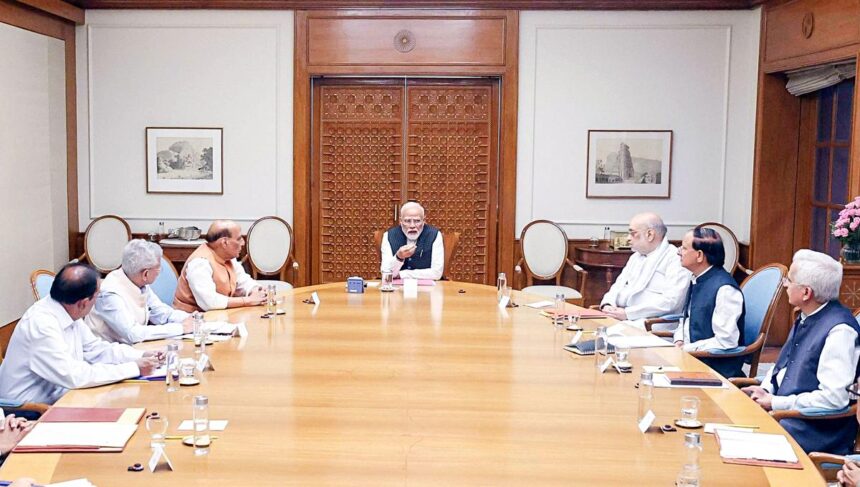
The Union Cabinet led by Prime Minister Narendra Modi has approved a landmark proposal to accord Vande Mataram the same legal and symbolic status as India’s national anthem Jana Gana Mana, marking a major development in the country’s constitutional and cultural discourse.
The decision was taken during the first Cabinet meeting held on Tuesday following the recently concluded Assembly elections in West Bengal, Assam, Tamil Nadu, Kerala and Puducherry. According to government officials, the proposal includes amendments to the Prevention of Insults to National Honour Act, extending legal protections currently available to the national anthem to Vande Mataram as well.
Once the proposed amendment is enacted, any act of intentional disrespect, disruption or obstruction during the singing of Vande Mataram could attract criminal penalties similar to those applicable in cases involving disrespect toward the national anthem. The move effectively places the National Song and the National Anthem on equal legal footing for the first time in India’s history.
The Cabinet’s decision has already generated significant political and constitutional discussion across the country, with supporters describing it as a historic recognition of Vande Mataram’s role in India’s freedom struggle and critics expected to debate its broader legal and social implications in Parliament and public discourse.
Government sources stated that the proposed amendment would make offences involving disruption or insult to Vande Mataram cognizable under the revised legal framework. Under existing provisions of the Prevention of Insults to National Honour Act, individuals found guilty of insulting the national anthem, the Constitution or the national flag can face imprisonment, fines or both.
Current law provides for imprisonment of up to three years or monetary penalties for intentionally preventing or disturbing the singing of the national anthem. Repeat offenders may face a minimum prison sentence of one year. According to officials, similar provisions are expected to apply to Vande Mataram once the amendment comes into force.
The move comes during the 150th anniversary year of Vande Mataram, adding symbolic significance to the Cabinet’s decision. The song, composed by Bankim Chandra Chattopadhyay, occupies a central place in India’s nationalist movement and anti-colonial history.
Government Says Decision Recognises Historical and Cultural Importance of Vande Mataram
Officials familiar with the Cabinet discussions indicated that the decision was intended to formally recognise the historical role played by Vande Mataram during India’s freedom movement. The song emerged as one of the most influential patriotic compositions during the struggle against British colonial rule and was widely used by freedom fighters and nationalist organisations.
Composed in the late nineteenth century by Bankim Chandra Chattopadhyay, Vande Mataram was originally included in his Bengali novel Anandamath. Over time, it became a powerful slogan associated with India’s independence movement and inspired generations of political activists, revolutionaries and social reformers.
The song was first adopted as India’s national song before independence, while Jana Gana Mana later became the country’s official national anthem after independence. Despite its symbolic importance, Vande Mataram did not previously enjoy the same level of statutory legal protection as the national anthem under the Prevention of Insults to National Honour Act.
Government officials stated that the amendment seeks to bridge that distinction by legally recognising both national symbols within the same framework of protection and respect. Supporters of the move argue that the decision acknowledges the emotional and historical significance attached to Vande Mataram in India’s national identity.
The proposal also follows discussions held in Parliament during December last year, when several lawmakers reportedly demanded equal legal status for the national song during commemorative events linked to its 150th anniversary celebrations.
Sources indicated that ministers present during the Cabinet meeting congratulated Prime Minister Narendra Modi following the BJP’s electoral performance in West Bengal and Assam. Political observers believe the timing of the announcement may also carry symbolic political significance because Vande Mataram has historically held strong emotional resonance in Bengal’s nationalist history.
Officials additionally pointed out that the government had previously amended national honour legislation in 2005 to strengthen legal protections against disrespectful use of the national flag. The latest proposal is therefore being presented as part of a broader effort to reinforce legal safeguards around national symbols.
Proposed Legal Changes Could Introduce Criminal Penalties for Disrespect
The proposed amendment to the Prevention of Insults to National Honour Act is expected to significantly expand the legal scope of offences linked to national symbols in India. At present, the law primarily covers insults or disruptions related to the national flag, the Constitution and the national anthem.
Under the revised framework, intentional acts that obstruct, disturb or insult the singing of Vande Mataram may become punishable offences. Legal experts note that this would effectively elevate the national song to the same legal category currently occupied by Jana Gana Mana.
Existing legal provisions prescribe penalties that may include imprisonment for up to three years, monetary fines or both depending on the nature of the offence. Repeat violations can attract stricter punishments including mandatory minimum imprisonment.
Constitutional scholars are expected to closely examine the proposed amendment once it is introduced in Parliament. Questions regarding enforcement, interpretation of “disrespect” and the balance between constitutional freedoms and national honour laws are likely to feature prominently in upcoming legal and political debates.
Some legal experts may also debate whether extending criminal penalties to the national song could raise issues related to freedom of expression under Article 19 of the Constitution. Similar debates have emerged in the past regarding mandatory participation during the national anthem in public institutions and cinema halls.
Government sources, however, maintain that the amendment is intended purely to ensure equal dignity and legal recognition for Vande Mataram as a national symbol deeply connected to India’s freedom movement.
Political analysts believe the proposal could become a major subject of parliamentary debate once the amendment bill is formally introduced. Opposition parties are likely to seek clarification regarding implementation mechanisms, scope of offences and constitutional safeguards.
The legislation is expected to be tabled during an upcoming session of Parliament. If approved by both Houses and subsequently notified, the amendment would mark one of the most significant legal changes involving India’s national symbols in recent years.
Political and Cultural Significance of the Decision
The Cabinet’s approval comes at a politically significant moment following the BJP’s electoral victories in key states, particularly West Bengal and Assam. Political observers note that Vande Mataram carries deep historical associations with Bengal’s nationalist movement and anti-colonial mobilisation.
The BJP and several nationalist organisations have long advocated stronger institutional recognition for Vande Mataram, describing it as an inseparable part of India’s cultural and civilisational identity. The latest Cabinet decision is therefore being viewed as both a symbolic and ideological statement by the government.
The announcement has already sparked discussion across political and academic circles regarding the evolving relationship between national identity, constitutional law and cultural symbolism in contemporary India.
Supporters argue that the decision honours India’s independence movement and reinforces respect for national symbols. Critics, however, may raise concerns regarding the possible expansion of criminal penalties linked to symbolic expression and participation requirements.
The proposal also revives broader historical debates surrounding Vande Mataram, which has occasionally remained a subject of political and religious discussion because certain portions of the original composition include references interpreted differently by various communities.
Despite those debates, the song continues to occupy a prominent place in India’s nationalist history and public consciousness. It is frequently performed during official ceremonies, educational functions and commemorative national events.
As Parliament prepares to consider the proposed amendment, attention is likely to remain focused on how the legal changes are framed and implemented. The outcome of the legislative process could significantly reshape India’s legal treatment of national symbols and redefine the official status of Vande Mataram within the country’s constitutional framework.
For now, the Cabinet’s approval represents a historic step toward granting Vande Mataram equal symbolic and legal standing alongside Jana Gana Mana, reflecting the government’s broader emphasis on national heritage, constitutional symbolism and cultural identity.