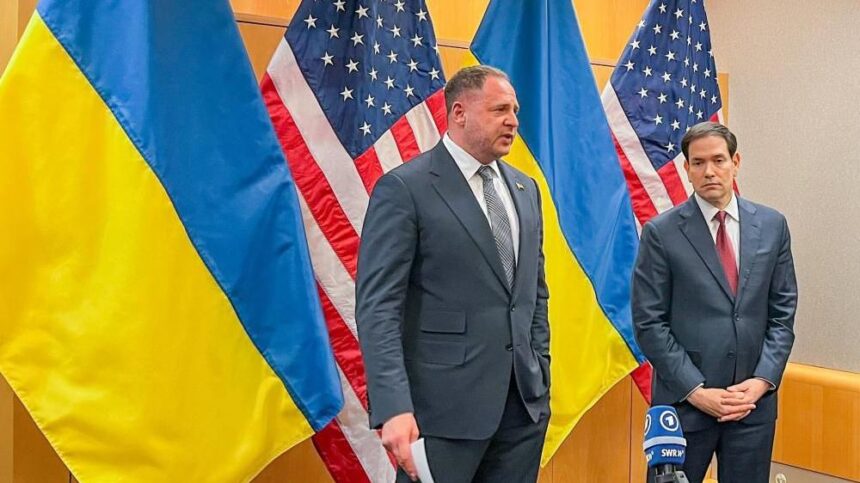
The latest round of diplomacy aimed at ending the prolonged war in Ukraine has brought renewed global attention to the depth of unresolved divisions, as representatives from Ukraine, Russia and the United States convened for intensive talks that underscored both the urgency of peace and the formidable obstacles posed by territorial claims, security guarantees and deeply entrenched political positions.
Territory as the central fault line in renewed negotiations
The talks marked a rare moment of direct trilateral engagement between Ukraine, Russia and the United States, reflecting growing international pressure to explore diplomatic avenues after years of conflict that have reshaped Europe’s security landscape. For Ukraine, represented by President Volodymyr Zelenskyy, the negotiations were framed as an opportunity to reaffirm the country’s core principles while seeking an end to the violence that has devastated cities, displaced millions and strained national resilience.
From the outset, however, it became clear that the question of territory would dominate discussions. Russian representatives reiterated their longstanding position that any lasting peace must involve Ukraine relinquishing control over regions currently occupied by Russian forces. These demands focus primarily on eastern and southern territories that Moscow claims are now irreversibly integrated into its sphere of control. For Kyiv, such proposals are fundamentally unacceptable, as they challenge Ukraine’s sovereignty and the internationally recognised borders that underpin its statehood.
Zelenskyy’s stance during the talks reflected a balance between diplomatic openness and firm resolve. He emphasised that peace cannot come at the cost of national dismemberment, arguing that conceding territory under pressure would not only legitimise aggression but also set a dangerous precedent for international relations. Ukrainian negotiators stressed that security and territorial integrity are inseparable, warning that any agreement lacking firm guarantees would leave the country vulnerable to future attacks.
The United States played a mediating role, attempting to narrow the gap between the two sides while maintaining support for Ukraine’s core demands. American envoys encouraged dialogue on phased confidence-building measures, including ceasefire monitoring and humanitarian access, but acknowledged that progress would remain limited without movement on the territorial issue. The presence of the United States added diplomatic weight to the talks, yet also highlighted the complexity of balancing alliance commitments with the pursuit of compromise.
Russia’s position, articulated by senior officials, remained rooted in the assertion that territorial realities created by the war must be recognised as the basis for peace. Moscow framed its demands as pragmatic and irreversible, arguing that without formal acknowledgement of its gains, negotiations would amount to a temporary pause rather than a durable settlement. This framing reinforced the perception that the talks were less about reconciliation and more about testing the limits of each side’s endurance and resolve.
The atmosphere surrounding the negotiations reflected the accumulated weight of years of conflict. While the act of sitting at the same table suggested a shared recognition that military solutions alone are insufficient, the sharp divergence on land underscored why previous diplomatic efforts have failed to deliver a breakthrough. Each side entered the talks constrained by domestic expectations, historical narratives and strategic calculations that leave little room for concession.
Security guarantees, global pressure and the uncertain path forward
Beyond territory, the talks also focused on the broader architecture of security that would underpin any potential peace agreement. Ukraine has consistently argued that strong, enforceable guarantees are essential to prevent renewed aggression, pointing to past agreements that failed to protect its sovereignty. Zelenskyy’s team highlighted the need for mechanisms that would deter future attacks and ensure rapid international response in the event of violations.
The role of external actors loomed large in these discussions. Ukraine’s diplomatic position has been strengthened by continued backing from Western allies, who view the conflict as a test of international norms and collective security. This support has taken the form of military assistance, economic aid and political commitments designed to reinforce Ukraine’s negotiating position. At the same time, allies have encouraged Kyiv to remain open to dialogue, reflecting concern about the war’s long-term economic and humanitarian costs.
Russia, meanwhile, approached the talks under significant geopolitical pressure of its own. Sanctions, economic strain and diplomatic isolation have weighed heavily on Moscow, even as it maintains a posture of strategic confidence. Russian negotiators argued that security concerns extend beyond Ukraine, framing the conflict as part of a broader confrontation with Western influence. This perspective complicated efforts to isolate the talks to bilateral issues, as Russia linked progress to wider questions about regional balance and international power dynamics.
Global attention on the negotiations has been intense, with many governments and observers viewing them as a potential turning point. The humanitarian toll of the war, particularly on civilians facing infrastructure damage and economic hardship, has amplified calls for a ceasefire. Yet humanitarian urgency alone has proven insufficient to bridge the political divides at the heart of the conflict.
The talks also revealed the limits of diplomacy when fundamental narratives clash. For Ukraine, the war is a struggle for survival and self-determination. For Russia, it is portrayed as a necessary assertion of strategic interests and historical claims. The United States and other mediators operate in the space between these narratives, seeking incremental progress while recognising that comprehensive agreement may remain out of reach in the near term.
As discussions continued, both sides signalled willingness to keep channels open, even as expectations of immediate breakthroughs remained low. Diplomats described the process as exploratory rather than decisive, aimed at clarifying positions and identifying areas where dialogue might gradually reduce tensions. The emphasis on continued engagement suggested recognition that prolonged stalemate carries risks of escalation and further suffering.
The broader international context added urgency to these efforts. Shifts in global alliances, economic uncertainty and concerns about the precedent set by unresolved conflicts have heightened interest in a negotiated outcome. Yet the same factors also constrain flexibility, as leaders weigh domestic political pressures and strategic calculations against the desire for peace.
The negotiations thus unfolded as a complex interplay of hope and realism. The presence of all key actors in the same forum marked a notable moment in the diplomatic timeline of the conflict, but the persistence of deep disagreements underscored the formidable challenges ahead. As the talks progressed, the focus remained on whether sustained dialogue could gradually transform entrenched positions into a framework for coexistence, even if a comprehensive settlement remains distant.