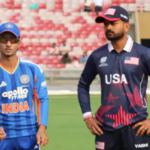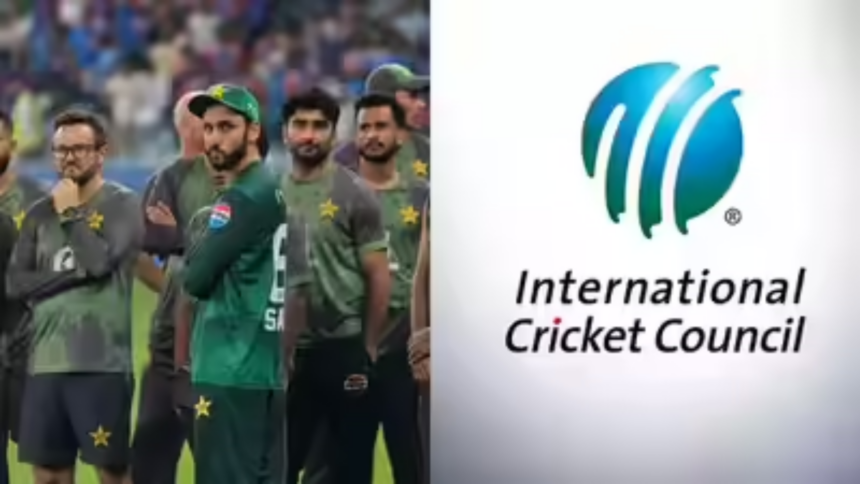
Uncertainty has clouded one of world cricket’s most anticipated encounters as Pakistan’s threat to boycott its group-stage match against India at the ICC Men’s T20 World Cup has left players, officials and fans waiting for clarity amid the absence of a formal decision by the sport’s governing body.
With the marquee India–Pakistan clash scheduled for mid-February, the lack of an official meeting or directive from the International Cricket Council has intensified speculation about the future of the fixture. The potential boycott, reportedly stemming from political directions to the Pakistan Cricket Board, has placed the tournament organisers in a difficult position, balancing sporting integrity, tournament regulations and geopolitical realities. For fans and broadcasters alike, the situation has revived long-standing concerns about how international cricket navigates political tensions between rival nations.
The India–Pakistan match is widely regarded as the biggest draw of any ICC tournament, attracting massive global viewership and generating significant commercial revenue. Its uncertain status has therefore raised questions not only about points and standings in the group stage, but also about the broader credibility and smooth conduct of the T20 World Cup. As days pass without a clear ICC response, anticipation has been replaced by anxiety over whether the game will be played at all.
Boycott threat and ICC’s silence
The current impasse has its roots in Pakistan’s indication that it may not field its team against India, following political objections related to tournament-related decisions and broader regional tensions. While Pakistan remains part of the T20 World Cup, the reported instruction not to play India has placed the ICC in a reactive position, with no emergency meeting announced so far to address the issue.
Under ICC regulations, teams that refuse to play a scheduled match without valid grounds risk forfeiting points, and potentially face further sanctions. However, without an official communication from the ICC outlining consequences or a path forward, uncertainty continues to dominate the narrative. The absence of a clear stance has led to speculation about whether quiet diplomacy is underway behind the scenes or whether the ICC is waiting for formal confirmation from Pakistan’s cricket board.
The situation has echoes of past controversies where bilateral tensions spilled into multilateral tournaments. In previous ICC events, the governing body has insisted that teams either play as scheduled or accept forfeiture, emphasising that political disputes should not disrupt global competitions. Observers note that any deviation from this approach could set a precedent that weakens the ICC’s authority and complicates future tournaments.
For Pakistan, a boycott would mean more than just losing points. It could affect its chances of progressing beyond the group stage and invite criticism from within the cricketing community. Former players and analysts have warned that such a move risks isolating Pakistan cricket and depriving players of valuable competitive exposure on the world stage.
Impact on tournament, fans and cricket diplomacy
The possible absence of an India–Pakistan match carries significant implications for the tournament as a whole. From a sporting perspective, the fixture often shapes group dynamics, influencing qualification scenarios and momentum. A walkover or forfeiture would distort competition balance, raising questions about fairness for other teams in the group.
Commercially, the stakes are equally high. Broadcasters and sponsors invest heavily in ICC tournaments with the expectation of marquee contests delivering peak viewership. The India–Pakistan rivalry is consistently among the most watched sporting events globally, and its cancellation would inevitably affect advertising revenue and audience engagement. While the tournament will continue regardless, the loss of its headline match would be felt across markets.
Fans, meanwhile, have reacted with a mix of disappointment and frustration. Many see the rivalry as a celebration of cricketing excellence rather than politics, and have expressed concern that players and supporters are once again paying the price for diplomatic tensions. Social media platforms have been flooded with appeals for cricket to remain separate from political disputes, though others argue that sport cannot be entirely insulated from national considerations.
From India’s side, the Board of Control for Cricket in India has publicly aligned itself with the ICC’s established position on tournament participation, indicating that it will abide by whatever decision the governing body takes. Indian officials have avoided direct engagement with the boycott issue, placing the responsibility squarely on the ICC to enforce its rules and ensure a level playing field.
The broader episode has once again highlighted the complex relationship between cricket and diplomacy in South Asia. While ICC tournaments are designed to provide neutral platforms for competition, bilateral tensions between India and Pakistan have repeatedly intruded, forcing administrators to make difficult choices. How the ICC handles the current situation may influence future scheduling, contingency planning and even the willingness of teams to host or travel for major events.
As the scheduled date of the match approaches, pressure is mounting on the ICC to clarify its position and provide certainty to all stakeholders. Whether through a formal meeting, a public statement or direct engagement with member boards, a decision will be required to prevent prolonged uncertainty from overshadowing the tournament. Until then, the fate of cricket’s most high-profile rivalry remains unresolved, suspended between sport, politics and governance.