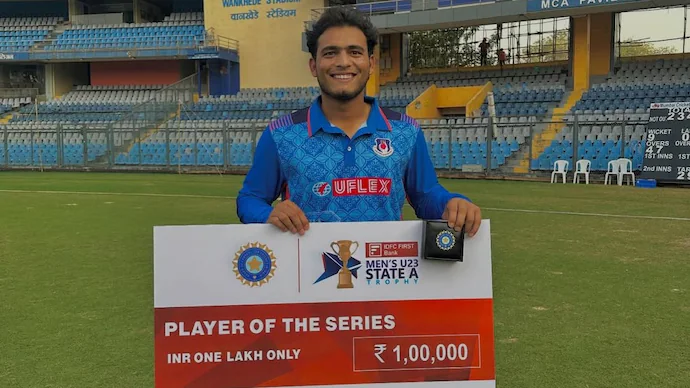
The IPL 2026 auction produced one of its most extraordinary moments when two uncapped Indian teenagers, Prashant Veer and Kartik Sharma, shattered long-standing auction records, underlining the league’s growing faith in domestic scouting and future-ready talent. In a dramatic bidding frenzy in Abu Dhabi, Chennai Super Kings invested heavily in youth, paying ₹14.2 crore each for the left-arm spin allrounder from Uttar Pradesh and the wicketkeeper-batter from Rajasthan, redefining the market for uncapped Indian players and signalling a shift in franchise strategy.
Record-breaking bids highlight changing auction dynamics and scouting depth
Prashant Veer and Kartik Sharma became the most expensive uncapped Indian players in IPL history, eclipsing the previous benchmark of ₹10 crore set by Avesh Khan in 2022. Their identical price tags were the result of prolonged, multi-team bidding wars that reflected both immediate skill demand and long-term investment thinking. Chennai Super Kings ultimately prevailed, outbidding rivals who were equally keen to secure the pair as cornerstone prospects for the next cycle.
Veer entered the auction with a base price of ₹30 lakh, but the bidding escalated rapidly as Mumbai Indians and Lucknow Super Giants initiated the contest. Rajasthan Royals and Sunrisers Hyderabad soon joined, turning the process into a tense showdown before CSK secured the final bid. Despite having played only nine domestic T20 matches, Veer’s performances in the Uttar Pradesh T20 League, the Syed Mushtaq Ali Trophy, and Under-23 competitions had already marked him as a rare left-arm spin allrounder with composure beyond his years.
Kartik Sharma followed almost immediately, triggering a similar escalation. Also listed at a base price of ₹30 lakh, the 19-year-old wicketkeeper saw intense interest from multiple franchises before CSK once again emerged on top. Known for his fearless lower-order hitting, Kartik has built a reputation as a finisher capable of clearing boundaries under pressure. In just 12 T20 matches, he has scored 334 runs at a strike rate of 164, striking 28 sixes and showcasing the power-hitting profile increasingly valued in modern T20 cricket.
The auction overall reflected a broader trend, with uncapped Indian players commanding unprecedented attention. Jammu and Kashmir fast bowler Auqib Nabi was picked up by Delhi Capitals for ₹8.4 crore, while pace-bowling allrounder Mangesh Yadav earned ₹5.2 crore from Royal Challengers Bengaluru. Several other uncapped players crossed the ₹1 crore mark, indicating a structural shift in how franchises evaluate domestic talent pipelines.
This surge in prices underscored how data-driven scouting, exposure through regional leagues, and consistent domestic performance have reduced the information gap around young players. Teams are no longer hesitant to invest heavily before international debuts, confident that performance indicators across tournaments provide reliable predictors of future success.
Chennai Super Kings’ philosophy shift and belief in long-term local cores
Chennai Super Kings’ aggressive approach at the auction reflected a conscious evolution in philosophy. Head coach Stephen Fleming acknowledged that the franchise had reassessed its traditional reliance on experience after recognising the pace at which the game is changing. According to Fleming, the team identified a need to refresh its skill base midway through the previous season, prompting a renewed focus on youth, adaptability, and athleticism.
Veer was seen as a strategic fit following squad restructuring, particularly after changes in the allrounder department. His ability to contribute with both bat and ball aligns with CSK’s requirement for flexible options in varying conditions. Kartik, meanwhile, had already been on the franchise’s radar through trials, reinforcing confidence in the scouting process that culminated in the record bid.
Fleming emphasised that modern IPL success increasingly depends on building a strong domestic core capable of sustaining performance across seasons. This approach demands not just time and patience, but also financial commitment. With multiple domestic tournaments now serving as talent incubators, franchises are investing earlier, accepting the risk that comes with youth in exchange for long-term stability and upside.
The auction also highlighted how life-changing moments for players and families are intertwined with professional evaluation. While emotional impact is undeniable, franchises stressed that price tags ultimately reflect perceived skill value, role clarity, and growth potential rather than sentiment alone. The bidding wars themselves served as validation, with multiple teams independently reaching similar valuations.
Delhi Capitals’ acquisition of Auqib Nabi further reinforced this narrative. The 29-year-old pacer, though uncapped, brought experience, consistency, and versatility, having impressed across domestic formats and in support roles with IPL teams in the past. His price rose as competing franchises recognised immediate utility alongside future development.
Mangesh Yadav’s rise from a ₹30 lakh base to ₹5.2 crore illustrated another dimension of the auction, where short domestic exposure combined with standout league performances can dramatically alter valuation. His performances in the Madhya Pradesh Premier League proved influential, demonstrating how state and regional competitions now carry significant weight in IPL scouting assessments.
Collectively, the outcomes of the IPL 2026 auction signalled a recalibration of priorities. The emphasis has shifted toward identifying adaptable Indian talent early, locking in players before international recognition inflates value, and creating squads capable of evolving with the game. For Prashant Veer and Kartik Sharma, the record bids marked the beginning of immense expectations, while for franchises, they represented a strategic bet on the future of Indian cricket within the IPL ecosystem.