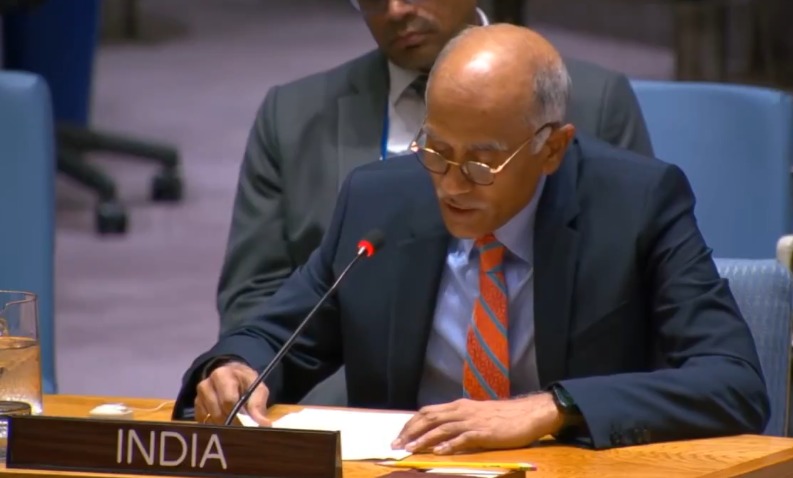
India has underscored the urgent need to reform the United Nations Security Council to ensure that peacekeeping operations are effective, legitimate, and aligned with contemporary global realities. Highlighting the contributions of countries like India, which is the largest troop contributor to UN peacekeeping missions, India argued that major contributors are yet to be included as permanent members of the Council, which plays a pivotal role in providing mandates for these missions. India emphasized that without structural reforms that expand both permanent and non-permanent membership to reflect the current geopolitical and operational landscape, peacekeeping missions risk being ineffective, underfunded, and disconnected from the realities on the ground. Speaking during an open debate convened by South Korea, the UN Security Council President for the month, India’s Permanent Representative P. Harish highlighted the intertwined nature of UN peacekeeping effectiveness with the Council’s legitimacy and called for inclusive consultations involving all stakeholders, particularly troop- and police-contributing countries.
Structural Reforms and Legitimacy for Effective Peacekeeping
P. Harish elaborated that the effectiveness of UN peacekeeping operations is inherently tied to the structural legitimacy of the Security Council. Without reforms that expand both permanent and non-permanent seats, the Council does not accurately reflect contemporary global dynamics or the countries most actively engaged in peacekeeping efforts. India, which has contributed the highest number of troops to UN missions worldwide, remains excluded from permanent membership. This exclusion, according to Harish, undermines the credibility of mandates and limits the operational effectiveness of peacekeeping initiatives. He stressed that reforming the Council is essential not only for ensuring legitimacy but also for enabling missions to operate under clear, practical, and achievable mandates.
Harish also highlighted the growing challenges faced by peacekeeping operations, describing them as complex, multi-dimensional, and politically sensitive. “Peacekeeping operations today confront multiple challenges, including political, operational, and technological complexities,” he noted, emphasizing the need to return to the core principles of UN peacekeeping. Central to this approach is the simplification of mandates, ensuring they are realistic, clearly defined, and focused. Missions with outdated or overly broad mandates risk becoming inefficient and unable to respond effectively to rapidly evolving conflict environments.
Funding constraints further complicate the execution of peacekeeping operations. Harish pointed out that UN missions often operate under uncertain financial conditions, which limits their capacity to deliver on ambitious mandates. He argued that mandates must be commensurate with available resources to ensure that peacekeepers can operate effectively. Highlighting the specific challenge posed by major contributors, he mentioned that the United States, which accounts for 25 percent of the UN peacekeeping budget, has at times threatened to reduce or eliminate its contributions, placing additional strain on operational capabilities.
Operational Challenges, Political Engagement, and Strategic Coordination
India stressed that peacekeeping missions are most successful when accompanied by a broader political process with a clearly defined vision for political outcomes. Harish highlighted that operational effectiveness is closely linked to active engagement with political stakeholders and the implementation of mandates that are realistic and achievable. He called for the withdrawal and liquidation of peacekeeping missions with outdated or redundant mandates, noting that operations must evolve to match changing circumstances on the ground. While he did not explicitly mention the UN Military Observer Group in India and Pakistan, India has previously stated that this mission is redundant under the current conditions, reflecting the need for continuous reassessment of the relevance of ongoing operations.
The Under-Secretary-General for Peace Operations, Jean-Pierre Lacroix, echoed India’s concerns, emphasizing that peacekeeping operations are not intended to be indefinite. He highlighted that successful missions require clear, prioritized mandates, strong political engagement, and consistent support from member states. Without these elements, missions risk stagnation and the potential relapse of conflict in regions where they operate. Lacroix underscored the importance of aligning operational objectives with strategic goals to ensure that missions are both time-bound and outcome-focused, preventing unnecessary prolongation of deployments that fail to deliver meaningful results.
Similarly, Rosemary DiCarlo, Under-Secretary-General for Political and Peacebuilding Affairs, stressed the challenging environments in which peacekeeping missions operate. She noted that missions are often deployed in politically volatile situations, including active civil wars, where the initial goals of peacekeeping must be modest and achievable. Such objectives might include preventing a further escalation of violence, facilitating ceasefire agreements, or supporting fragile peace processes in their early stages. DiCarlo emphasized that realistic expectations and incremental progress are essential to ensuring that peacekeeping operations provide tangible benefits without overextending their resources or ambitions.
Harish further elaborated that consensus-driven decision-making is critical for successful peacekeeping operations. He advocated for a member state-driven process of wide-ranging consultations to ensure that all stakeholders, particularly troop- and police-contributing countries, participate in shaping the mandates and strategic objectives of missions. This inclusive approach, according to India, would enhance both legitimacy and operational effectiveness, ensuring that the Security Council and its peacekeeping missions accurately reflect contemporary global dynamics and the contributions of countries actively engaged in maintaining international peace and security.
The evolving nature of modern conflicts demands that peacekeeping mandates are not only clear and focused but also flexible enough to adapt to changing realities. Harish highlighted that missions must be equipped to respond to political, operational, and technological challenges that have become increasingly complex in the 21st century. Peacekeeping operations need both the legitimacy derived from equitable representation on the Security Council and the operational capacity to execute mandates effectively, ensuring that international interventions contribute meaningfully to conflict resolution and stability.
India’s interventions at the Security Council also highlighted the critical interplay between political processes and peacekeeping operations. Successful missions often require alignment with broader diplomatic and political efforts, including negotiations, ceasefire agreements, and reconciliation processes. By linking operational mandates to achievable political outcomes, peacekeeping missions can achieve greater success and reduce the risk of prolonged conflict or mission fatigue. Harish emphasized that member states must prioritize these linkages when designing and evaluating peacekeeping mandates to ensure coherent and sustainable outcomes.
Moreover, India stressed the importance of financial sustainability in peacekeeping operations. With funding often uncertain and dependent on contributions from major donors, missions must operate within their resource constraints. Harish argued that matching mandates with available resources is essential for operational efficiency and effectiveness. This pragmatic approach ensures that peacekeeping operations can deliver results without overextending their capabilities or creating expectations that cannot be met due to budgetary limitations.
The call for Security Council reform also underscores India’s broader vision for a more representative and equitable international order. By including major contributors to peacekeeping operations in both permanent and non-permanent categories, the Council would gain enhanced legitimacy and ensure that decisions reflect the realities of contemporary global security dynamics. Harish emphasized that structural reform is not merely a procedural adjustment but a strategic necessity to strengthen the credibility and effectiveness of the UN’s peacekeeping architecture.
In conclusion, India’s position highlights the multifaceted challenges facing modern peacekeeping operations. From political volatility and operational complexity to funding uncertainties and the need for strategic coherence, peacekeeping missions require both structural legitimacy and effective execution. By advocating for Security Council reform, inclusive consultations, realistic mandates, and alignment with broader political processes, India is calling for a comprehensive approach that strengthens international peacekeeping and ensures that the UN continues to fulfill its core mission of maintaining global peace and security.
Peacekeeping operations today face unprecedented challenges that demand reform at both structural and operational levels. India’s interventions reflect a commitment to ensuring that the United Nations remains capable of responding effectively to contemporary conflicts, leveraging the contributions of its member states, and maintaining credibility with both troop-contributing nations and the international community. The emphasis on realistic mandates, political engagement, financial sustainability, and strategic coordination underlines the need for a holistic approach that integrates operational, political, and institutional dimensions to enhance the effectiveness and legitimacy of peacekeeping missions worldwide.
By linking structural reforms to operational efficiency and highlighting the contributions of countries like India, India’s advocacy at the Security Council provides a roadmap for a more effective, representative, and resilient UN peacekeeping system. This approach seeks to address the evolving challenges of modern conflicts while reinforcing the foundational principles of the United Nations, including legitimacy, inclusivity, and accountability, ensuring that peacekeeping operations continue to play a critical role in maintaining international peace and security in the 21st century.