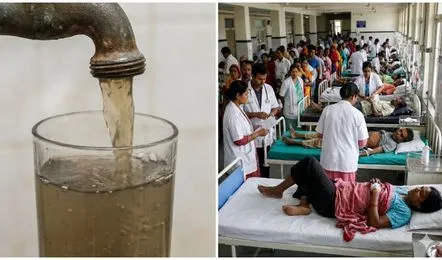
Barely days after the contaminated water crisis in Indore drew nationwide attention, a similar public health alarm has surfaced in Gandhinagar, where polluted drinking water has been linked to a spike in typhoid cases, prompting swift intervention by health authorities and renewed scrutiny of urban water safety systems.
According to officials, multiple residents in parts of Gandhinagar have been diagnosed with typhoid, with preliminary investigations pointing towards contamination in the local water supply as the likely source of infection. The development has intensified concerns about the condition of ageing pipelines, leakages, and the vulnerability of municipal water networks to sewage intrusion, especially during periods of high demand and maintenance work.
Health authorities moved quickly to contain the outbreak after hospitals reported an unusual rise in patients presenting with high fever, weakness, abdominal pain, and gastrointestinal symptoms consistent with typhoid. Medical teams were alerted to follow standard treatment protocols while surveillance units began tracing possible clusters to identify the most affected localities.
health department response and water safety measures
Officials from the Gujarat Health Department confirmed that emergency measures were initiated as soon as the link between illness and drinking water contamination was suspected. Water samples were collected from multiple points across the affected areas and sent for laboratory testing to determine bacterial contamination and possible breaches in the supply system.
As a precautionary step, residents in vulnerable neighbourhoods were advised to boil drinking water and avoid direct consumption from taps until further notice. Tanker-based water supply was arranged in several localities to ensure access to safe drinking water, while chlorination and flushing of pipelines were intensified to reduce contamination risks.
Doctors at government and private hospitals said most patients responded well to timely antibiotic treatment, though they cautioned that delayed diagnosis could lead to complications. Special outpatient counters were set up in some health centres to screen patients with fever symptoms, and community health workers were deployed to spread awareness about hygiene, safe water usage, and early reporting of illness.
Municipal officials acknowledged that the outbreak has exposed systemic weaknesses in urban water infrastructure. Preliminary assessments suggest that old and damaged pipelines, coupled with intermittent water supply, may have allowed contaminated groundwater or sewage to mix with drinking water. Repair and replacement work has been prioritised in the affected zones, with engineers instructed to identify vulnerable stretches of the network.
The administration has also increased coordination between the health, water supply, and municipal engineering departments to ensure that corrective measures are implemented without delay. Officials said continuous monitoring would remain in place until laboratory reports confirm that the water supply is safe for consumption.
rising concern after indore crisis highlights broader risks
The Gandhinagar outbreak has inevitably drawn comparisons with the recent crisis in Indore, where contaminated water led to widespread illness and multiple deaths, triggering court intervention and political protests. Public health experts warn that such incidents underscore a broader national challenge involving urban water safety, infrastructure maintenance, and rapid response mechanisms.
Epidemiologists note that typhoid, a water-borne disease caused by Salmonella typhi bacteria, thrives in conditions where sanitation systems are compromised. Rapid urbanisation, population pressure, and ageing civic infrastructure have increased the risk of contamination in many cities, making preventive maintenance and regular water quality testing critical.
In Gandhinagar, local residents expressed anxiety over the safety of their drinking water, with many demanding long-term solutions rather than temporary fixes. Civil society groups have called for transparent disclosure of water test results and a clear timeline for infrastructure upgrades to restore public confidence.
The state government has sought to reassure citizens that the situation is under control and that there is no cause for panic. Officials emphasised that lessons from the Indore episode are being applied proactively, including faster detection of outbreaks, stronger inter-departmental coordination, and stricter monitoring of water quality.
Public health specialists stress that while emergency responses are essential, preventing such outbreaks requires sustained investment in water infrastructure, routine audits of pipelines, and public awareness about hygiene and safe water practices. They also advocate for stronger accountability mechanisms to ensure timely repairs and upgrades.
As health teams continue surveillance in Gandhinagar, authorities remain on alert for any further spread of the infection. The incident has reinforced the urgency of addressing water safety as a core public health priority, particularly in urban centres where even brief lapses can have serious consequences for large populations.