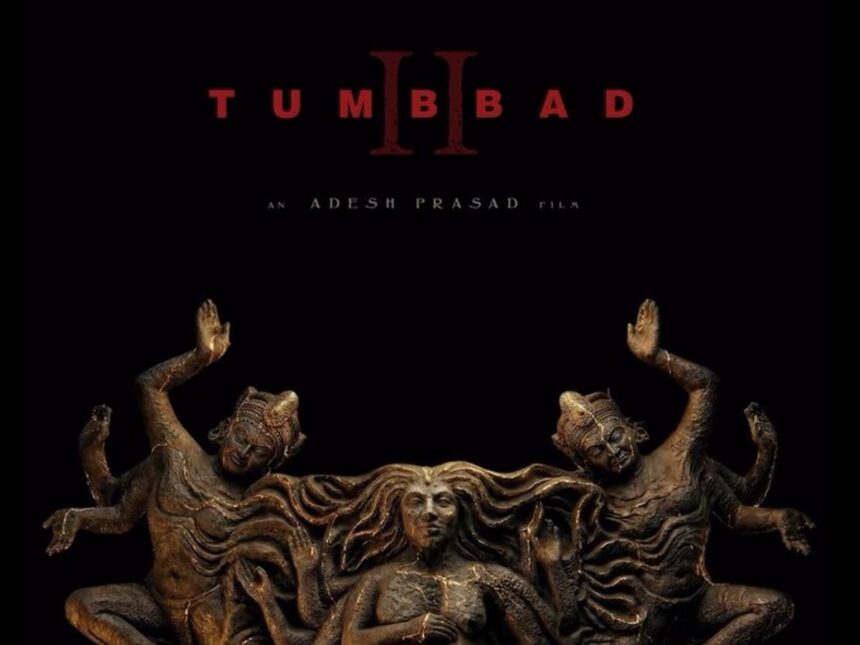
The highly anticipated sequel Tumbbad 2 has officially commenced filming, announcing itself as an even darker and more expansive chapter of the original film’s haunting mythology. Fans of the original have been waiting years for a continuation that deepens the eerie world rooted in folklore, greed, and cosmic dread, and the release of the motion poster has only amplified expectations. Where the first film captured critical acclaim for its atmospheric storytelling and richly textured horror rooted in Indian myth, this sequel promises to explore those themes further — layered with fresh narrative complexity and cinematic spectacle. With production underway and creators signaling a bold new vision, Tumbbad 2 is poised to expand both its storyline and its emotional impact, while staying true to the unsettling tone that made its predecessor a cult phenomenon.
Motion poster reveals darker aesthetic and mythic depth
The motion poster for Tumbbad 2 sets the tone immediately, drawing audiences into a world that feels both familiar and eerily transformed. Unlike the first film’s slow, creeping dread, this visual tease embraces a bolder palette of shadows and stark contrasts, suggesting a horror that is both internal and cosmic. The imagery evokes ancient legends, forgotten gods, and unearthly landscapes — all hinted at through subtle motion elements that enhance the sense of lurking danger. This move toward a “bigger” horror experience suggests that the sequel will expand its mythic scope, taking audiences beyond the original’s rural setting and deeper into the philosophical quandaries that made the first installment resonate so deeply.
The choice of a motion poster — rather than a static one — reflects the production’s commitment to crafting a sensory experience from the earliest stage of promotion. Every flicker and shift in light within the poster seems deliberate, designed to tease narrative threads without giving too much away. There’s a palpable sense of unease that lingers with each glimpse of cryptic symbols and darkened ruins, hinting at worldbuilding that leans into mythological horror rooted in Indian cultural motifs. This evolution in aesthetics signals that Tumbbad 2 intends to broaden its symbolic canvas, exploring not just the horror of greed and human frailty, but how myth and fear intersect in ancient storytelling traditions.
Alongside the motion poster, statements from the production team emphasize that the sequel will be “darker and bigger” — a phrase that likely references both the scale of the narrative and the intensity of its emotional stakes. While the original film’s horror was rooted in quiet dread and atmospheric tension, this new chapter appears to push boundaries further, suggesting more visceral and psychologically complex encounters with the unknown. The motion poster’s visual cues — jagged shadows, swirling mist, and half‑glimpsed figures — reinforce the anticipation that the sequel’s universe is one where myth bleeds into reality, challenging both the characters and audiences to confront fear on a more elaborate scale.
The shift toward a larger scope also raises questions about how the sequel might expand its mythic foundations. The original Tumbbad drew inspiration from folklore and the Hindu concept of insatiable greed; if the sequel broadens this canvas, viewers can expect new mythological influences and possibly deeper cultural explorations. By teasing visual motifs that feel ancient and uncharted, the motion poster primes audiences for a narrative journey that promises to be richer, more frightening, and emotionally resonant. It’s a clear signal that Tumbbad 2 won’t simply revisit familiar territory — it aims to deepen the lore and redefine what horror can mean within its universe.
Production begins as anticipation builds for mythic horror sequel
With the cameras now rolling, Tumbbad 2 marks a significant step forward in what has become one of Indian cinema’s most distinctive horror legacies. The original Tumbbad won global acclaim for its combination of folklore‑based horror and cinematic craft, earning a dedicated following among fans of genre storytelling. By embracing a sequel that is described as “darker and bigger,” the creators are acknowledging both the expectations of those fans and the potential to push the boundaries of horror in mainstream Indian film.
The onset of shooting also brings renewed attention to the cast, crew, and creative vision driving the project. While details about the full ensemble remain largely under wraps, speculation is high that returning collaborators and new creative voices will converge to build a world that feels expansive yet intimately terrifying. Shooting schedules reportedly include not just sets evocative of the original film’s rural landscapes but also new locations that may introduce mythological settings and environments previously unexplored on screen. This choice hints at the sequel’s ambition to paint its horror across both familiar and novel backdrops, challenging filmmakers and audiences alike to reimagine the boundaries of mythic terror.
Behind the camera, expectations are that the sequel will uphold the visual and narrative quality that distinguished its predecessor. Fans of the first film appreciated its deliberate pacing, meticulous worldbuilding, and blend of psychological horror with folklore. With Tumbbad 2, the aim appears to be to preserve that artistry while pushing it into a broader, even more immersive cinematic experience. The production’s early promotional choices, especially the motion poster, indicate a confidence in the tactile power of visuals to evoke mood and mystery — a hallmark of the original’s success.
As shooting progresses, the creative team’s commitment to atmosphere, tone, and detail will be essential in fulfilling the heightened expectations surrounding the sequel. Horror, especially when rooted in cultural myth, demands more than jump scares; it requires a cinematic language that can evoke dread, empathy, and fascination all at once. The motion poster’s layered aesthetic presages this ambition, hinting at shadows that carry meaning and spectral forms that feel both alien and intimately connected to human fears. This suggests a narrative richness that could redefine how audiences think about mythic horror within Indian cinema.
The genesis of Tumbbad 2 also speaks to wider trends in storytelling, where filmmakers increasingly draw on indigenous folklore and cultural history to craft stories with global resonance. The original film’s acclaim came not just from its horror, but from its rootedness in folklore that felt uniquely Indian yet universally compelling. By expanding this foundation in Tumbbad 2, the creators are participating in a larger movement that showcases the power of culturally specific horror to transcend borders while honoring its origins.
With principal photography underway and the motion poster already generating buzz, anticipation continues to build among audiences and critics alike. Every update — from visual teasers to behind‑the‑scenes glimpses — will likely be dissected and discussed as the film’s production unfolds. While the specifics of the plot remain guarded, what has already emerged points to a story that will deepen the mystery, broaden the mythology, and redefine the stakes in a universe where terror is both ancient and immediate.
Tumbbad 2’s journey from inception to screen will be closely watched, not only because of its lineage but because it represents a bold step in how horror is imagined, crafted, and experienced in Indian cinema. Its visual language, mythic depth, and commitment to atmospheric storytelling position it as a defining sequel — one that embraces the shadows while illuminating the fears that lie beneath.