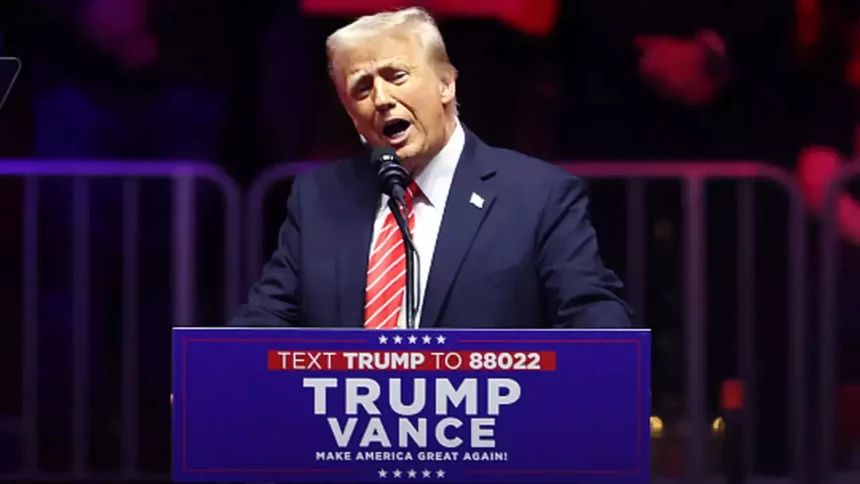
Washington, D.C.: Former U.S. President Donald Trump has once again stirred the immigration debate with his latest policy proposals, including significant reforms to the H-1B visa program and an attempt to end birthright citizenship. These policies, if implemented, could have far-reaching consequences for skilled immigrants, particularly Indian professionals, as well as for the U.S. economy and global talent movement.
H-1B Visa Reforms: A Tougher Road for Skilled Professionals
The H-1B visa program, which enables skilled foreign workers to secure employment in the U.S., has been a crucial pathway for Indian professionals in the tech and healthcare industries. Trump’s proposed reforms aim to tighten the eligibility criteria, emphasizing that only “competent” individuals should be granted entry. This could introduce new evaluation metrics, making it more challenging for foreign professionals to secure jobs in the U.S.
Tech giants like Google, Microsoft, and Apple, which rely heavily on H-1B visa holders, may face significant disruptions. A stricter immigration policy could either push them to outsource jobs to other countries or relocate operations to more immigration-friendly nations. Experts warn that such a move could weaken the U.S.’s position as a global innovation hub.
Birthright Citizenship Under Scrutiny
Trump has also revived his long-standing demand to end birthright citizenship, challenging the 14th Amendment of the U.S. Constitution, which grants automatic citizenship to anyone born on American soil. His argument is that children of undocumented immigrants and temporary visa holders should not be entitled to U.S. citizenship.
If implemented, this policy could create legal uncertainties for thousands of Indian families currently in the green card backlog. With over one million Indian nationals waiting for permanent residency, concerns about their children’s future legal status may rise sharply. Immigration analysts believe that such a move could increase socio-political tensions and trigger lengthy legal battles.
Economic and Global Implications
The economic impact of these policies could be profound. Skilled immigrants contribute significantly to the U.S. GDP, particularly in sectors like technology, medicine, and engineering. Studies reveal that over 50% of U.S. billion-dollar startups were founded by immigrants. Stricter immigration rules may drive top talent to countries like Canada, Australia, and Germany, which are actively attracting skilled workers with flexible policies.
Additionally, these policies could weaken America’s reputation as the “Land of Opportunity.” A restrictive immigration stance might not only deter skilled professionals but also damage the U.S.’s global leadership in innovation and economic competitiveness.
A Polarizing Debate Ahead
Trump’s proposals have sparked intense political debate. His core voter base, which advocates for stricter immigration controls, is likely to support these measures. However, civil rights organizations, business leaders, and moderate voters argue that a more balanced, bipartisan immigration reform is needed rather than extreme policy shifts.
With past immigration policies, such as the travel ban and family separation orders, triggering widespread protests, similar nationwide demonstrations could erupt again. As the 2024 U.S. presidential elections approach, immigration is set to become a key battleground issue, shaping the nation’s political landscape in the years to come.
What lies ahead for immigrants and the U.S. economy? Only time will tell.
Watch full video here: https://youtu.be/jklR0rlrytg