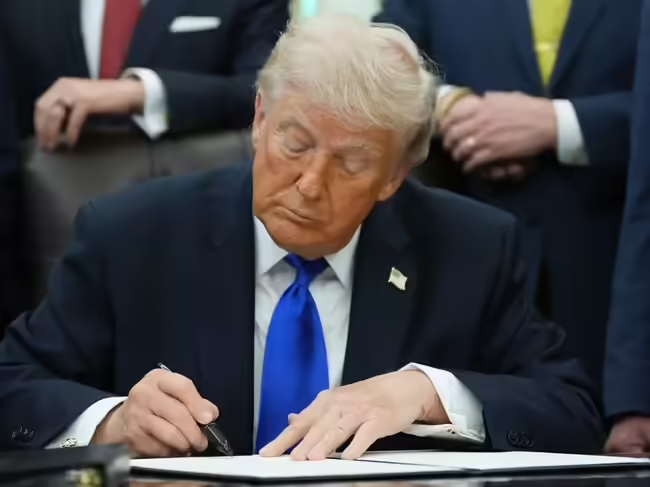
US President Donald Trump has threatened to raise tariffs on European Union vehicles to 25%, potentially disrupting global trade and straining transatlantic economic relations.
Global trade tensions may escalate once again as Donald Trump announced plans to increase tariffs on cars and trucks imported from the European Union to 25 percent. The proposed move, expected to take effect as early as next week, could have significant implications for the global economy at a time of ongoing financial uncertainty.
The announcement comes despite an existing trade agreement between the United States and the European Union, which had capped tariffs at 15 percent on most goods. Trump claimed that the EU is not complying with the terms of the agreement, though he did not provide detailed specifics regarding the alleged violations.
Trade Deal Under Strain
The earlier agreement, negotiated between Trump and Ursula von der Leyen, was aimed at stabilizing trade relations and reducing economic friction between the two major economies. Known as the Turnberry Agreement, the deal was designed to maintain predictable tariff structures and support cross-border trade.
However, the stability of this agreement has come under question following a ruling by the Supreme Court of the United States. The court determined that the president did not have the authority to declare an economic emergency to impose certain tariffs, effectively reducing the earlier tariff ceiling to 10 percent under revised legal interpretations.
In response, the Trump administration has initiated fresh investigations into trade imbalances and national security concerns, which could justify a new round of tariffs under alternative legal provisions.
Potential Impact on Global Economy
A tariff increase to 25 percent on EU vehicles could significantly affect the global automotive industry. European car manufacturers, who rely heavily on exports to the United States, may face higher costs and reduced competitiveness in one of their largest markets.
The European Union had previously estimated that the existing agreement would save its automakers between 500 million and 600 million euros per month. A sharp tariff hike could reverse these gains and disrupt supply chains across multiple sectors.
Trade between the United States and the European Union is substantial, with total goods and services exchange reaching approximately 1.7 trillion euros in 2024. This makes the transatlantic relationship one of the most important economic partnerships in the world.
EU Response and Expectations
The European Commission has emphasized that both sides must honor the commitments made under the agreement. Officials have reiterated that EU products should continue to benefit from competitive tariff treatment without any unexpected increases.
Brussels has maintained that the agreement remains valid and expects the United States to adhere to its terms. Any unilateral move to raise tariffs could lead to retaliatory measures, further escalating trade tensions.
Legal and Policy Uncertainty
The situation is further complicated by ongoing legal and policy debates within the United States. The Supreme Court ruling has created uncertainty about the administration’s authority to impose tariffs, forcing policymakers to explore alternative legal frameworks.
These developments highlight the complex interplay between domestic law and international trade policy. As the administration continues its investigations, the final outcome remains uncertain.
Broader Implications for Trade Relations
The proposed tariff hike is likely to have ripple effects beyond the automotive sector. It could impact global supply chains, investor confidence, and economic growth, particularly at a time when markets are already facing volatility due to geopolitical tensions and rising energy costs.
For businesses and consumers, higher tariffs could translate into increased prices and reduced availability of imported goods. This could also affect employment in industries linked to international trade.
Conclusion
Trump’s proposal to raise tariffs on EU cars and trucks to 25 percent marks a potential turning point in US-EU trade relations. While the move is aimed at addressing perceived imbalances, it risks triggering a broader trade conflict with significant global consequences.
As both sides assess their options, the coming weeks will be crucial in determining whether tensions escalate or a diplomatic resolution can be reached. The outcome will not only shape transatlantic relations but also influence the broader trajectory of the global economy