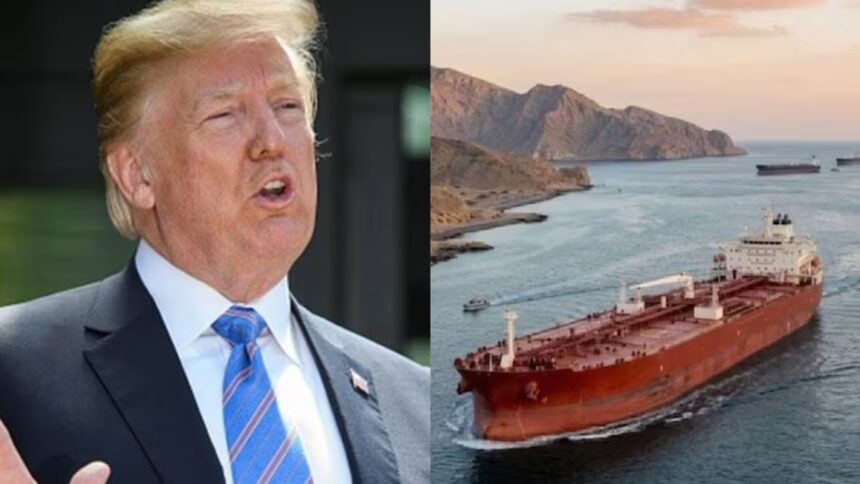
A widening geopolitical rift has emerged as former US President Donald Trump struggles to rally international support during the escalating conflict involving Iran, Israel and the United States. Seventeen days into the crisis the situation has grown far more complex than initial expectations of a quick resolution. The conflict intensified after reports of the deaths of more than forty senior Iranian officials including associates of former Supreme Leader Ali Khamenei. In response Iran halted oil shipments through the strategically vital Strait of Hormuz. This narrow maritime corridor carries nearly twenty percent of the world’s oil and gas supply making it one of the most important energy routes in the global economy. The closure of this route has triggered serious concerns about global energy security and economic stability. Washington has urged its allies to help reopen and secure the waterway warning that failure to act could weaken the credibility and unity of the NATO alliance. However several major European nations have declined to participate in a US-led military operation highlighting growing divisions among Western allies on how to respond to the crisis.
NATO allies reluctant to join military operation
Several European governments have publicly rejected the idea of sending naval forces to the Strait of Hormuz emphasizing diplomatic engagement rather than military escalation. Germany has taken one of the strongest positions against joining the mission. German Chancellor Friedrich Merz stated that there had never been any agreement regarding German participation in a US-led operation in the region. According to him the conflict does not justify Germany’s involvement in combat operations. Merz also argued that while some might hope for political change in Iran bombing the country into submission cannot be considered a responsible strategy. Germany’s Defence Minister Boris Pistorius also questioned the effectiveness of European participation noting that the United States Navy already possesses overwhelming maritime capabilities in the region.
Britain and Italy prefer diplomatic approach
Other European nations have expressed similar reservations. United Kingdom Prime Minister Keir Starmer confirmed that Britain would not join the conflict militarily at this stage. While he acknowledged the importance of reopening the Strait of Hormuz to stabilise global oil markets he emphasized that any security initiative should involve broad international consensus rather than unilateral military intervention. Italy has also supported diplomatic engagement over armed escalation. Italian Foreign Minister Antonio Tajani stated that European naval missions currently operating in nearby waters focus mainly on anti piracy and maritime security operations and cannot easily be transformed into offensive military campaigns. France Australia and Japan have also declined requests to deploy naval forces to protect shipping lanes in the Gulf.
EU rejects expansion of Red Sea mission
The European Union has also rejected Washington’s request to extend its existing maritime security mission in the Red Sea to the Strait of Hormuz. EU foreign policy chief Kaja Kallas said member states currently have no interest in expanding the mission beyond its present scope. Several European leaders have also demanded greater clarity regarding the long term objectives of the United States and Israel in the conflict. Without a clearly defined strategy many governments appear unwilling to risk escalating tensions through direct military involvement.
Global energy and geopolitical implications
The closure of the Strait of Hormuz has become one of the most serious consequences of the crisis. The waterway connects the Persian Gulf with the Arabian Sea and serves as a crucial route for global oil shipments. Any disruption in this corridor can rapidly affect international energy prices and economic stability. As a result countries around the world are closely monitoring developments in the region. President Trump continues to urge allies to participate in securing the waterway but the refusal of NATO partners has left the United States facing increasing diplomatic isolation. Analysts believe the coming weeks will determine whether the conflict moves toward de escalation through diplomacy or intensifies further through military confrontation.