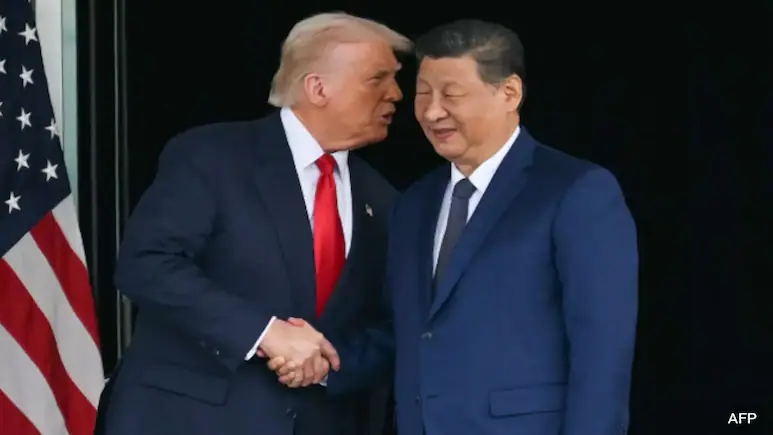
US President Donald Trump has departed for a high-stakes three-day official visit to China, marking a major diplomatic engagement with Chinese President Xi Jinping. The visit comes at a critical moment in global geopolitics, with trade negotiations expected to dominate discussions while escalating tensions surrounding Iran are also likely to feature prominently in the talks.
The trip represents Trump’s seventh face-to-face meeting with Xi Jinping and the first visit by a US President to China since 2017, underlining the significance of the renewed engagement between Washington and Beijing. The visit is being closely watched by global markets, diplomatic observers, and strategic analysts, as it could shape the direction of US–China relations in the coming years.
High-Stakes Diplomatic Visit Amid Global Tensions
The visit takes place against a backdrop of complex international developments, including ongoing trade disputes, geopolitical competition, and rising instability in the Middle East. The US and China remain the world’s two largest economies, and their relationship continues to influence global economic stability, supply chains, and international security frameworks.
Before boarding Air Force One, Trump expressed optimism about the visit and emphasized the importance of maintaining strong bilateral relations with China. He stated that he expected the discussions to yield positive outcomes and reiterated his belief that the two nations could maintain a productive long-term partnership.
Trump described his relationship with Xi Jinping as strong and stable, suggesting that both sides have historically been able to manage differences while continuing cooperation on key issues.
Trade Expected to Dominate US–China Talks
Trade is expected to be the central focus of the discussions between Trump and Xi Jinping. The US–China trade relationship has long been marked by tensions involving tariffs, market access restrictions, intellectual property concerns, and industrial competition.
During the upcoming talks, both leaders are expected to discuss ways to stabilize economic relations and reduce uncertainty in global markets. The discussions may include tariff structures, export controls, supply chain resilience, and investment flows between the two countries.
Trump emphasized that economic cooperation remains a priority, noting that trade relations with China have been “very important” and suggesting that improved engagement could benefit both nations.
The outcome of these discussions could have significant implications for global markets, particularly in sectors such as manufacturing, technology, energy, and finance.
Iran Crisis Likely to Feature in Discussions
While trade is expected to dominate the agenda, tensions involving Iran are also likely to be discussed during the visit. The ongoing geopolitical situation in the Middle East has drawn global attention, particularly due to military confrontations, sanctions, and disputes over nuclear activities.
Trump has taken a firm stance on Iran, reiterating his position that the US does not require external assistance in addressing the situation. He suggested that Iran is facing significant military pressure and indicated that Washington would continue to pursue its strategic objectives.
When asked whether China could play a role in mediating with Iran, Trump downplayed the necessity of Beijing’s involvement, stating that the United States is capable of handling the situation independently.
The inclusion of Iran in the broader diplomatic discussion highlights the interconnected nature of global politics, where economic and security issues often overlap in high-level bilateral engagements.
First US Presidential Visit to China Since 2017
This visit marks the first time a sitting US President has traveled to China since 2017, making it a significant diplomatic milestone. It also represents Trump’s seventh direct meeting with Xi Jinping, reflecting a pattern of high-level personal diplomacy between the two leaders.
Such direct engagements are often seen as critical in managing complex international relationships, especially between two global superpowers with competing strategic interests.
The renewed face-to-face dialogue is expected to help both sides address unresolved issues and explore potential areas of cooperation, despite ongoing differences in ideology, governance models, and geopolitical priorities.
Trump’s Delegation and Economic Backing
The US delegation accompanying Trump includes senior government officials and key economic advisors, reflecting the importance of the visit across both political and economic dimensions.
The delegation includes Secretary of State Marco Rubio, Secretary of War Pete Hegseth, White House Deputy Chief of Staff James Blair, Deputy National Security Advisor Robert Gabriel, and several ambassadors and senior advisors.
The presence of high-ranking officials underscores the seriousness of the negotiations and the wide range of issues expected to be discussed during the visit.
In addition to government representatives, more than a dozen business and technology leaders from major American companies are also part of the broader delegation. These executives represent sectors including finance, defence, technology, and consumer goods, highlighting the economic stakes of the visit.
Their participation suggests that trade, investment opportunities, and market access will be central to the discussions, with potential implications for global corporate strategy and cross-border economic activity.
Economic Stakes for Global Markets
The US–China economic relationship is one of the most influential in the world, and any developments from this meeting are likely to have immediate effects on global financial markets.
Investors are closely watching for signals regarding tariff reductions, trade agreements, and regulatory easing, all of which could impact stock markets, commodity prices, and currency movements.
Industries such as semiconductor manufacturing, artificial intelligence, energy exports, and automotive production are particularly sensitive to US–China policy shifts.
A more stable trade relationship could boost investor confidence, while renewed tensions could trigger volatility across global markets.
Strategic Competition and Diplomatic Balancing
Beyond trade, the US and China continue to compete in areas such as technology leadership, military influence, and global governance. Issues such as cybersecurity, artificial intelligence regulation, and space exploration are increasingly shaping the strategic rivalry between the two nations.
At the same time, both countries recognize the importance of maintaining dialogue to prevent escalation and manage differences through diplomatic channels.
The Trump–Xi meeting is therefore seen as an opportunity to balance competition with cooperation, particularly in areas where mutual interests align.
Role of Business and Technology Leaders
The inclusion of business leaders in the US delegation highlights the growing importance of private sector influence in international diplomacy. Companies from sectors such as finance, defence, and technology are expected to engage with Chinese counterparts on investment opportunities and regulatory frameworks.
This approach reflects a broader trend in global diplomacy where economic actors play an increasingly important role in shaping international relations.
Their presence also signals that the visit is not limited to political discussions but extends to long-term economic planning and industrial cooperation.
Diplomatic Optics and Global Reactions
The meeting between Trump and Xi is being closely monitored by governments around the world, as the outcome could influence global alliances, trade routes, and security partnerships.
Allied nations, emerging economies, and international organizations are particularly interested in whether the two powers can reach agreements that stabilize global markets and reduce geopolitical tensions.
The diplomatic optics of the visit are also significant, as high-level engagements between the US and China often signal shifts in global power dynamics.
The visit of US President Donald Trump to China for a high-level meeting with President Xi Jinping marks a crucial moment in global diplomacy. With trade negotiations at the forefront and geopolitical tensions involving Iran also in focus, the discussions are expected to have wide-ranging implications for international relations and economic stability.
As both leaders engage in their seventh face-to-face meeting, the world will be watching closely for signs of cooperation or renewed tension between the two largest economies. The outcomes of this visit could shape not only US–China relations but also the broader trajectory of global politics and trade in the years ahead.