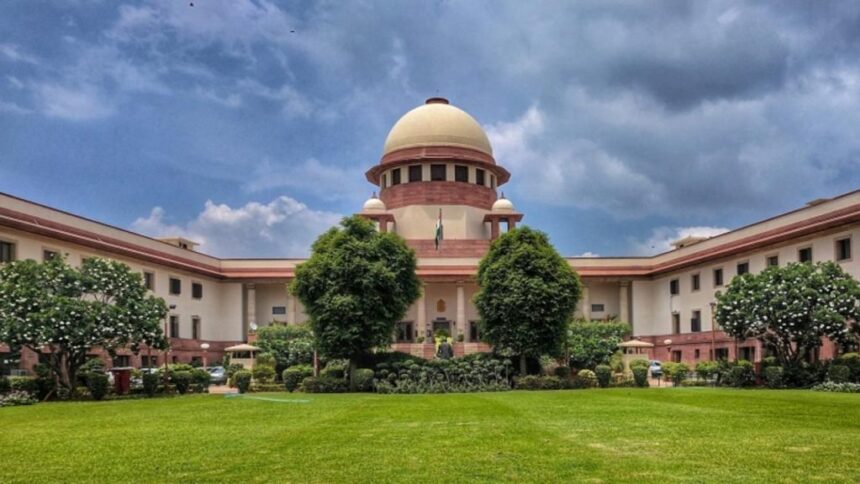
The recent ruling by the Supreme Court, which declared the actions of Tamil Nadu Governor R N Ravi as erroneous and illegal, marks a significant step in strengthening India’s federal structure. By rejecting the governor’s decision to reserve 10 bills for presidential consideration, the Court reinforced the importance of upholding the democratic legitimacy of state governments. This ruling, made possible through the invocation of Article 142, which allows for the “complete justice,” also directs that these 10 bills should be considered as passed.
This judgment is crucial because it underscores the constitutional limits on the powers of the governor and reaffirms that governors must not undermine the elected state governments. The Court’s emphasis on adhering to the constitutional oath of office and avoiding partisan actions is a clear reminder of the role governors are expected to play in a democracy. The decision could have broader implications for similar cases where gubernatorial actions overstep constitutional boundaries.
Clarification of Governor’s Role and Powers
The Supreme Court’s ruling goes beyond just addressing a specific case; it clarifies the role and scope of the governor’s office in India’s democratic framework. The Court noted that the governor must operate within the confines of the Constitution, refraining from actions that could obstruct or undermine the functioning of democratically elected governments. In doing so, the Court highlighted that a governor’s actions that undermine a state government’s authority are a violation of their constitutional oath.
The Court also made it clear that the governor cannot delay or block bills that have passed through the legislative process. This clarification of the powers of the governor under Article 200, which deals with the assent to bills, is significant because it establishes a clear timeline for governors to act. According to the Court, if the governor reserves a bill for the president’s consideration, this should be done within three months. If a bill is presented again after reconsideration, the governor must grant assent within one month.
Ending the ‘Pocket Veto’ Practice
The ruling has effectively ended the practice of governors exercising what has been called a “pocket veto,” where they indefinitely withhold assent to bills passed by the state legislature. By doing so, the Court reinforced the principle of popular sovereignty and emphasized that the governor must act in accordance with the advice of the state council of ministers, as mandated by the Constitution.
This ruling is particularly important because it addresses a broader issue that has plagued federalism in India—governors, often seen as representatives of the central government, sometimes act in ways that undermine the power of state governments, especially in opposition-ruled states. This tendency has often led to a political and ideological clash between the central government and state governments.
Political Context and the Role of Governors
The political context behind these actions cannot be ignored. Governors, especially in states led by opposition parties, have often acted in ways that align with the interests of the ruling party at the centre. This has been particularly true when the central government and the state government have sharply divergent positions on socio-economic and cultural issues. The actions of governors, in such cases, are often seen as politically motivated, adding a layer of conflict between the union and the states.
In states where the ruling party at the union level is not a dominant force, the office of the governor becomes a key point of contention. Governors have sometimes been used as tools to challenge or obstruct the functioning of opposition-led state governments, especially in areas like the prosecution of state officials or preventing certain legislative actions. These actions, which seem to bypass democratic processes, have often been seen as efforts to exert control over states that do not align with the central government’s ideology.
Reforming the Office of the Governor
The Supreme Court’s judgment has opened up a crucial debate on the relevance and the role of the office of the governor in a federal system. While some argue that the office is a relic of colonial rule with centralising tendencies, others call for structural reforms to make governors more accountable to the people of the state rather than to the union government. What is clear, however, is that the current structure of the governor’s office needs serious rethinking to make it more in tune with India’s federal principles.
The Court’s ruling should trigger a broader political and constitutional debate about the governor’s role, the need for reforms, and whether the office, in its current form, continues to serve the needs of a modern federal democracy. Whether the institution of the governor should be reformed or abolished is a discussion that goes beyond the judiciary and requires political discourse.
The Path Ahead for Federalism and Democracy
This judgment not only impacts the immediate case of Tamil Nadu but also has far-reaching consequences for the relationship between state and central governments in India. The ruling serves as a strong reminder of the need to respect the boundaries set by the Constitution and ensure that the powers of the governor are exercised in accordance with democratic values.
As India continues to navigate its federal framework, the Supreme Court’s ruling provides an important blueprint for safeguarding the autonomy and powers of state governments. By asserting that governors must act in a manner that supports democratic governance, the Court has reinforced the values of federalism and popular sovereignty, setting a precedent for future governance and legal challenges.