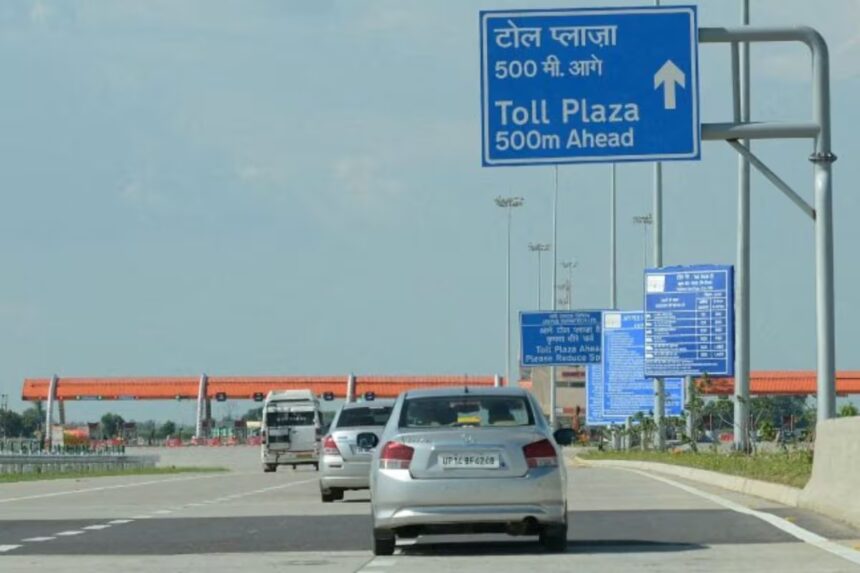
The Ministry of Road Transport and Highways has announced a temporary toll reduction for partially open national expressways, effective February 15, 2026. Under this amendment, tolls on stretches of expressways that are not operational end-to-end will now be levied at rates applicable for corresponding national highways, removing the earlier 25 percent premium applied to incomplete sections. The decision comes after widespread criticism from commuters and logistics operators who argued that paying full expressway tolls for incomplete stretches was unfair, particularly since these corridors did not yet provide the full access-controlled, seamless travel experience that completed expressways offer. By adjusting the toll framework, the government aims to encourage greater use of partially open expressways, improve traffic flow, reduce congestion on parallel national highways, and provide a more economical commuting option for passengers and freight transporters alike. The revised toll structure is set to remain in effect for up to one year or until the expressway is fully operational, whichever occurs first. This move reflects a broader government initiative to make travel across the country more efficient, affordable, and environmentally sustainable.
Toll Structure Amendment and Impact on Commuters
Previously, tolls on national expressways were levied at a rate 25 percent higher than normal national highways, even for stretches that were incomplete. This premium was justified by the enhanced experience provided by expressways, including access-controlled lanes, higher speed limits, and uninterrupted travel free from frequent intersections or local traffic. However, users traveling only on partially open sections of these expressways argued that they were paying for a service they could not fully utilize, since end-to-end connectivity was not yet available. The Ministry of Road Transport and Highways addressed this concern through the National Highways Fee (Determination of Rates and Collection) (Amendment) Rules, 2026, which explicitly allows for tolls on incomplete stretches to be calculated at rates applicable for national highways. Under this rule, commuters will pay only for the completed length at the national highway rate, ensuring fairness in toll collection.
The amendment is expected to directly benefit daily commuters, long-distance travelers, and freight operators who frequently use these expressways. It will reduce travel costs for sections of expressways such as Delhi-Mumbai, Chennai-Bengaluru, Delhi-Katra, and Amritsar-Jamnagar, which have been opened in phases but are yet to be fully operational. By lowering the financial burden for partial use, the government hopes to encourage greater adoption of expressways even before their completion, thereby optimizing traffic distribution across parallel routes and easing congestion on existing national highways. Passengers who previously avoided expressways due to higher toll rates are now likely to experience faster, safer, and more cost-effective journeys, while freight operators can benefit from reduced logistics costs, improved scheduling efficiency, and decreased fuel consumption.
Economic and Environmental Benefits of Temporary Toll Cuts
Beyond commuter convenience, the temporary toll reduction on partially open expressways carries broader economic and environmental implications. The initiative is expected to promote smoother freight movement by enabling trucks and goods carriers to utilize expressways at lower cost. This can accelerate supply chains, reduce transit times, and improve the overall competitiveness of industries that rely on road transport. By diverting traffic from congested national highways, the policy can also lead to significant reductions in vehicular emissions, contributing to lower pollution levels and enhanced air quality along heavily trafficked corridors. Reduced congestion on older highways will also improve road safety, decreasing the likelihood of accidents associated with stop-and-go traffic and unpredictable vehicle interactions.
From an economic perspective, the toll amendment can help stimulate regional commerce by facilitating smoother travel for small businesses, traders, and local producers who depend on timely delivery of goods to markets. Lower toll rates on incomplete expressway stretches will particularly benefit small-scale logistics operators and medium enterprises that previously faced higher operational costs when using partially open corridors. This change complements other government measures aimed at promoting efficient infrastructure utilization, including investment in expressway construction, phased opening strategies, and integration of digital toll collection systems to streamline payments and reduce administrative overhead. By making incomplete stretches more accessible and affordable, the policy aligns with broader objectives of improving road connectivity and enhancing the transport sector’s contribution to national economic growth.
The temporary toll reduction also demonstrates the government’s responsiveness to public feedback and willingness to adjust policies to suit practical commuting realities. Users had expressed concerns about paying expressway rates without receiving the full benefits of faster travel and uninterrupted connectivity. By instituting a temporary adjustment, the Ministry ensures equitable treatment for all commuters while maintaining incentives for timely completion of expressway projects. Moreover, the measure underscores the government’s focus on phased project implementation, recognizing that infrastructure can serve public utility even before full operational readiness, provided toll structures are fair and proportional to the service delivered.
As the revised toll structure applies for up to one year or until the expressway becomes fully operational, it also provides a predictable framework for commuters and transport operators to plan routes and budgets effectively. Stakeholders, including regional transport authorities, highway operators, and logistics firms, can align operational strategies with the new toll regime, ensuring better utilization of national expressways and improved efficiency across the road network. By linking toll fees to completed lengths rather than the entire projected corridor, the amendment balances fiscal requirements of expressway maintenance with public interest, reinforcing the principle that infrastructure charges should reflect actual utility provided to users.
The Ministry of Road Transport and Highways emphasized that this amendment is part of a larger initiative to make journeys seamless, economical, and environmentally sustainable. By enabling partial stretches to operate at reduced rates, the government can promote faster travel, reduce congestion, and provide greater affordability to passengers and freight carriers. Simultaneously, this measure encourages the use of expressways for commercial and passenger traffic even before project completion, increasing the value of ongoing investments in highway infrastructure. Additionally, the reduction in congestion on older national highways contributes to lower wear-and-tear, reduced maintenance costs, and extended lifespan of the existing road network.
Overall, the temporary toll reduction on partially open expressways is a strategic initiative with multiple benefits. It addresses public grievances regarding toll fairness, enhances commuter convenience, supports economic activity by reducing logistics costs, improves environmental conditions by lowering emissions, and promotes the use of new infrastructure to decongest older highways. The policy reflects a pragmatic approach to infrastructure management, balancing government revenue needs with the public interest and emphasizing accessibility, efficiency, and affordability. By making partial stretches more attractive to commuters and freight operators, the amendment ensures that national expressways deliver practical utility even before completion, reinforcing the government’s commitment to improving India’s transport ecosystem and creating a road network that benefits all users.