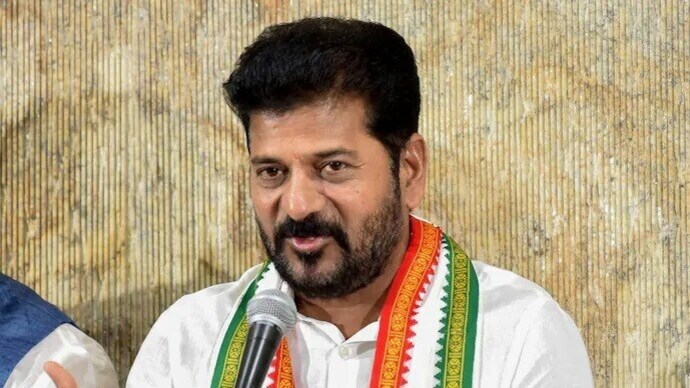
In a major push for social justice, the Telangana government, led by Chief Minister Revanth Reddy, is gearing up for a high-stakes mission to New Delhi to secure Presidential assent and central government approval for two key reservation bills. These bills, which propose a 42% reservation for Backward Classes (BCs) in education, employment, and local governance, mark a bold attempt to redefine the state’s commitment to its historically marginalised communities. The state’s cabinet has already cleared an ordinance to breach the 50% reservation cap, and a delegation of senior leaders is set to camp in the capital from August 5 to 7 to lobby for support. With resistance building from political quarters, especially the BJP, Telangana’s move could set a precedent with national implications.
A Political and Constitutional Push
The Telangana cabinet recently gave its nod to an ordinance that removes the 50% cap on reservations, a move that is currently awaiting the Governor’s assent. This legislative step is essential to implement the newly proposed quota, which is based on findings from the state’s comprehensive caste survey. The data suggests that BCs make up 56.3% of Telangana’s population, bolstering the state’s argument to expand their share in reservations.
To expedite the process and ensure the bills become law, Chief Minister Revanth Reddy will lead a high-powered delegation to Delhi, comprising cabinet ministers, MLAs, MLCs, and senior Congress leaders. Their agenda includes meetings with President Droupadi Murmu to seek direct consent, as well as outreach to MPs and floor leaders of major national parties, including the BJP and BRS, in a bid to create national consensus around the initiative.
The delegation’s visit coincides with a crucial period in Telangana politics. The High Court has issued directives to hold long-pending local body elections, and Finance Commission grants have been withheld due to the absence of elected representatives in these bodies. The passage of the reservation bills is seen as a necessary step to revive the state’s local governance mechanisms while ensuring broader social inclusion.
Contentious Debate Over BC Quota Composition
While the Congress-led Telangana government has framed the reservation expansion as a fulfilment of its electoral promises and a transformative step towards social equity, opposition voices have raised sharp concerns. The BJP, particularly Union Minister of State for Home and Karimnagar MP Bandi Sanjay, has strongly opposed the inclusion of certain Muslim communities under the BC-E category within the 42% quota.
Sanjay alleges that the Congress government is disguising religion-based quotas as caste-based affirmative action. “Congress is giving a false impression to BCs,” he said, arguing that while BCs already have 27% reservation, the new structure only provides an additional 5% for them, with the rest allegedly being directed towards Muslim sub-groups. He warned that such a model, if allowed, could become a template for other states, calling it a political move with long-term national ramifications.
In response, the state government has reiterated that the quota structure is firmly rooted in empirical socio-economic data, not religious identity. BC Welfare Minister Ponnam Prabhakar emphasised that the push for reservations is a non-political, data-driven initiative focused on dignity and opportunity for over 90% of Telangana’s population, including SCs, STs, BCs, and minorities. He urged the BJP not to obstruct what he described as a landmark legislative effort for backward communities.
The broader constitutional question of breaching the 50% reservation ceiling, set by the Supreme Court, is also at the heart of the debate. However, Telangana argues that its model follows the precedent of states like Tamil Nadu, which have maintained higher quotas under special constitutional provisions.
Centre-Stage for a National Conversation
Telangana’s proactive approach in gathering political momentum reflects its urgency to deliver on promises of inclusive governance and social empowerment. The three-day camping in Delhi is being seen not just as a legislative mission but also as a symbolic assertion of state rights in shaping affirmative action policies. It represents an attempt to put BC welfare at the centre of the national political conversation.
The Congress leadership in Telangana is also using this moment to showcase its seriousness about governance, transparency, and evidence-based policymaking. Officials point to the detailed caste survey as the foundation for the bills, which they argue represent the first genuine attempt since Independence to assess and address the socio-economic realities of BCs.
However, as the political narrative intensifies, the path ahead remains complex. The ordinance to increase the reservation is yet to receive the Governor’s assent, and any delay could stall implementation. Moreover, the BJP’s firm opposition, particularly to the inclusion of Muslim communities, signals the likelihood of a larger constitutional and political showdown.
At the centre of this issue lies a fundamental question: should empirical data and changing social realities override judicially imposed caps on reservations? Telangana’s stance is that modern governance must reflect the actual demographics and needs of the population, rather than being bound by legacy legal constraints. Whether this approach gains traction at the national level depends largely on how effectively the state leadership navigates the central corridors of power in the coming days.
As the delegation prepares to land in Delhi, the spotlight is now firmly on whether the central government and the President will back Telangana’s bold attempt at reservation reform—or whether political resistance will stall what could be a landmark policy shift in the country’s affirmative action framework.