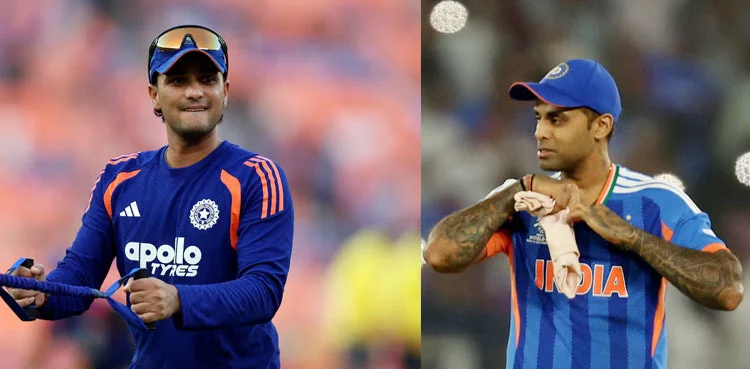
As India entered the decisive Super 8 phase of the T20 World Cup 2026, captain Suryakumar Yadav delivered a message that resonated far beyond routine pre-match commentary. His emphatic backing of opener Abhishek Sharma, despite the batter’s difficult run of form, became a defining narrative ahead of India’s clash against South Africa. The remarks were not merely defensive statements shielding a teammate from criticism; they reflected a deeper leadership philosophy rooted in trust, perspective, and psychological stability.
Cricket tournaments, particularly World Cups, magnify every fluctuation in form. A sequence of ducks, especially from a player ranked as the world’s number one T20I batter, naturally invites scrutiny. Yet Surya’s response signalled an attempt to shift the conversation from statistical anxiety to long-term confidence. His words underscored a critical aspect of elite sport often overshadowed by performance metrics: belief within the dressing room.
India’s Super 8 campaign began under conditions shaped by contrasting emotional currents. On one hand stood the pressure of expectations attached to a tournament favourite playing on home soil. On the other existed the lingering memory of an unexpectedly tight contest against the United States, a match that Surya himself described as a “wake-up call.” Together, these factors framed India’s evolving mindset.
Surya’s press conference thus became a lens through which broader themes emerged. Leadership under pressure, the psychology of form slumps, adaptability to unpredictable pitches, and the growing competitiveness of associate nations collectively defined the discourse. His comments offered insight not only into team strategy but also into the subtle emotional calibrations required in high-stakes tournaments.
The captain’s statement — “I am worried about the people who are worrying about Abhishek Sharma” — carried layered meaning. It was part reassurance, part defiance, and part psychological repositioning. Rather than conceding to narratives of concern, Surya reframed Sharma’s struggles as temporary, while hinting at future impact. Such rhetoric illustrates how modern captains increasingly operate as custodians of team morale as much as tactical decision-makers.
Leadership, confidence, and the psychology behind backing a struggling star
Backing a player enduring a visible slump is among the most delicate challenges for any captain. The public nature of international cricket ensures that dips in performance are dissected relentlessly. When Abhishek Sharma recorded a hat-trick of ducks, statistical discomfort became unavoidable. Yet Surya’s unwavering support revealed a leadership instinct shaped by long-term evaluation rather than short-term reaction.
Form slumps occupy a paradoxical space in cricket. They are both inevitable and deeply unsettling. Even the most accomplished batters experience phases where timing, decision-making, and confidence appear misaligned. The difference between crisis and continuity often lies in how teams interpret these phases.
Surya’s remarks highlighted a crucial psychological truth. External noise rarely mirrors internal team assessment. While spectators and analysts often equate recent scores with capability, dressing rooms tend to consider preparation quality, technical soundness, and historical performance patterns. Surya’s defence suggested that Sharma’s value within the squad extends beyond current numbers.
Leadership communication plays a pivotal role in such moments. Public backing stabilises internal confidence, signalling to the player and squad alike that trust remains intact. It mitigates the corrosive effects of doubt that can spread subtly within teams during tournaments. Surya’s tone indicated assurance rather than anxiety, a distinction critical in high-pressure environments.
His reference to Sharma’s achievements from the previous year reinforced this perspective. By invoking past excellence, Surya anchored Sharma’s identity in proven capability rather than recent setbacks. Elite athletes often benefit from reminders of competence during performance dips. Memory becomes a tool for resilience.
The captain’s phrasing also subtly shifted pressure outward. By expressing concern for future opponents rather than Sharma himself, Surya reframed the narrative. Such rhetorical manoeuvres are not mere theatrics; they influence psychological framing. Confidence, even when symbolic, can alter internal energy.
This approach aligns with evolving leadership trends in cricket. Modern captains increasingly function as psychological architects, managing emotional equilibrium within squads. Technical adjustments matter, but mental stability frequently determines tournament outcomes.
Sharma’s slump also reflects broader realities of T20 cricket. The format’s compressed nature amplifies variance. A handful of deliveries can define innings, creating exaggerated perceptions of consistency and failure. Statistical volatility is inherent, making sustained confidence indispensable.
Surya’s defence thus represented more than loyalty. It illustrated strategic patience, acknowledging that tournament trajectories rarely hinge on isolated performances. Trusting high-impact players through temporary downturns often yields dividends.
Wake-up call, adaptability, and India’s recalibrated tournament mindset
Beyond individual narratives, Surya’s press conference shed light on India’s collective evolution during the tournament. His description of the match against the United States as a “good wake-up call” reflected a striking acknowledgement of vulnerability — a quality rarely articulated openly by captains of favoured teams.
India’s precarious position at 77 for 6 during that game challenged assumptions of dominance. The recovery, driven by Surya’s own innings, demonstrated resilience but also exposed structural fragilities. Associate nations, once perceived primarily as developmental participants, increasingly disrupt established hierarchies.
Surya’s comments signalled recognition of this shifting landscape. The notion of a wake-up call implies recalibration rather than embarrassment. It suggests learning derived from adversity, an essential component of tournament progression.
Playing a World Cup on home soil introduces unique pressures. Familiar conditions often coexist with heightened expectation. Surya’s candid admission that pressure is unavoidable reflected leadership grounded in realism. Denial rarely neutralises psychological burden.
His emphasis on staying present and grounded highlighted coping strategies central to elite performance. Tournaments generate emotional oscillations. Managing momentum, avoiding overthinking, and sustaining clarity demand disciplined mental frameworks.
Pitch unpredictability emerged as another defining theme. Pre-tournament assumptions about batting-friendly surfaces frequently collided with reality. Ahmedabad’s tacky pitches exemplified how conditions resist linear prediction. Adaptability thus becomes strategic currency.
Surya’s assurance that India is ready to adapt to any wickets conveyed tactical flexibility. Teams navigating diverse surfaces must recalibrate shot selection, pacing, and risk assessment continuously. Static strategies rarely survive dynamic conditions.
India’s struggles against off-spin further illustrated the tournament’s complexities. Surya’s acknowledgement of ups and downs reflected pragmatic assessment rather than defensive rhetoric. Variability against specific bowling types is common, demanding technical and situational adjustments.
The captain’s perspective suggested confidence rooted in experience. Familiarity with diverse bowling challenges equips batters to adapt. Tournament cricket rewards iterative learning rather than rigid perfection.
India’s upcoming clash against South Africa added narrative intensity. Both teams entered unbeaten, carrying psychological momentum. Encounters between evenly matched sides often hinge on composure, adaptability, and execution under pressure.
Surya’s press conference therefore framed India’s Super 8 campaign within a broader psychological and tactical context. Leadership clarity, player backing, and collective recalibration defined the messaging.
His remarks reflected an evolving cricket reality where margins narrow, associate nations compete fiercely, and adaptability supersedes assumption. The discourse extended beyond match preview, illuminating how elite teams navigate uncertainty.