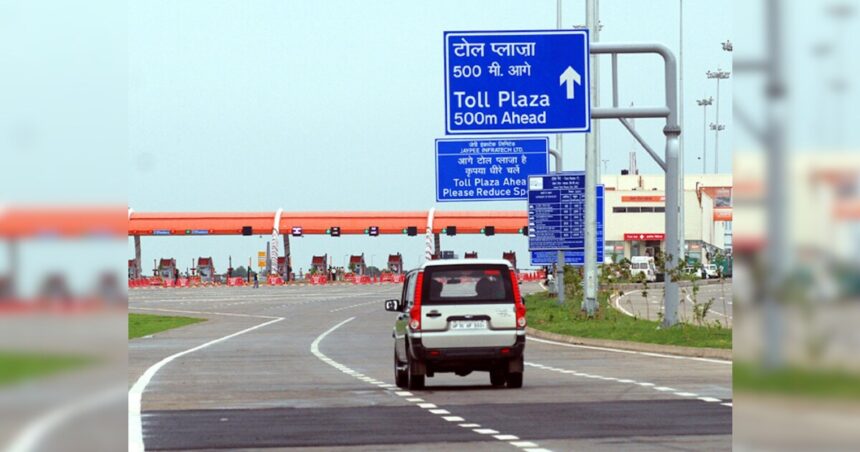
India’s highway infrastructure is poised for another transformative shift as the National Highways Authority of India considers eliminating cash payments across toll plazas from April 1, 2026. The proposal to enable toll transactions exclusively through FASTag or UPI represents more than a technological upgrade; it signals a structural evolution in how mobility, payments, and governance intersect within the country’s expanding digital economy. While digital toll collection has been gradually integrated over recent years, the move toward a fully cashless tolling ecosystem underscores the government’s broader ambition to enhance operational efficiency, reduce congestion, and strengthen transparency across the national highway network.
Toll plazas have long functioned as critical nodes within India’s road infrastructure, yet they have also been persistent points of friction. Vehicle queues, payment delays, disputes over change, and operational inefficiencies have shaped commuter experiences for decades. The NHAI digital toll payment initiative seeks to address these systemic challenges by redefining how transactions occur at these high-traffic checkpoints. By prioritizing digital payments, authorities aim to streamline vehicle movement, reduce manual intervention, and minimize transactional bottlenecks that frequently disrupt traffic flow.
This potential transition reflects India’s larger digitalization trajectory. Over the past decade, the country has witnessed rapid adoption of electronic payment systems, with platforms such as UPI reshaping consumer behavior and transactional ecosystems. The integration of digital payment frameworks into highway toll operations illustrates how financial technology increasingly influences infrastructure management. What once appeared as a convenience feature is now emerging as an operational necessity.
Traffic congestion, operational inefficiencies, and the logic behind cashless tolling
One of the central arguments supporting the NHAI digital toll payment proposal revolves around traffic efficiency. Toll plazas, particularly during peak hours, often become congestion hotspots. Cash transactions, despite their familiarity, inherently introduce delays. Each manual payment requires vehicle stoppage, currency exchange, verification, and change management. Even minor transactional delays can compound into significant traffic backlogs when multiplied across thousands of vehicles.
The problem is not merely temporal but structural. Highways are designed for continuous movement, yet toll plazas impose unavoidable interruptions. When these interruptions involve manual payment processes, the cumulative effect can be substantial. Long queues increase fuel consumption, elevate emissions, and contribute to commuter frustration. By enforcing digital payments, authorities aim to compress transaction times, enabling vehicles to pass through toll gates with minimal stoppage.
Cash payments also generate operational complexities. Disputes over incorrect change, counterfeit currency detection, and reconciliation challenges add layers of administrative burden. Digital transactions, in contrast, produce automated records, enabling precise tracking, auditing, and revenue management. The shift toward mandatory FASTag and UPI usage thus aligns with broader objectives of reducing administrative friction while enhancing data accuracy.
The emphasis on transparency further reinforces the rationale. Digital tolling systems generate real-time transactional data, facilitating monitoring, analytics, and predictive planning. Authorities can better assess traffic patterns, peak load behaviors, and revenue streams. Such insights are increasingly valuable in infrastructure governance, where policy decisions rely on accurate, scalable datasets.
Moreover, fully digital tolling systems may help address concerns about revenue leakage. Manual transactions, by their nature, carry risks of human error and mismanagement. Automated systems reduce discretionary intervention, strengthening institutional accountability. The digitalization of toll payments therefore intersects with governance priorities extending beyond commuter convenience.
Yet, transitioning to a cashless ecosystem also introduces new considerations. Digital dependency requires robust technological infrastructure, reliable connectivity, and system resilience. Ensuring uninterrupted service across more than 1,150 toll plazas demands sustained investment in network stability, cybersecurity safeguards, and grievance redressal mechanisms. Digital efficiency, while promising, is contingent upon systemic reliability.
FASTag saturation, UPI integration, and the expanding digital mobility framework
A critical enabling factor behind the NHAI digital toll payment initiative is the near-universal adoption of FASTag. With over 98% of vehicles reportedly equipped with FASTag, India has already established a foundational digital tolling framework. FASTag’s widespread integration has gradually normalized electronic toll collection, transforming payment behavior across highways.
FASTag functions as more than a payment tool; it represents an infrastructural interface between vehicles and digital systems. The RFID-based mechanism enables automatic toll deduction, minimizing transaction time and reducing physical interaction. Its adoption reflects successful policy implementation supported by regulatory mandates and enforcement measures.
Existing toll rules further reinforce compliance. Vehicles entering FASTag lanes without active tags face double toll charges when paying in cash, creating financial incentives for digital adoption. Similarly, differential pricing for UPI payments illustrates how payment modalities are embedded within operational frameworks. These regulatory mechanisms reflect how economic signals influence user behavior.
The inclusion of UPI within toll payment options underscores the evolving digital payments ecosystem. UPI’s ubiquity across retail, services, and peer-to-peer transactions positions it as a natural complement to FASTag-based tolling. By enabling UPI payments, authorities accommodate a payment mode deeply integrated into consumer habits.
This convergence of FASTag and UPI reflects a broader digital mobility vision. Transportation systems increasingly rely on integrated digital frameworks encompassing payments, traffic management, and user analytics. Digital tolling systems contribute to this ecosystem by generating mobility-linked datasets capable of informing policy, infrastructure planning, and congestion management strategies.
Fully digital toll plazas may also facilitate future technological integrations. Emerging concepts such as dynamic toll pricing, congestion-based tariffs, and AI-driven traffic optimization depend upon accurate, real-time data flows. Digital payment systems inherently support these capabilities, reinforcing the strategic value of cashless tolling.
However, digital inclusion remains a relevant concern. Despite high FASTag penetration, segments of the population may still encounter barriers related to digital literacy, banking access, or technological familiarity. Policymakers must balance efficiency gains with accessibility considerations, ensuring that transitions do not inadvertently marginalize certain user groups.
The NHAI digital toll payment initiative therefore reflects not only technological modernization but also behavioral transformation. As commuters increasingly adapt to electronic payment ecosystems, infrastructure systems evolve to mirror these shifts. Toll plazas, once symbols of manual transaction and delay, are gradually becoming components of India’s digital governance architecture.