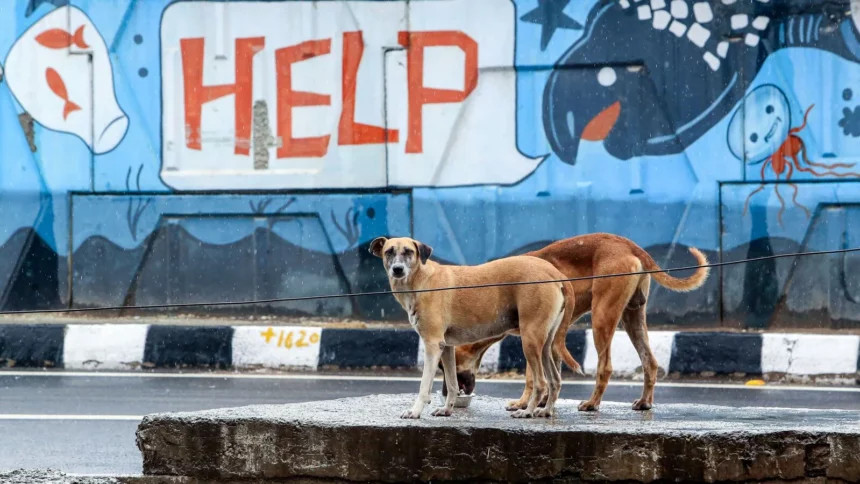
The Supreme Court of India is set to deliver a verdict today on a highly contentious case concerning the removal and relocation of stray dogs from the Delhi-NCR region, a matter that has sparked widespread debate, protests, and legal scrutiny across the capital and beyond. The case, which began as a suo motu action following reports of stray dog bites and rabies incidents, particularly affecting children, has escalated into a larger discussion on animal rights, public safety, governance, and judicial oversight. The proceedings have highlighted tensions between governmental enforcement, citizen concerns, and animal welfare activists, and the upcoming decision is expected to have lasting implications for urban animal management practices. The Supreme Court’s involvement, through multiple benches and detailed deliberations, reflects the seriousness with which the judiciary has approached the balance between humane treatment of animals and public safety obligations.
Background of the Case: Initial Orders and Public Outrage
The matter first gained attention when a media report highlighted the rise in stray dog bites across Delhi-NCR, particularly involving children, and the associated risk of rabies. This prompted the Supreme Court to take suo motu cognizance of the issue on July 28, initiating proceedings to assess the adequacy of existing policies regarding stray dogs in the capital region. On August 11, a two-judge bench of the Supreme Court passed a set of directives requiring the authorities to start capturing stray dogs “at the earliest” and relocating them to designated shelters. The order emphasized immediate action, citing concerns over public health and the failure of municipal authorities to implement existing Animal Birth Control Rules, which provide guidelines for sterilization, vaccination, and humane management of stray populations.
The blanket nature of the order, however, triggered widespread protests among animal rights activists, local residents, and political groups. Critics described the directives as unscientific, cruel, and likely to exacerbate the problem rather than solve it. Demonstrations took place at major locations, including India Gate, where activists confronted law enforcement officials tasked with executing the removal orders. Social media campaigns amplified the discontent, and several petitions were filed challenging the approach, demanding alternatives such as vaccination drives, sterilization programs, and community engagement in humane dog population management. Animal welfare organizations argued that capturing and relocating dogs without addressing root causes would be ineffective and could lead to increased stress and mortality among the animals, ultimately failing to reduce incidents of bites or rabies exposure.
In addition to public protests, the enforcement of the order led to tense encounters between officials and residents, with some individuals attempting to free captured dogs. FIRs were filed in multiple cases, further escalating the situation and bringing national attention to the legal and ethical dimensions of the case. The initial Supreme Court directives also caused friction within political circles, particularly as the Delhi government indicated its willingness to comply, while some opposition groups and activists criticized the move as harsh and insensitive.
The Special Bench and Legal Deliberations: Addressing Governance Failures
In response to mounting criticism and multiple petitions, a special three-judge bench comprising Justices Vikram Nath, Sandeep Mehta, and N V Anjaria was constituted to hear the matter. This bench reviewed the initial orders, considered the objections raised by various stakeholders, and examined the role of municipal and state authorities in managing the stray dog population. On August 14, the bench reserved its verdict after extensive hearings, acknowledging that the problem in Delhi-NCR had been exacerbated by the inaction of local authorities, who had largely failed to implement sterilization, vaccination, and other measures under the Animal Birth Control Rules.
During the hearings, the bench considered evidence on the scale of stray dog populations, patterns of human-animal interactions, and public health data related to rabies incidents. Experts, veterinarians, and activists were called upon to provide inputs on best practices for urban animal management. The court also noted complaints regarding the manner of execution of the August 11 order, which some argued had caused undue stress and risk to both the animals and personnel involved. Legal counsel for the Delhi government highlighted the challenges of balancing public safety with humane treatment, emphasizing that authorities were constrained by both logistical issues and community resistance. The bench indicated a need to consider both immediate measures for public safety and long-term strategies that are sustainable, ethical, and aligned with established animal welfare norms.
The legal discussions extended beyond the technicalities of capturing and relocating stray dogs to broader questions of governance and accountability. The court scrutinized municipal systems for animal management, compliance with national guidelines, and the extent to which existing policies had been effectively implemented. The special bench recognized that the failure to adhere to the ABC Rules had contributed significantly to the current crisis, leading to the Supreme Court’s intervention. Additionally, the court considered arguments about public sentiment, highlighting clashes between residents, law enforcement, and activists as a reflection of community expectations and civic responsibility.
Controversy, Public Reactions, and Political Dimensions
The Supreme Court case quickly transcended the legal sphere, becoming a flashpoint for social, political, and community discussions. Several incidents during the protest period underscored the intensity of public reaction. Notably, an alleged physical attack on Delhi Chief Minister Rekha Gupta by an individual angered over the court’s initial orders highlighted the extreme sentiments stirred by the case. The incident brought additional attention to the risks and challenges associated with enforcing the directives, as well as the political sensitivities surrounding stray dog management.
Animal rights organizations and activists consistently criticized the approach outlined in the August 11 order, arguing that humane solutions such as mass sterilization, vaccination campaigns, and community engagement were more effective than capturing and relocating animals. They highlighted global best practices where urban stray populations are controlled through integrated approaches that minimize harm while protecting public health. Proponents of the initial order, however, stressed immediate safety concerns, citing instances of dog bites and potential rabies transmission as justifications for urgent intervention. The tension between immediate public safety measures and long-term humane strategies formed a central theme of the debate, shaping both public discourse and legal arguments.
The political context of the case added another layer of complexity. Authorities faced pressure to comply with the Supreme Court’s directives while navigating public backlash and activist opposition. The issue became emblematic of broader discussions about urban governance, the enforcement of public health measures, and the responsibilities of state and municipal agencies in addressing emergent challenges. Various stakeholders, including opposition political groups, animal welfare organizations, and local residents, expressed divergent perspectives, highlighting the difficulty of achieving consensus on contentious urban policy matters.
Implications for Urban Animal Management and Public Policy
The Supreme Court’s verdict, anticipated today, will have significant implications for urban animal management policies in Delhi-NCR and potentially across India. The case underscores the challenges associated with managing stray animal populations in densely populated urban areas, where public safety, community sentiment, and animal welfare concerns intersect. It also reflects broader questions regarding governance, enforcement of national guidelines, and the responsibilities of municipal authorities to prevent crises arising from neglect or inadequate planning.
Experts suggest that sustainable management of stray dog populations requires a combination of approaches, including systematic sterilization, vaccination, creation of dog shelters, community engagement programs, and public education campaigns. Legal directives that ignore these elements may be counterproductive, as they fail to address underlying issues while generating social conflict. The Supreme Court’s consideration of these factors signals recognition of the need for holistic policy solutions, balancing ethical considerations with pragmatic public health measures.
Furthermore, the case illustrates the growing role of judicial intervention in environmental and animal welfare matters, highlighting the judiciary’s capacity to influence public policy in areas where governance gaps exist. It demonstrates how legal mechanisms can be used to enforce compliance with established rules, hold authorities accountable, and shape discourse around complex societal challenges. The outcome of this case is likely to set a precedent for future urban animal management decisions, guiding municipalities and state governments in implementing humane, effective, and legally compliant strategies.
Community Engagement, Awareness, and Future Directions
Beyond immediate legal and governance concerns, the Supreme Court case has prompted broader public engagement on issues of stray dog management, animal welfare, and urban safety. Civil society organizations, activists, and local residents have increasingly participated in discussions regarding sustainable solutions, sharing expertise, and advocating for policies that consider both human and animal needs. Educational campaigns, awareness drives, and community-level initiatives have been emphasized as critical tools for ensuring responsible pet ownership, vaccination coverage, and conflict mitigation between humans and animals in urban areas.
The controversy also highlights the importance of integrating scientific research and field data into policy formulation. Data on stray dog population dynamics, bite incidents, vaccination rates, and shelter capacities can inform targeted interventions, improving outcomes for both public health and animal welfare. Policymakers are encouraged to adopt evidence-based strategies that prioritize humane treatment, minimize risk, and ensure long-term sustainability, while judicial oversight provides an additional mechanism to enforce compliance and accountability.
The Supreme Court’s forthcoming verdict, therefore, represents more than a resolution of a single dispute; it symbolizes an opportunity to establish a framework for comprehensive, humane, and scientifically informed management of urban stray animal populations. Its implications extend to public health, municipal governance, animal welfare, and civic engagement, offering lessons for other metropolitan regions facing similar challenges. The decision will likely influence the trajectory of policy and practice in the management of stray animals, shaping the interaction between law, ethics, and practical urban administration for years to come.