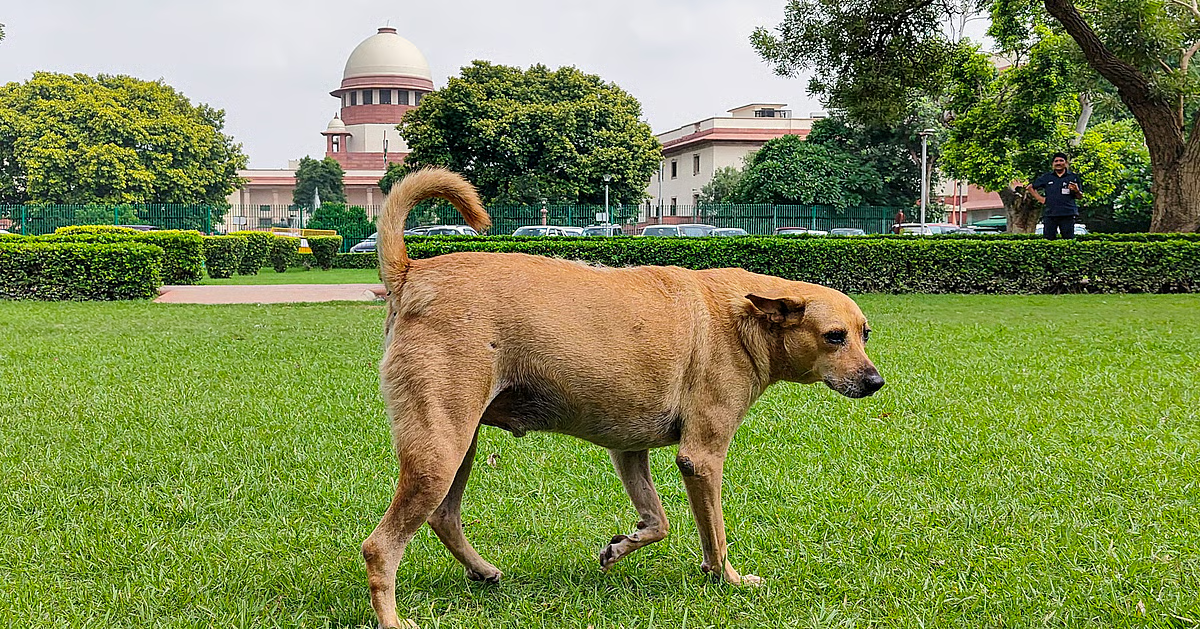
The Supreme Court of India has reserved its judgment in the suo motu case addressing the pressing issue of stray dogs in public spaces across the country. The decision comes after a detailed and exhaustive hearing in which the Bench meticulously considered submissions from multiple stakeholders, including state governments, the central government, the National Highways Authority of India, the Animal Welfare Board of India, animal rights activists, and citizens affected by dog bite incidents. The case has highlighted the complex challenges of managing stray dog populations, ensuring public safety, and implementing the Animal Birth Control (ABC) Rules effectively across India, with the apex court emphasizing the need for balanced, humane, and practical solutions that protect both human life and animal welfare.
Supreme Court Scrutinizes Sterilization Data and Stakeholder Submissions
During the hearing, the Supreme Court Bench comprising Justices Vikram Nath, Sandeep Mehta, and N.V. Anjaria carefully reviewed the status of stray dog sterilization centres across the country. The Animal Welfare Board of India (AWBI) raised significant concerns regarding discrepancies in the data submitted by various state governments. While AWBI recognised only 76 sterilisation centres nationwide, state reports suggested the existence of as many as 883 centres, many of which had not received official recognition. This disparity highlighted gaps in data accuracy, accountability, and the utilisation of earmarked funds for animal welfare initiatives.
The Court granted liberty to all stakeholders to submit written representations within a week, signalling the importance of comprehensive and verified data in guiding judicial oversight. The apex court directed AWBI to expedite processing of pending applications for recognition of sterilisation centres within a defined timeframe, reflecting the need for a streamlined regulatory mechanism. The submissions also addressed the challenges in implementing the ABC Rules, particularly concerning proper vaccination, sterilisation, and monitoring of dog populations in urban and rural areas.
Throughout the hearings, representatives of state governments explained the logistical difficulties they face in identifying, sterilising, and managing stray dogs, particularly in densely populated urban environments. The discussions also highlighted the importance of coordinating efforts between municipal agencies, state authorities, and animal welfare organisations to ensure systematic and humane approaches to population control. Concerns regarding rabies prevention, public safety, and community engagement were central to the deliberations, reflecting the court’s balanced consideration of both human and animal interests.
Balancing Public Safety and Humane Treatment of Stray Dogs
The broader context of the case stems from longstanding public safety concerns, particularly in urban areas where stray dog populations have led to incidents of dog bites and transmission of rabies. In August 2025, a previous Bench of the Supreme Court, led by Justices J.B. Pardiwala and R. Mahadevan, had directed municipal bodies across Delhi-NCR to immediately capture stray dogs and relocate them to designated shelters. The ruling described the situation as “grim,” emphasizing the need to protect vulnerable populations, including children, women, and the elderly, from potential harm. Civic agencies in Delhi, Noida, Gurugram, and Ghaziabad were ordered to make streets free of stray dogs, with strict legal consequences for any organisation or group obstructing the implementation.
The earlier directive, however, generated widespread debate and criticism from animal rights groups and the public, raising questions about the ethics of mass relocation and the sustainability of shelter-based management. In response, a three-judge Bench later modified the instructions, shifting the emphasis toward humane treatment, vaccination, sterilisation, and controlled release in line with ABC Rules. The current suo motu proceedings have continued this approach, exploring ways to integrate public safety with animal welfare standards.
Experts and activists presented evidence and suggestions for improving the efficacy of stray dog management. Discussions included establishing standard operating procedures for capturing, vaccinating, and sterilising stray dogs, ensuring proper record-keeping, and creating awareness campaigns to educate the public on responsible interactions with animals. The role of community participation, NGO support, and municipal accountability was repeatedly emphasised, reflecting the multi-faceted nature of this nationwide issue.
The Supreme Court’s ongoing hearings have also highlighted the urgent need for robust monitoring mechanisms to ensure compliance with sterilisation and vaccination targets. Several states were called upon to clarify discrepancies in their reports, and questions were raised about the effectiveness of existing shelters, the condition of animals, and the allocation of funds to maintain operations. This scrutiny underscores the Court’s commitment to promoting transparent and accountable governance while upholding ethical standards in animal care.
As the deliberations progressed, the Court also examined the broader implications of stray dog populations on public infrastructure, including roads and highways. Agencies such as the National Highways Authority of India provided input regarding accidents involving stray animals and the associated risk to commuters. These discussions reinforced the need for coordinated national strategies, integrating animal welfare with public health, safety, and urban management policies.
Through the suo motu proceedings, the Supreme Court has emerged as a central forum for addressing both practical and ethical dimensions of stray dog management. The case has brought attention to the challenges faced by municipal bodies, animal welfare organisations, and communities alike, highlighting the delicate balance between safeguarding human life and ensuring humane treatment for animals. With stakeholders from across India participating, the hearings have underscored the need for comprehensive national policies, standardised implementation of ABC Rules, and continuous monitoring to create sustainable solutions.
The Court’s decision is now eagerly awaited, as it is expected to set a precedent for the regulation and management of stray dogs across India. The reserved verdict will likely outline obligations for states, municipalities, and animal welfare organisations, clarifying responsibilities regarding sterilisation, vaccination, shelter management, and public safety measures. By addressing data discrepancies, governance gaps, and operational challenges, the judgment aims to provide a holistic framework to resolve ongoing disputes and enhance collaboration among all parties involved.
The hearings have also served as a reminder of the broader societal responsibility in addressing animal welfare. Citizens, NGOs, and state agencies were called upon to work together to maintain humane treatment of stray animals, reduce public health risks, and promote coexistence. The case continues to generate nationwide attention, reflecting the Supreme Court’s pivotal role in shaping policies that balance ethical, legal, and practical considerations in urban and rural environments.