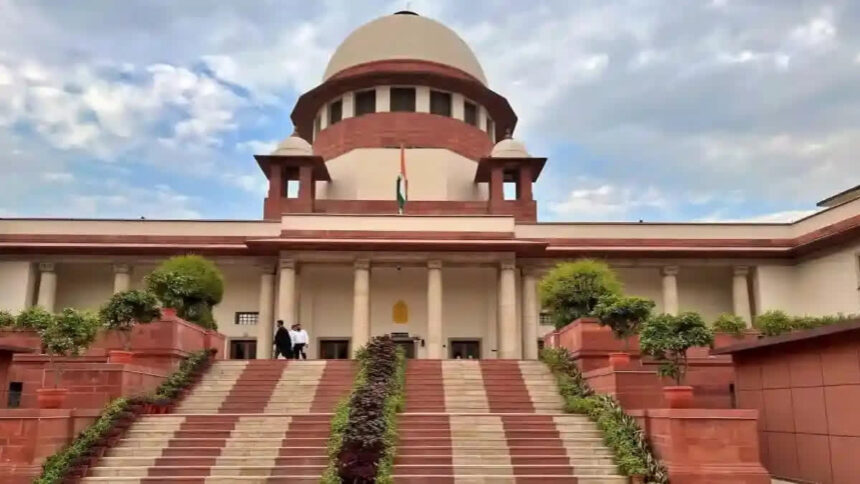
The Supreme Court has flagged three critical concerns regarding the recently enacted Waqf Act, which has sparked legal challenges from a wide range of petitioners, including Members of Parliament, Muslim scholars, and political parties. The bench, headed by Chief Justice of India (CJI) Sanjiv Khanna, is considering passing an interim order to address these concerns, though no formal order was issued during the hearing. The petitioners argue that the law violates the Constitution’s provisions for religious freedoms, particularly Articles 25 and 26.
Status of ‘Waqf by User’ Properties
One of the key concerns raised by the court is the status of properties declared as ‘waqf by user’ by previous court rulings. The court emphasized that if these properties were denotified as waqf, it could lead to significant legal and social repercussions. The court made it clear that properties already recognized as waqf, either by court rulings or by user, should not be reclassified or treated as non-waqf properties.
Composition of Waqf Council and Boards
Another issue raised was the involvement of non-Muslim members in the Waqf Council and Waqf Boards. The court questioned whether such a composition was in line with the religious nature of the Waqf institutions, suggesting that, while ex-officio members can be from any faith, the primary members should be Muslims. The court’s remarks pointed to the potential need for a more representative composition of these bodies.
The third concern highlighted by the Supreme Court relates to the powers of collectors in deciding disputes over Waqf properties. The court took issue with a provision in the law that would prevent properties from being treated as waqf during the collector’s investigation, even before a final decision was made. The court expressed concern that this would lead to unfair treatment of properties, and proposed that the provision be stayed. The bench emphasized that the collector’s inquiries could continue but that properties should not be prematurely disqualified as waqf during these proceedings.
The hearing, which saw no orders passed, has been adjourned with the Supreme Court considering passing an interim order on the matter. The case highlights the ongoing legal and religious complexities surrounding the implementation of the Waqf Act and its broader implications on property rights and religious institutions in India.