The Supreme Court has flagged possible procedural infirmities in the parliamentary inquiry initiated against Justice Yashwant Varma, observing that it will first determine whether the flaws are serious enough to invalidate the entire process before taking any final decision.
Supreme Court scrutiny of inquiry process and legal framework
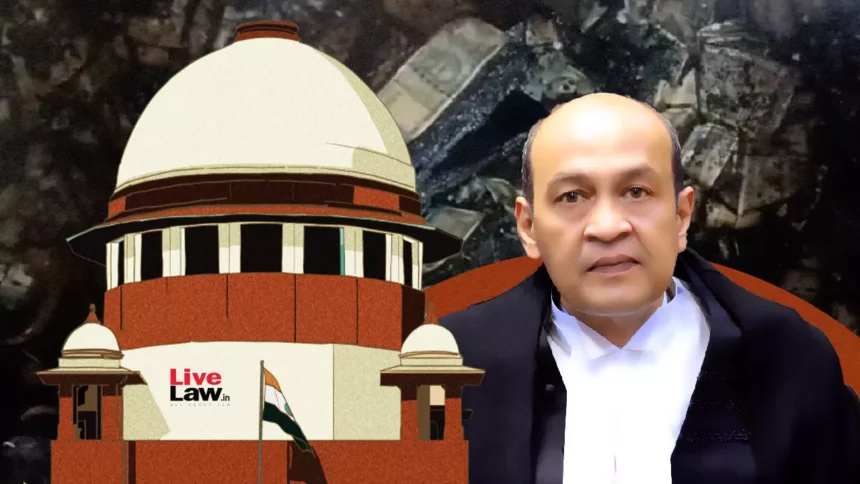
The issue came up before the Supreme Court of India while it was hearing a petition filed by Justice Yashwant Varma, who has challenged the validity of the inquiry committee constituted by the Speaker of the Lok Sabha. The bench, comprising Justice Dipankar Datta and Justice Satish Chandra Sharma, observed that there appears to be “some infirmity” in the constitution of the parliamentary panel but made it clear that not every procedural defect automatically vitiates proceedings.
The court’s remarks assume significance as they reflect a careful balancing act between procedural propriety and the need to allow statutory mechanisms to function. The bench indicated that it would closely examine whether the alleged infirmity goes to the root of the inquiry or whether it is a curable defect that does not warrant termination of the entire process. This approach suggests that the court is not inclined to mechanically strike down proceedings without first assessing their legal and constitutional implications.
Justice Varma’s plea revolves around the manner in which the inquiry committee was constituted. According to the petition, an impeachment motion against him was moved in both Houses of Parliament, but while the Lok Sabha admitted the motion, it was not approved by the Rajya Sabha. Despite this, the Lok Sabha Speaker went ahead and constituted an inquiry committee, a move that the petitioner claims is procedurally flawed and contrary to parliamentary practice.
During the hearing, the Supreme Court noted that under the Judges (Inquiry) Act, the Speaker of the Lok Sabha does possess the authority to constitute a committee to inquire into allegations of corruption against a judge. The bench observed that this power is not automatically extinguished merely because a similar motion did not find approval in the Rajya Sabha. However, the court acknowledged that the sequence of events and the interplay between the two Houses raise important legal questions that require careful examination.
The judges emphasised that the court’s task at this stage is to assess the nature and gravity of the alleged infirmity. They underlined that procedural lapses must be evaluated in context, and only those defects that strike at the very foundation of the process would justify nullifying the inquiry altogether. This observation indicates that the Supreme Court is keen to avoid setting a precedent that allows technicalities to derail accountability mechanisms, while still ensuring strict adherence to constitutional and statutory requirements.
The matter has been listed for further hearing, and the court is expected to delve deeper into the legislative intent behind the Judges (Inquiry) Act, the role of Parliament in judicial accountability, and the limits of judicial intervention in parliamentary processes. The outcome of this examination could have far-reaching implications for how allegations against judges are dealt with in the future.
Background of allegations, parliamentary action, and earlier court observations
The case against Justice Varma stems from an incident reported on March 14, 2025, when bags containing bundles of burnt ₹500 currency notes were allegedly found in a storeroom at his official residence in New Delhi following a fire. The discovery triggered widespread attention and led to questions about the source and nature of the cash. Subsequently, Justice Varma was transferred to the Allahabad High Court, a move that itself became part of the broader public discourse surrounding the case.
Following the incident, steps were initiated within Parliament to address the allegations. An impeachment motion was introduced, reflecting the seriousness with which the matter was viewed. However, the motion did not secure approval in the Rajya Sabha, even as parallel proceedings continued in the Lok Sabha. It was this divergence that ultimately led to the present legal challenge, with Justice Varma contending that the Lok Sabha could not unilaterally proceed with an inquiry after the Rajya Sabha had declined to approve the motion.
The Supreme Court’s current observations build on earlier proceedings in the same matter. On December 16, 2025, the apex court had issued a notice to Om Birla, seeking a response from the Speaker’s office as well as from the secretaries of both Houses of Parliament. At that stage, the bench included Justice Dipankar Datta and Justice A.J. Masih, and the court had expressed concern over how the inquiry committee came to be constituted despite the Rajya Sabha’s decision.
Justice Datta had raised pointed questions during the earlier hearing, asking how, with so many Members of Parliament and legal experts present in Parliament, the procedural issue went unnoticed. He questioned how legal advisors and parliamentarians allowed a situation to arise where one House proceeded with an inquiry after the other had rejected the motion. These remarks underscored the court’s unease with the apparent lack of clarity and coordination in handling a matter of such constitutional sensitivity.
In the present hearing, the court revisited these concerns but adopted a more calibrated tone, indicating that it would not rush to invalidate the proceedings without first examining their legal sustainability. The bench’s emphasis on assessing the seriousness of the infirmity suggests that it is conscious of the broader consequences of its ruling, particularly in relation to judicial accountability and the separation of powers.
The case has also sparked debate within legal and political circles about the adequacy of existing mechanisms for dealing with allegations against members of the higher judiciary. While some argue that strict procedural safeguards are essential to protect judicial independence, others contend that excessive reliance on technical objections can undermine public confidence in accountability processes. The Supreme Court’s nuanced approach appears aimed at navigating this tension by ensuring that both principles are respected.
As the matter moves forward, the next hearing is expected to focus on detailed arguments regarding parliamentary procedure, constitutional interpretation, and the scope of judicial review over legislative actions. The court’s eventual ruling will likely clarify the extent to which procedural irregularities can affect parliamentary inquiries into judicial misconduct, setting an important precedent for future cases.