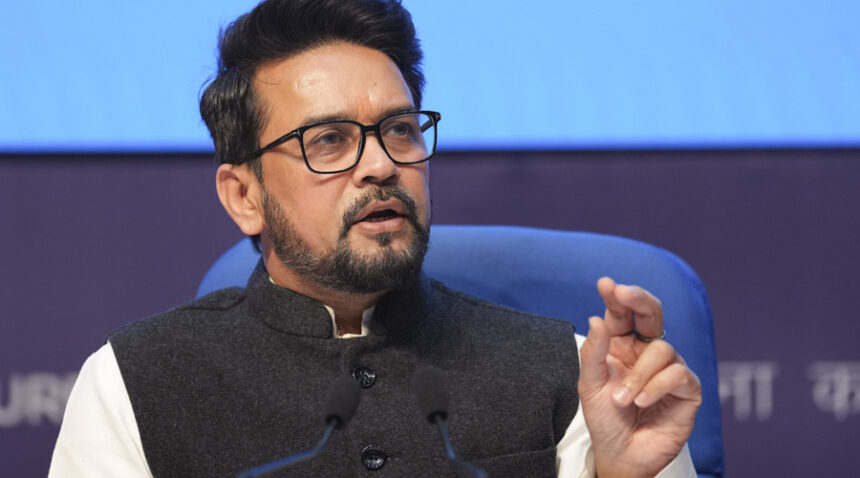
New Delhi: The Supreme Court of India on Thursday paved the way for former Board of Control for Cricket in India (BCCI) president Anurag Thakur to participate again in the affairs of the cricket body. The apex court modified its January 2017 order that had barred Thakur from associating with the functioning of the Board of Control for Cricket in India.
A Bench comprising Chief Justice of India Surya Kant and Justice Joymalya Bagchi held that Thakur is now free to participate in BCCI affairs in accordance with its rules and regulations.
In its January 2, 2017 order, the Supreme Court had directed Thakur—who was then the BCCI president—to “cease and desist” from being associated with the board’s functioning. The direction followed contempt and perjury proceedings initiated against him in connection with an affidavit related to BCCI’s autonomy.
Doctrine of proportionality applied
The court modified its earlier order after considering an application filed by Thakur seeking relief from what he described as a continuing and disproportionate restriction. Applying the doctrine of proportionality, the Bench observed that the 2017 direction was never intended to operate as a lifelong ban.
“We find it a fit case to apply the doctrine of proportionality, so as to hold that neither this court intended to impose a lifelong ban nor, in the facts and circumstances of this case, such a severe embargo is otherwise warranted,” the Bench said. It also noted that Thakur had remained disassociated from BCCI’s working for more than nine years.
The court further recorded that Thakur had earlier tendered an unconditional apology, which had been accepted by the apex court.
Background of the case
The proceedings against Thakur stemmed from allegations that he had filed a false affidavit regarding correspondence with then International Cricket Council (ICC) chairman Shashank Manohar on issues related to BCCI’s autonomy. In January 2017, the Supreme Court had initiated contempt and perjury proceedings against him, observing that his conduct appeared to be an attempt to evade compliance with the court’s orders.
However, on July 14, 2017, the Supreme Court dropped the contempt and perjury proceedings after Thakur tendered an unconditional and unequivocal apology in person.
During Thursday’s hearing, senior counsel appearing for Thakur argued that the 2017 direction could not be construed as a permanent or lifelong bar and that its continuation for over nine years had caused undue hardship and prejudice.
Broader context of BCCI reforms
The case traces its roots to the Supreme Court’s broader intervention in BCCI’s governance. The court had earlier constituted a committee headed by former Chief Justice of India R M Lodha to recommend structural and administrative reforms in the cricket body. The court later accepted the committee’s recommendations, leading to sweeping changes in BCCI’s constitution, structure and functioning.
With the latest order, Thakur is now permitted to engage with BCCI affairs, subject to compliance with applicable rules and regulations, marking a significant development nearly a decade after his removal from the board’s functioning.