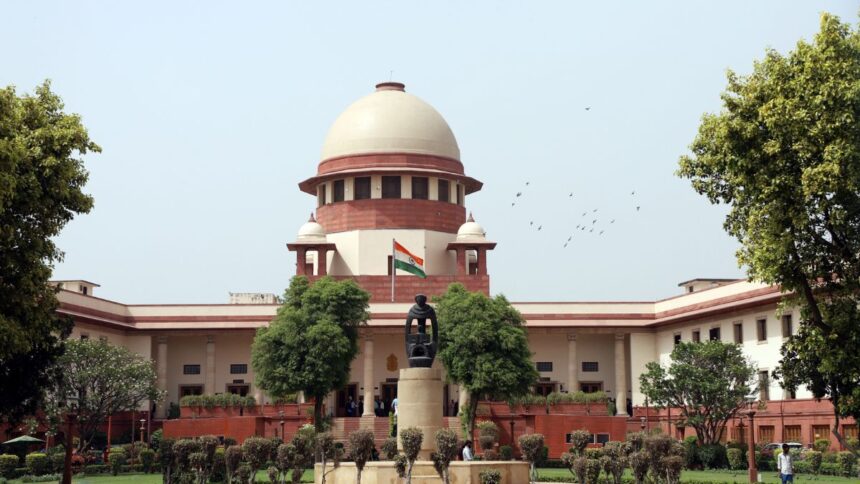
The Supreme Court of India on September 12 adjourned the ongoing hearings concerning the transparency of the NEET PG 2025 examination by two weeks, highlighting growing concerns among medical aspirants and doctors about the disclosure process of the exam results. The top court was addressing several pending matters related to the National Board of Examinations in Medical Sciences (NBEMS) notification that limited the release of information to only question IDs instead of full question papers. Candidates and stakeholders argued that this restricted disclosure, which provides only question IDs, answer keys, and candidate responses against a master set, is insufficient for true verification and undermines the principles of transparency. The court has scheduled a comprehensive hearing in the upcoming weeks to address all challenges collectively, reflecting the heightened scrutiny of the NEET PG 2025 evaluation process.
Candidates Challenge NBEMS’ Limited Disclosure and Transparency Practices
Medical aspirants and doctors participating in the ongoing NEET PG 2025 legal proceedings contended that the NBEMS’ decision to release only question IDs instead of complete question papers is far from transparent. Initially, the board had indicated that candidates would have access to the full set of questions along with the official answer key, promising an unprecedented level of clarity and fairness in the evaluation process. However, a subsequent “corrective notice” issued by NBEMS restricted this access, providing only question IDs. Petitioners argued that this change rendered the process non-verifiable for most candidates, who rely on complete question sets to accurately assess their performance, cross-check their answers, and prepare for future attempts or academic planning.
During the hearing on September 4, the Supreme Court bench questioned the petitioners on the basis of transparency, asking whether their concerns stemmed primarily from lower-than-expected scores. The bench observed that while Article 32 rights allow candidates to challenge administrative decisions in court, such petitions occasionally exploit the legal system rather than genuinely enhance transparency. Nevertheless, petitioners maintained that transparency in examinations, particularly for high-stakes medical tests like NEET PG, is critical to safeguard candidates’ trust and ensure fairness in selection for postgraduate medical courses. The debate has brought to light the broader issue of how examination authorities balance operational efficiency, privacy of question papers, and the rights of candidates to verify their performance.
NBEMS had first announced on August 21 that, for the 2025 cycle, it would release the NEET PG answer key alongside candidate response sheets and questions, a significant step in the direction of transparency. This move was anticipated to allow over 2.42 lakh candidates, who appeared for the exam across 301 cities and 1,052 test centers, to verify their answers against the official answer key comprehensively. The examination, conducted online in a single shift on August 3, had drawn widespread participation from medical aspirants seeking admission into Doctor of Medicine (MD), Master of Surgery (MS), and postgraduate diploma programs. However, the rollback of the full disclosure decision, replacing it with limited access to question IDs, reignited concerns and prompted legal challenges from various stakeholders, including practicing doctors and aspiring candidates.
Implications for Counselling and Future Medical Admissions
The transparency issue is closely intertwined with the process of postgraduate medical admissions in India. The Medical Counselling Committee (MCC) is currently preparing to announce the schedule for 50 percent All India Quota (AIQ) counselling for the academic session 2025–26, covering MD, MS, and diploma courses. Candidates’ ability to verify their responses and assess scores accurately is crucial for ensuring a fair and merit-based counselling process. The court’s intervention underscores the significance of maintaining transparency in examinations that directly impact career trajectories and professional opportunities in the medical field.
The limited disclosure format, which only provides question IDs, answer keys, and responses against a master set, has been criticized as inadequate because most candidates cannot independently verify whether their answers correspond to the official question paper. This situation leaves aspirants dependent on the board’s calculations without a method for cross-verification, raising fears of potential errors or miscalculations in score evaluation. Legal experts highlight that ensuring transparency in such examinations not only addresses immediate grievances but also sets a precedent for future high-stakes tests in India, fostering accountability and public trust in examination authorities.
Over 2.42 lakh candidates who appeared for NEET PG 2025 are now awaiting clarity on how their results will be verified and the manner in which discrepancies, if any, will be addressed. The Supreme Court’s adjournment provides additional time for both the petitioners and the board to present comprehensive arguments, while also giving the judiciary an opportunity to examine possible reforms in the disclosure policy. Advocates for the petitioners emphasize that releasing complete question papers and answer keys is not merely a procedural matter but a substantive right for candidates who invest significant time and resources in preparing for these examinations. The discussions are expected to cover multiple facets of transparency, including the extent of information release, verification mechanisms, and measures to prevent future disputes.
The NEET PG 2025 transparency debate has also drawn attention to the broader challenges faced by examination authorities in balancing operational efficiency and candidate rights. While authorities argue that releasing only question IDs may protect the integrity of question banks and prevent misuse of exam material, aspirants insist that such measures compromise their ability to verify results and understand performance gaps. The Supreme Court’s upcoming hearings are anticipated to delve deeper into these conflicting perspectives, potentially influencing the policies of NBEMS and other examination bodies in India.
Additionally, the case has implications for candidates preparing for subsequent attempts or those seeking higher academic opportunities abroad. Transparent access to question papers and response sheets allows aspirants to conduct detailed self-assessments, identify weak areas, and adopt targeted study strategies. By restricting access, NBEMS inadvertently limits candidates’ ability to engage in meaningful post-examination evaluation, affecting both immediate counselling decisions and long-term academic planning. Experts suggest that adopting a more transparent framework could enhance credibility, reduce litigation, and provide candidates with a fair platform to assess their performance accurately.
The Supreme Court’s oversight highlights the judiciary’s role in ensuring that high-stakes examinations, such as NEET PG, adhere to principles of fairness, accountability, and transparency. With the adjournment of the hearing by two weeks, petitioners have an opportunity to consolidate arguments and present data supporting their claims of non-verifiability. Legal practitioners anticipate that the court will examine the broader implications of the board’s disclosure policies, possibly suggesting amendments or guidelines to enhance candidate verification rights without compromising the integrity of the examination process.
NEET PG remains one of India’s most competitive medical examinations, with thousands of aspirants vying for limited postgraduate seats. Maintaining transparency in result disclosure is critical for ensuring public confidence and protecting the rights of candidates. The adjournment of the Supreme Court hearing reflects the complexity of balancing candidates’ demands for full disclosure with the administrative challenges faced by NBEMS. Moving forward, the proceedings will likely set a benchmark for transparency in examinations not only in medical education but across other high-stakes competitive assessments in India.
As the next hearing approaches, candidates and aspirants continue to follow developments closely, seeking assurances that the verification process will be sufficiently transparent and fair. The Supreme Court’s intervention, while procedural, signals a recognition of the importance of safeguarding candidates’ rights and ensuring the credibility of India’s medical education system. Stakeholders from across the medical community, including practising doctors, educators, and aspirants, are expected to contribute to the discourse, emphasizing the need for clarity, accuracy, and accountability in the evaluation and disclosure process.
The NEET PG 2025 transparency case serves as a reminder of the growing expectations from examination authorities to uphold fairness and integrity in high-stakes testing. With over 2.42 lakh candidates affected, the discussions in the Supreme Court are not only about individual grievances but also about establishing a framework for systematic transparency in future examinations. The forthcoming hearings are poised to address these concerns comprehensively, potentially reshaping disclosure practices and ensuring that candidates receive verifiable, reliable, and detailed access to their examination performance data.