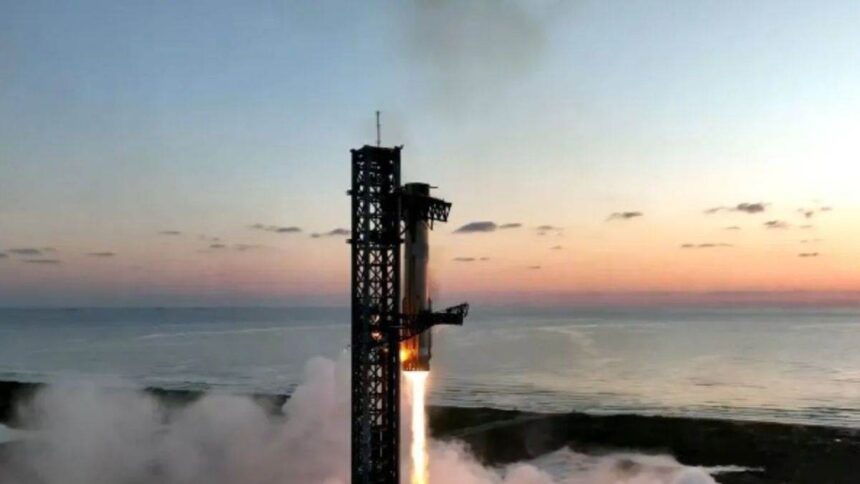
Elon Musk’s SpaceX encountered a significant setback when its Starship rocket, launched from Texas, exploded just minutes into its test flight. The Federal Aviation Administration (FAA) has initiated an investigation into the cause of the blast, with officials from Turks and Caicos collaborating to assess the impact. The explosion led to debris falling into the ocean near the island nation, raising concerns about potential property damage.
Officials from Turks and Caicos, the FAA, and the United Kingdom Space Agency held a meeting to evaluate the incident. While no injuries have been reported, authorities are reviewing property damage linked to the debris. SpaceX confirmed it would lead the investigation, with oversight from the FAA. The agency will provide a list of corrective measures SpaceX must implement before the next Starship test flight.
In a statement, the FAA noted that it is working with SpaceX and local authorities to examine reports of debris affecting Turks and Caicos. The island nation’s government has engaged international partners, including the United Kingdom Space Agency, to support post-incident responses, such as debris management and health-related technical expertise.
Matt Morley, a 39-year-old charter pilot with Minnesota-based Club Jet, witnessed the falling debris while piloting a business jet from Chicago Midway International Airport to Turks and Caicos. Initially mistaking it for a meteor, Matt Morley informed air traffic control, which clarified that it was a SpaceX rocket. His account underscores the risks associated with such incidents for aviation and local populations.
The Starship system is integral to SpaceX’s ambitious test and development program, aimed at refining its next-generation launch system. The system includes two components: the Super Heavy rocket booster, providing initial liftoff power, and the Starship spacecraft mounted atop it. SpaceX has aggressively pursued testing since 2023 to enhance the design and reliability of the system.
Whether this explosion will cause significant delays to the Starship testing schedule remains uncertain. The incident adds another challenge to SpaceX’s mission of achieving reliability for commercial and interplanetary missions. As the investigation continues, the findings will play a crucial role in shaping the future of the Starship project and its regulatory clearances.
The Starship system represents a cornerstone of SpaceX’s plans for deep-space exploration. Although setbacks are expected during such groundbreaking developments, this incident highlights the inherent risks and complexities in pushing the boundaries of space technology.