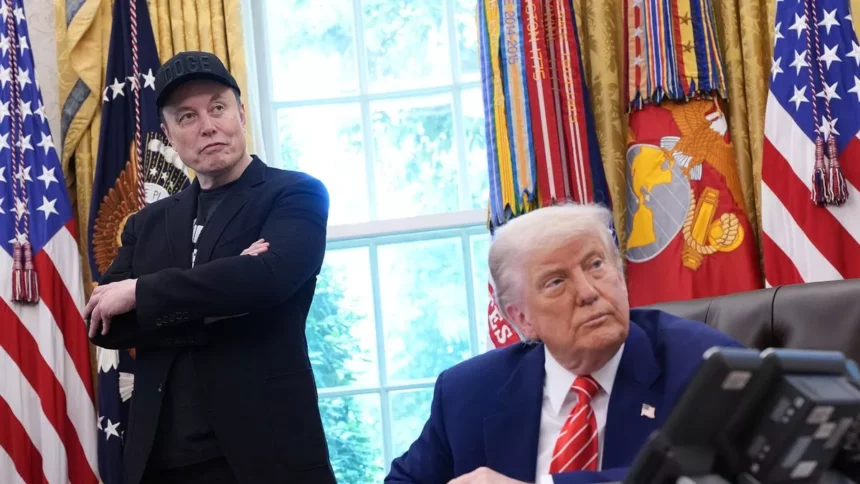
A high-stakes clash between Elon Musk and U.S. President Donald Trump has sparked concerns over the future of SpaceX’s involvement in major government space projects. The escalating feud, stemming from Elon Musk’s public criticism of Donald Trump’s tax and spending policies, could jeopardize contracts worth $22 billion and potentially disrupt critical U.S. space missions. Elon Musk’s retaliatory comments about halting SpaceX’s collaboration with NASA have raised red flags across the space industry.
Rift Escalates Over Policy Disagreements
Tensions began last week when Elon Musk publicly condemned Donald Trump’s legislative agenda, particularly the tax-cut and spending proposals. Donald Trump responded aggressively, reportedly threatening to cut off government contracts with Elon Musk’s companies, including SpaceX. In turn, Elon Musk stated he would begin “decommissioning” the Dragon spacecraft—the only American-made vessel currently capable of transporting astronauts to and from the International Space Station (ISS). Such a move could significantly hamper NASA’s operations, given Dragon’s crucial role in maintaining U.S. commitments under the ISS international agreement.
NASA, while avoiding direct comments on the SpaceX controversy, reiterated its focus on continuing partnerships to meet national objectives in space. However, the potential loss of Dragon could force the agency into a costly and complex realignment of its plans.
Impact on Space Program and Industry Stability
Despite the political tensions, analysts believe that SpaceX’s market dominance may offer some protection from immediate fallout. The company, which became a global leader in space launch services long before Elon Musk’s recent political involvement, has built a broad commercial and international customer base. Still, the threat of losing U.S. government support presents a serious risk.
Justus Parmar, CEO of SpaceX investor Fortuna Investments, noted that while the situation may not be “catastrophic,” it could lead to “significant lost revenue and missed opportunities” for future contracts.
Complicating matters further, Donald Trump’s proposed space budget had already unsettled the NASA workforce by suggesting layoffs and slashing funds for key science missions. At the same time, the Artemis program—America’s lunar return effort—faces conflicting funding priorities, with the Senate pushing to maintain support through 2029, and Donald Trump’s plans leaning toward cutbacks.