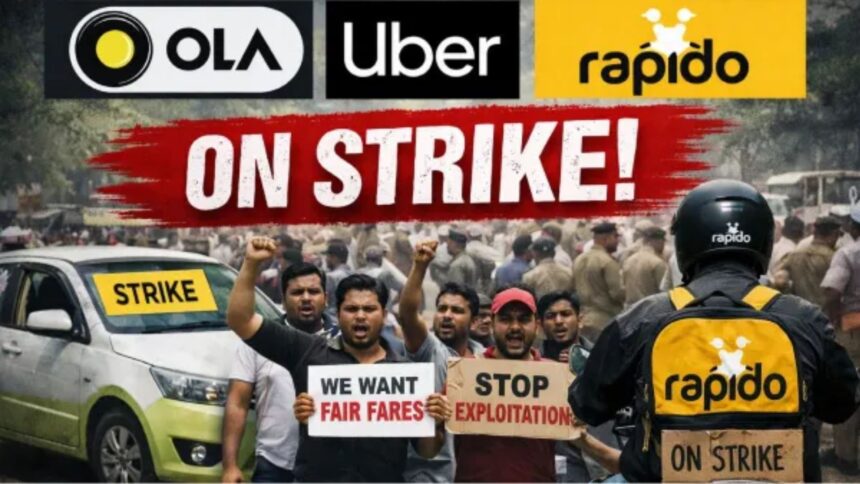
Thousands of app-based drivers halted services nationwide, highlighting income insecurity, fare disputes, and regulatory gaps in gig transportation.
nationwide driver shutdown disrupts mobility and spotlights falling earnings
On Friday, a coordinated six-hour work stoppage by drivers affiliated with app-based ride-hailing platforms brought renewed attention to the challenges facing India’s rapidly expanding gig economy. Drivers working with Ola, Uber, and Rapido collectively logged out of their applications as part of a nationwide protest aimed at pressing for fairer fares, predictable incomes, and clearer regulatory oversight.
The protest, described by organisers as a symbolic “all india breakdown,” was visible across major cities and regional centres, particularly during peak commuting hours. In several urban pockets, commuters faced longer wait times and reduced availability of cabs and bike taxis, prompting many to turn to public transport, auto-rickshaws, or personal vehicles. While the disruption varied by location, the strike sent a clear message about the growing discontent among drivers who form the backbone of app-based mobility.
At the heart of the protest lies a sharp decline in driver earnings over the past year. Drivers argue that base fares have not kept pace with rising fuel prices, maintenance costs, insurance expenses, and inflation. Many contend that algorithm-driven pricing structures prioritise competitive rider fares at the expense of driver livelihoods, leaving them vulnerable to unpredictable income flows. Incentives that once supplemented earnings have also become irregular or difficult to achieve, further squeezing take-home pay.
Drivers participating in the strike said the issue is not limited to daily income but extends to long-term sustainability. Many reported working longer hours simply to earn what they previously made in shorter shifts. This, they argue, undermines the promise of flexibility that originally attracted them to gig work. For full-time drivers, the lack of assured minimum earnings has created financial stress, affecting household stability and debt repayment.
Another major grievance raised during the protest was the continued use of private, non-commercial vehicles for commercial transport through aggregator platforms. Drivers with commercial licences argue that this practice undercuts regulated operators, distorts competition, and depresses fares further. They have demanded stricter enforcement to ensure that only compliant commercial vehicles are allowed to operate on ride-hailing platforms.
The strike also reflected frustration over the slow implementation of regulatory safeguards. While policy frameworks exist on paper, drivers say enforcement remains weak, allowing platforms to continue unilateral fare-setting. For many drivers, the six-hour stoppage was less about immediate disruption and more about drawing public and governmental attention to systemic issues that have gone unresolved for years.
gig economy tensions deepen as drivers seek regulation, dignity, and stability
Beyond fares, the strike highlighted broader anxieties about the nature of gig work in India. App-based drivers occupy an ambiguous position, neither fully independent entrepreneurs nor protected employees. This status leaves them without access to benefits such as social security, health insurance, paid leave, or formal grievance redressal mechanisms. As platform-based transport has grown, so too has the sense among drivers that their contribution is undervalued.
Unions representing gig and platform workers have repeatedly argued that existing policies must be translated into enforceable rules that protect drivers from arbitrary changes in pricing and incentive structures. They point to the Motor Vehicle Aggregator Guidelines, which were intended to bring transparency and accountability to the sector, but say the absence of clearly notified minimum base fares has rendered these guidelines ineffective in practice.
Drivers also raised concerns about algorithmic opacity. Many claim they do not understand how fares are calculated, why incentives fluctuate, or how trip allocations are determined. This lack of transparency, they argue, creates a power imbalance where platforms control key aspects of work while drivers bear the risks. The strike served as a collective attempt to reclaim some negotiating space in an otherwise one-sided relationship.
The protest fits into a wider pattern of gig worker mobilisation across sectors such as food delivery, logistics, and e-commerce. As digital platforms increasingly mediate work, questions around fair compensation, worker rights, and regulatory accountability have become central to public debate. App-based transport, due to its visibility and scale, has emerged as a focal point in this discussion.
From the commuter perspective, reactions to the strike were mixed. Some expressed inconvenience, while others voiced support for drivers’ demands, acknowledging the rising costs faced by those providing essential mobility services. Urban transport experts note that such strikes underscore the fragility of app-dependent mobility systems, particularly when they rely on a workforce with limited protections.
Platform companies, for their part, have maintained that pricing structures are designed to balance rider affordability with driver earnings, and that flexibility remains a core feature of gig work. However, drivers counter that flexibility without income security offers little comfort, especially as costs rise and competition intensifies.
The six-hour duration of the strike was intended as a measured escalation rather than a prolonged shutdown. Union representatives indicated that the action was a signal rather than an endpoint, suggesting that further mobilisation could follow if meaningful dialogue does not take place. For many drivers, the protest was as much about dignity and recognition as it was about money.
As India’s urban mobility continues to depend heavily on app-based platforms, the tensions revealed by the strike raise pressing questions about sustainability. Whether through regulatory reform, negotiated fare frameworks, or new models of platform accountability, the issues highlighted by the drivers point to the need for a more balanced and humane gig economy.