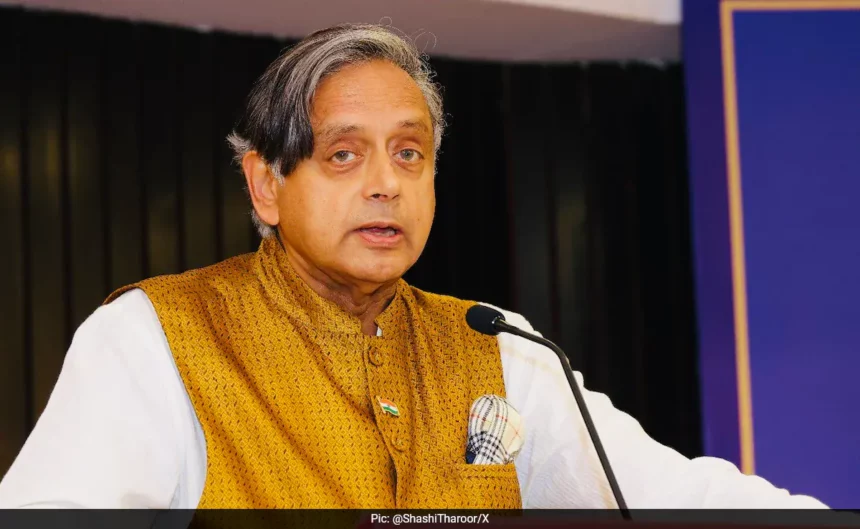
Senior Congress leader Shashi Tharoor has publicly condemned a viral video that falsely attributed remarks to him praising Pakistan’s diplomatic handling of the T20 World Cup controversy. The video, circulated widely on social media by accounts sympathetic to Pakistan, used AI-generated audio to create a misleading narrative in which a voice resembling Tharoor appeared to laud Pakistan for reversing its boycott threat of the high-profile India-Pakistan clash. Tharoor clarified that the clip was entirely fabricated, stating that neither the language nor the voice used in the video reflected his own. The incident has sparked renewed concerns about the proliferation of AI-manipulated content and the ease with which misinformation can influence public perception, particularly in the context of politically sensitive sporting events between India and Pakistan.
AI Manipulation and the Spread of Misinformation in Sports Diplomacy
The video in question depicted Tharoor seemingly praising Pakistan’s diplomatic maneuvering after the country withdrew its threat to boycott the T20 World Cup match against India. The AI-generated voice stated that Pakistan’s strategy was “brilliant” and suggested that the Indian cricket board had been “completely pinned,” emphasizing that Pakistan’s diplomatic success made a comparatively weaker nation appear dominant. Tharoor, however, was quick to denounce the clip, labeling it as “AI-generated fake news — and not even very good,” emphasizing that the language and tone did not correspond to his own speech patterns.
This incident follows a previous case in which an AI-altered audio clip of BCCI Vice President and Congress leader Rajiv Shukla was aired on a Pakistani cricket talk show hosted by former cricketer Shoaib Malik on ARY News. In that clip, a voice resembling Shukla expressed approval of ICC-led negotiations that had persuaded Pakistan to participate in the match. Shukla later clarified that the audio had been manipulated and urged the public not to circulate or believe the content, highlighting the increasing challenges posed by AI-driven misinformation in sports and international relations.
Experts in digital media manipulation have noted that advances in voice synthesis and deepfake technology have made it increasingly difficult for casual viewers to distinguish authentic statements from fabricated ones. The Tharoor incident illustrates the risks of AI-generated misinformation in politically and emotionally charged contexts such as India-Pakistan cricket encounters, where national pride, fan loyalty, and media attention create fertile ground for the spread of misleading narratives. Social media accounts sympathetic to Pakistan leveraged these tools to craft a narrative that exaggerated Pakistan’s diplomatic acumen while attempting to diminish Indian authority, illustrating the intersection of technology, geopolitics, and sports diplomacy.
Impact on Public Discourse and Cricket Administration
The manipulated videos have broader implications for both public perception and the administration of international cricket. By falsely attributing praise to Indian political figures, the AI-generated content sought to influence narratives around the Pakistan-India sporting rivalry and portray Pakistan as the tactically superior nation in negotiations with the International Cricket Council. Such distortions have the potential to inflame nationalistic sentiments, mislead fans, and complicate diplomatic relations, particularly in the context of high-stakes sporting events that already carry political overtones.
Shukla’s clarification underscored the importance of transparent communication and accurate reporting in maintaining trust in cricket governance. He emphasized that the ICC’s decision to facilitate Pakistan’s participation was critical for the sport, asserting that the World Cup would benefit from their inclusion and that the global cricket body had considered the interests of all stakeholders in reaching its decision. By debunking the fabricated audio, Shukla highlighted the responsibility of both public figures and audiences to critically assess content before accepting it as truth.
The use of AI to manipulate statements and create false narratives also raises questions about regulatory and technological measures to prevent the spread of misinformation. While social media platforms have implemented some content moderation policies, incidents like the Tharoor video reveal the limitations of current safeguards, particularly when content is designed to mimic the speech and style of recognizable public figures. Analysts have warned that unchecked AI-generated disinformation could erode public trust, distort political discourse, and exacerbate tensions between nations, especially in cases where sport and diplomacy intersect.
The narrative falsely attributed to Tharoor praised Pakistan for “making a weak nation appear as a Goliath,” reflecting a carefully constructed portrayal intended to highlight Pakistan’s perceived strategic brilliance. Such framing, though fabricated, leveraged the emotional stakes surrounding the India-Pakistan cricket rivalry, aiming to resonate with audiences who closely follow political and sporting developments. Tharoor’s immediate rebuttal served to clarify the record, emphasizing that public statements regarding international cricket and diplomacy should only be attributed to verified sources.
Moreover, the circulation of AI-manipulated content has implications for media literacy and public discernment. The Tharoor case demonstrates the necessity for audiences to critically evaluate information, particularly when it involves contentious topics like India-Pakistan relations, where misinformation can spread rapidly and provoke strong reactions. Educators, journalists, and policy makers have increasingly called for awareness campaigns and technical interventions to help users distinguish between authentic media and AI-generated fabrications.
The Pakistan-backed social media accounts that shared the video leveraged the ease of online virality to ensure rapid dissemination. AI technology, combined with the highly engaging context of cricket diplomacy, amplified the reach of the fabricated content. Analysts note that the psychological impact of hearing a familiar voice, even when synthetically generated, can lead audiences to assign unwarranted credibility, making such videos particularly potent tools in information warfare or influence campaigns.
Both Tharoor and Shukla’s clarifications serve as a countermeasure to the misinformation campaign, reinforcing the importance of direct statements from verified sources. Tharoor’s description of the video as “not even very good” also reflects the often amateurish quality of early AI-generated attempts, highlighting that while technology can create realistic approximations, it often fails to convincingly replicate the nuance, cadence, and style of the original speaker. Nevertheless, the incident underscores the speed at which misinformation can travel and the potential for even imperfect deepfakes to impact public discourse.
The incident also highlights the intersection of sports, politics, and technology in the digital age. Cricket, long a site of intense India-Pakistan rivalry, now serves as a platform where technological manipulation can be leveraged for propaganda purposes. The AI-generated Tharoor clip illustrates how sporting events with geopolitical significance are increasingly susceptible to digital misinformation, requiring vigilance from both governing bodies and audiences.
International observers have noted that the proliferation of AI-manipulated content poses challenges not only for public figures but also for institutions like the ICC. Misrepresentations of political figures commenting on cricket administration can cast doubt on the neutrality and legitimacy of governing bodies, potentially influencing fan perception and stakeholder confidence. By issuing prompt clarifications, Tharoor and Shukla helped mitigate potential reputational damage and underscored the necessity for proactive communication strategies in the era of AI-driven misinformation.
The Tharoor incident serves as a cautionary tale for politicians, sports administrators, and media organizations. It illustrates the risks associated with emerging technologies that enable the creation of synthetic media, and the ways in which these tools can be exploited to craft misleading narratives. Public figures now face the dual challenge of addressing real-world events while also countering false digital representations, often under tight time constraints and heightened scrutiny.
Furthermore, the controversy emphasizes the critical role of AI literacy in contemporary public life. Audiences must develop the skills to question the authenticity of media, particularly in cases where the content aligns with pre-existing beliefs or biases. The rapid spread of the Tharoor clip demonstrates that even well-known personalities are vulnerable to misrepresentation, and underscores the need for responsible social media consumption and fact-checking.
The false narrative surrounding Pakistan’s reversal of the boycott threat also underscores the high stakes of international sporting diplomacy. Cricket between India and Pakistan is not merely a game; it is deeply entwined with national identity, diplomacy, and historical tensions. AI-generated content, by distorting the statements of political leaders, has the potential to influence public perception of both nations’ strategies and capabilities. Tharoor’s prompt response reasserted that India’s political figures have not endorsed or praised Pakistan’s actions, preserving the integrity of the narrative surrounding the World Cup clash.
Finally, the incident draws attention to the broader challenge posed by synthetic media in shaping political and diplomatic discourse. The AI-generated Tharoor clip is part of a growing trend in which deepfake technologies are used to simulate voices, facial expressions, and statements of public figures, creating content that can easily be mistaken for authentic communication. This trend highlights the need for vigilance, transparency, and technological countermeasures to protect the integrity of information and public debate.
Shashi Tharoor’s response to the AI-manipulated video reinforces the importance of accurate representation, critical evaluation, and verified communication in politically sensitive contexts. The incident exemplifies how sports, diplomacy, and emerging digital technologies intersect in ways that can challenge both public understanding and institutional credibility. As AI-generated misinformation becomes increasingly sophisticated, public figures, media organizations, and audiences alike must adopt proactive strategies to identify, debunk, and mitigate the effects of fabricated content in the information ecosystem.