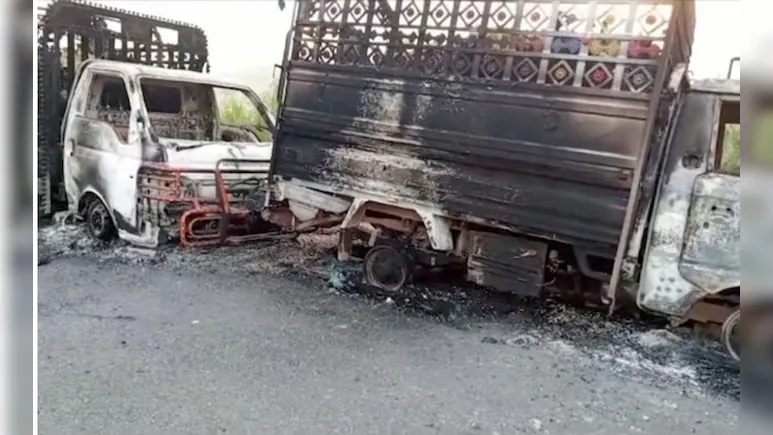
A wave of at least seven explosions within a span of 24 hours has shaken Pakistan’s Balochistan province, deepening fear and uncertainty among residents as suspected insurgent groups intensified attacks across Quetta and Dera Murad Jamali. While no deaths were reported, multiple explosions, grenade attacks and sabotage of key infrastructure have amplified concerns over deteriorating security conditions in one of Pakistan’s most sensitive and volatile regions.
Series of coordinated blasts create panic as insurgents target police, infrastructure and security posts
Balochistan, often described as Pakistan’s most restive province, witnessed an alarming escalation in violence as a series of explosions unfolded across several locations. The attacks began on Saturday when armed insurgents threw hand grenades at a police checkpoint in Quetta. Soon after the grenade assault, an improvised explosive device was detonated near a vehicle belonging to the Anti-Terrorism Department. The day saw three additional blasts in and around the capital city.
Senior Superintendent of Police Asif Khan confirmed that one explosion took place near Lohr Karez, a locality on the outskirts of Quetta. The blast destroyed a critical section of the railway line connecting Quetta with other regions, causing an immediate suspension of rail services. Police believe that insurgents placed explosive devices along the track deliberately timed to detonate just before a scheduled train’s arrival, an act intended to cause maximum infrastructural damage and potential casualties.
Although the explosions did not result in deaths, the impact on public sentiment was severe. Residents in Quetta reported widespread fear as the sound of multiple blasts echoed through the city. Panic gripped neighbourhoods, and commercial activity temporarily halted as police and security forces cordoned off affected zones.
The violence was not confined to Quetta. In Dera Murad Jamali, a patrolling police vehicle came under attack when unidentified attackers hurled hand grenades at it. The police have yet to identify the perpetrators, but officials believe the attacks carry the hallmarks of local insurgent outfits that have targeted law enforcement agencies in recent months.
In another attack, armed individuals targeted a construction company operating along Quetta’s Sariab road. Hand grenades were thrown at the construction site, damaging machinery and injuring two security guards stationed there. The injured guards were rushed to a nearby hospital, and authorities have launched an investigation into the motives behind targeting a private construction project.
Despite multiple attacks across various locations, no insurgent organisation immediately claimed responsibility on Saturday. However, authorities noted that insurgent activities resumed early Sunday morning, suggesting a planned and coordinated attempt to destabilise the region.
On Sunday, motorcycle-borne attackers hurled two hand grenades at the Manzoor Shaheed police station in Quetta. One grenade exploded, while the other was successfully defused by the bomb disposal squad. Later in the day, another grenade attack took place near a police patrol post in the Kech Beg area of Quetta, continuing the pattern of targeting law enforcement and infrastructure.
The surge in attacks reflects a familiar but deeply concerning pattern in Balochistan. The region has long dealt with insurgent movements seeking to challenge the Pakistani state, and violence often spikes in waves. The latest round of attacks underscores how volatile the security situation remains, despite ongoing military operations and increased surveillance. For residents already accustomed to unrest, the coordinated nature of the attacks has amplified anxiety, forcing security forces to increase their presence across key urban points in Quetta and surrounding towns.
Infrastructure damage, security concerns and a growing pattern of insurgent escalation
The destruction of the railway line near Lohr Karez stands out as one of the most disruptive incidents of the weekend. Railway infrastructure in Balochistan has been frequently targeted by insurgent groups, who view such acts as a means to cripple state connectivity and transport. The blast triggered immediate suspension of railway traffic, disrupting travel plans for hundreds of passengers and delaying critical freight movement.
Security authorities have launched a comprehensive assessment of the damage, and emergency teams were deployed to begin repair work. The incident has raised concerns about persistent vulnerabilities in infrastructure protection across the province. Officials acknowledged that railways, power installations, gas pipelines and construction projects remain high-value targets for militants who often aim to weaken the government’s economic and administrative outreach.
In addition to infrastructure, the targeting of police stations and patrolling units reveals a deliberate strategy by the attackers. By focusing on law enforcement, insurgents aim to undermine police morale and weaken the state’s capacity to respond quickly to violent events. The grenade attack on the Manzoor Shaheed police station on Sunday morning was particularly telling, as it took place just hours after the first wave of blasts, reinforcing the perception that insurgents were attempting to create sustained panic.
The provincial government has responded by stepping up security arrangements across Quetta. More checkpoints have been established, security patrols have been intensified and plainclothes officers are monitoring high-risk areas. Authorities have also increased surveillance around government buildings, transport hubs and military installations.
The broader context of these attacks ties into long-standing tensions in Balochistan. The province has been embroiled in insurgent activity for decades, driven by political grievances, demands for autonomy and resource-related conflicts. Various militant groups periodically carry out attacks on state infrastructure, economic projects and security forces. While the intensity of insurgency fluctuates, the ability of militants to conduct multiple coordinated attacks over a short period signals both operational capability and continued intent.
Although authorities have not identified any group behind the latest explosions, past incidents in the region have been linked to factions pushing anti-state narratives. The absence of an immediate claim of responsibility complicates early investigation efforts, forcing security agencies to rely on forensic analysis, intelligence reports and surveillance data to track potential culprits.
The pattern of attacks—hand grenades thrown from motorcycles, IEDs planted on railway tracks, and targeted strikes on police—mirrors methods previously used by insurgent groups active in the province. Law enforcement agencies suspect that smaller insurgent cells may be regrouping or receiving new logistical support. The repeated grenade attacks indicate that attackers have access to explosives and are operating in teams capable of coordinating across multiple sites in quick succession.
In Quetta, where life often alternates between cautious normalcy and abrupt violence, the weekend’s events have once again highlighted how fragile the security environment remains. Business owners expressed fear that continued attacks may force temporary closures or reduced working hours. Schools, markets and transport networks were placed on heightened alert as news of the blasts spread.
International observers have often pointed out that instability in Balochistan poses broader regional challenges. Given its strategic importance—bordering Afghanistan and Iran and hosting crucial economic corridors—the province is frequently at the centre of geopolitical tension. Violence in Balochistan often has ripple effects, particularly regarding trade routes, cross-border security and internal migration patterns.
The latest incidents also come amid ongoing political debates within Pakistan about how best to address long-standing grievances in the region. Some leaders argue for developmental initiatives and dialogue-based engagement, while others advocate stronger security operations to dismantle insurgent hideouts. The recurrent violence, however, illustrates the complexity of the conflict and the difficulty of ensuring long-term stability.
As authorities continue investigations and increase patrols, residents remain anxious about what the coming days may hold. For many, the sound of explosions has become an unwelcome reminder of the unpredictable nature of life in Balochistan. The coordinated attacks within 24 hours serve as a stark reminder that the insurgency remains active and capable, demanding sustained policy attention and enhanced security preparedness.