FOR IMMEDIATE RELEASE
Key takeaways:
- Scientists have found a potential new gene variant target to treat sickle cell disease, an inherited blood disorder that affects about 300,000 people globally each year, with limited treatment options.
- The potential to edit the gene, FLT1, could increase the amount of fetal hemoglobin, a protein that studies have shown helps people with sickle cell disease live longer.
- The study analyzed the genomes of 3,751 people with the disease to find the variant.
Scientists from Johns Hopkins Medicine and eight other institutions in the United States, Africa and Europe say they have identified a potential new gene target that could be edited to treat sickle cell disease, an inherited blood disorder marked by sickle-shaped red blood cells that cause intense pain and shorten lifespans.
The potential target, the FLT1 gene, contributes to the production of a protein, fetal hemoglobin, whose presence is already known to improve the lifespan of people with sickle cell disease. Scientists have been looking for ways to increase fetal hemoglobin in more people with sickle cell disease, says Ambroise Wonkam, M.D., Ph.D., the Henry J. Knott Director of the McKusick-Nathans Institute and Professor in Medical Genetics in the Department of Genetic Medicine at the Johns Hopkins University School of Medicine.
The scientists published results of their research, performed with funding support from the National Institutes of Health, March 1 in Nature Communications. The research involved a genome-wide association study (GWAS), which analyzes gene sequencing data to find and connect variations in a specific gene with a certain trait or condition.
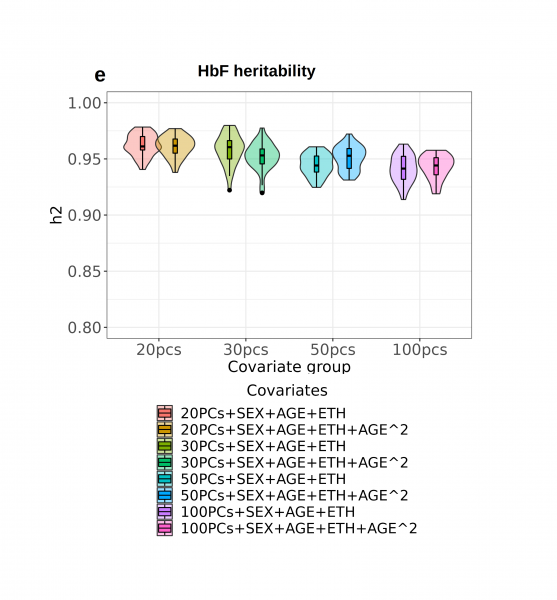
FLT1 is among 14 new genetic markers of fetal hemoglobin the scientists identified from GWAS data gathered and used with permission from 3,751 people with sickle cell disease. Fetal hemoglobin shuttles oxygen through veins and arteries in human fetuses, but is replaced by the adult version of hemoglobin shortly after birth. Sickle cell disease affects only adult hemoglobin, causing it to clump and distort red blood cells into a sickle shape. Preserving fetal hemoglobin after birth at levels above 8% through gene editing is one critical, viable approach to saving more patients with sickle cell disease, Wonkam says.
Researchers estimate that 300,000 people are born with sickle cell disease each year, the majority of whom are in Sub-Saharan Africa. In the United States, about 100,000 people have sickle cell disease, and the vast majority are non-Hispanic Black or African American, according to the Centers for Disease Control and Prevention. It is the most common form of an inherited blood disorder in the U.S., according to the American Society of Hematology.
Food and Drug Administration-approved cell-based gene therapies help patients with a common, severe form of the condition produce more fetal hemoglobin in adult life and live longer. However, Wonkam says this approach can be improved by targeting other gene variants.
“Finding new genetic variants that could be edited to treat more patients, which would preserve the type of hemoglobin present at birth, is critical for saving more lives,” says Wonkam.
Other cures for sickle cell disease include stem cell or bone marrow transplants, which are not options for all patients, Wonkam says.
In this study, Wonkam and the team of scientists used genetic tools to map more genes that regulate the level of fetal hemoglobin in Black populations in Cameroon, Tanzania and the United States.
To conduct their experiments, the scientists analyzed the whole genomes of 3,751 people with sickle cell disease, honing in on genes that regulate hemoglobin production. Using genotyping tools, they identified 14 novel locations of genes on various regions of the genome. Of the 14 genetic markers, FLT1, located on chromosome 13, had the strongest signal of gene expression, indicating its key role in producing fetal hemoglobin.
“Prior to this research, we only knew 10% to 20% of the gene locations that play a role in the production of fetal hemoglobin in African or African-descended individuals, compared with nearly 50% of the variation in genes that regulate fetal hemoglobin in European-descended individuals,” Wonkam says. “With the new genetic markers described in this study, we now know 90% of the genes associated with the production of fetal hemoglobin in sickle cell disease patients of African ancestry.”
The researchers say they plan next to examine how FLT1 interacts with other genes at a molecular level in low-oxygen settings. The scientists also hope to learn when in evolutionary time FLT1 became more common in African populations, which could help them identify similar genes to target.
Funding support for the research was provided by the National Institutes of Health (1U01HG007459‐01, U24‐HL‐135600), the National Cancer Institute (P30 CA021765), the Childcare Foundation and the American Lebanese Syrian Associated Charities, a nonprofit organization that raises funds for St. Jude Children’s Research Hospital.
In addition to Wonkam, other researchers who contributed to the study are Kevin Esoh, Fujr Osman, Michael Beer, Rachel Latanich, James Casella, Daiana Drehmer, Dan Arking and Gregory Newby from Johns Hopkins; Rachel Levine, Nikitha Nimmagadda, Erin Dempsey and Jonathan Yen from St. Jude Children’s Research Hospital; Valentina Josiane Ngo Bitoungui from University of Dschang in Cameroon; Khuthala Mnika, Victoria Nembaware, Jack Morrice and Nicola Mulder from University of Cape Town, South Africa; Siana Nkya, Raphael Sangeda and Julie Makani from University of Health and Allied Sciences, Tanzania; Guillaume Lettre from Montreal Heart Institute, Canada; Martin Steinberg from Boston University Chobanian & Avedisian School of Medicine; Emile Chimusa from Northumbria University, United Kingdom; and Stylianos Antonarakis from University of Geneva, Switzerland.
https%3A%2F%2Fwww.newswise.com%2Farticles%2Fscientists-identify-potential-new-genetic-target-for-sickle-cell-disease-treatment%2F%3Fsc%3Drsla