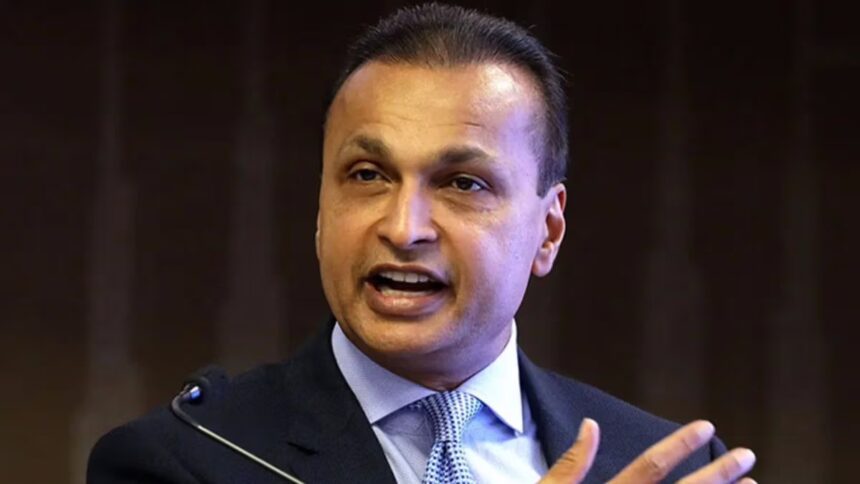
The State Bank of India (SBI) has officially classified Reliance Communications (RCom) and its promoter Anil D Ambani as ‘fraud’, a move that intensifies scrutiny over the financial dealings of the telecom company currently undergoing insolvency proceedings. This classification, completed on June 13, 2025, under RBI’s Master Directions on Fraud Risk Management and the bank’s own fraud policies, marks a significant development in one of India’s most high-profile corporate insolvency cases, drawing attention to the complex intersections of banking regulations, legal processes, and the obligations of large financial institutions in addressing non-performing accounts.
According to Minister of State for Finance Pankaj Chaudhary, who informed the Lok Sabha in a written reply, SBI reported the fraud classification to the Reserve Bank of India on June 24, 2025, and is preparing to lodge a complaint with the Central Bureau of Investigation (CBI). On July 1, 2025, the Resolution Professional of RCom informed the Bombay Stock Exchange as part of mandatory disclosure compliance, confirming the fraud classification publicly.
Insolvency and Previous Legal Developments
The financial exposure of SBI to RCom includes a fund-based principal outstanding of Rs 2,227.64 crore, along with accrued interest and expenses effective from August 26, 2016, and a non-fund-based bank guarantee of Rs 786.52 crore. RCom has been under the Corporate Insolvency Resolution Process under the Insolvency and Bankruptcy Code (IBC) since March 2020, with the Committee of Creditors having approved a resolution plan that is currently awaiting approval from the National Company Law Tribunal (NCLT) in Mumbai.
SBI has also initiated a Personal Insolvency Resolution Process against Anil D Ambani under the IBC, which is presently under consideration at the NCLT, Mumbai. Previously, SBI had classified RCom and Anil Ambani as ‘fraud’ on November 10, 2020, and filed a complaint with the CBI on January 5, 2021. However, this complaint was returned due to a ‘status quo’ order issued by the Delhi High Court on January 6, 2021, which prevented further action at that time.
Supreme Court Judgement and Revised Process
A significant Supreme Court judgment on March 27, 2023, in the State Bank of India & Others Vs Rajesh Agarwal & Others case mandated that banks and financial institutions provide borrowers with an opportunity to represent themselves before being classified as fraud. Following this directive, SBI reversed the fraud classification on September 2, 2023, to comply with due process requirements.
After adhering to the procedural requirements laid out by the RBI’s circular dated July 15, 2024, SBI re-ran the fraud classification process, leading to the latest categorisation of RCom and Anil Ambani as ‘fraud’ after following the necessary protocols.
Government Clarifications on Agricultural Loan Waivers and Bima Sakhi Scheme
In response to separate queries in the Lok Sabha, Minister Pankaj Chaudhary clarified that the government currently has no proposal to waive outstanding agricultural loans. Instead, various measures are being implemented to improve farmers’ economic conditions, including the Kisan Credit Card scheme under which farmers receive credit at subsidised rates and incentives for timely repayments, as well as efforts to enhance credit flows to the agricultural sector.
Additionally, Chaudhary provided updates on the Bima Sakhi-‘Mahila Career Agent (MCA) Scheme’, launched on December 9, 2024, by the Government of India to promote women as career agents in the insurance sector. The Life Insurance Corporation (LIC) paid Rs 62.36 crore in stipends to Bima Sakhis during FY 2024-25 and has allocated a budget of Rs 520 crore for the current financial year, of which Rs 115.13 crore has already been disbursed by mid-July 2025. Presently, there are 2,05,896 Bima Sakhis operating across India, and the scheme supports them with stipends, performance incentives, and career growth opportunities within LIC, including eligibility for recruitment as Apprentice Development Officers after five years of service.