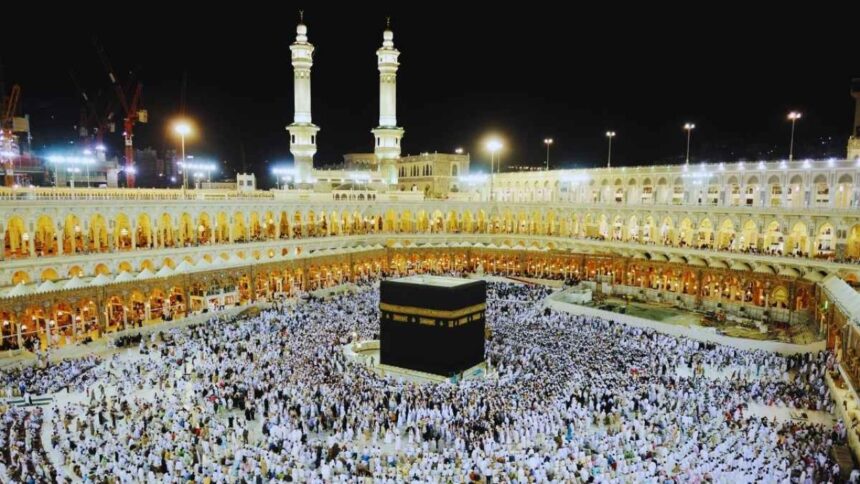
Saudi Arabia has officially begun issuing visas for the 2026 Hajj season, marking an early and strategic start to preparations for one of the world’s largest annual religious gatherings. The move reflects the Kingdom’s continued efforts to enhance planning efficiency, improve pilgrim services, and ensure smooth operational readiness well ahead of the arrival of millions of worshippers from across the globe.
Early Visa Issuance and Structured Planning for Hajj 2026
The Saudi Ministry of Hajj and Umrah announced that the issuance of visas for the 2026 Hajj season, corresponding to 1447 AH in the Islamic calendar, has officially commenced. This step is part of a comprehensive operational calendar aimed at strengthening preparedness and ensuring that all logistical, administrative, and service-related aspects are completed in a timely manner.
By initiating visa issuance months in advance, Saudi authorities are reinforcing a proactive approach to managing the pilgrimage. Early processing allows Hajj affairs offices, service providers, and pilgrims themselves to plan with greater certainty. It also enables the ministry to closely monitor registrations, manage capacity, and address potential challenges well before peak travel begins.
As part of the preparatory timeline, initial planning and the issuance of preliminary documentation to Hajj affairs offices began on 8 June 2025. These early steps laid the groundwork for coordination between Saudi authorities and international pilgrimage organizers. Preparatory meetings involving relevant stakeholders were subsequently completed, ensuring alignment on operational standards, health measures, accommodation requirements, and transport arrangements.
Pilgrim registration officially opened following these meetings, with a deadline set for 12 October 2025. This phase allowed pilgrims from various countries to confirm participation, select service packages, and complete essential documentation. Authorities emphasized adherence to this schedule to maintain orderly planning and avoid last-minute disruptions.
Contracts related to accommodation in Mecca and Medina, as well as transportation services at the holy sites, were finalized in January 2026. These agreements are a critical component of the Hajj framework, covering lodging capacity, bus services, crowd movement logistics, and access to essential amenities. Finalizing contracts early ensures that service providers are fully prepared to meet demand during the pilgrimage period.
The Ministry of Hajj and Umrah has stated that the first groups of pilgrims are expected to arrive in Saudi Arabia on 18 April 2026. This date marks the beginning of the final operational phase of the Hajj season, during which on-ground services, security arrangements, health facilities, and crowd management systems will be activated at full scale.
Pilgrim Registration, Digital Platforms, and Service Readiness
According to the ministry, approximately 750,000 pilgrims have registered so far for the 2026 Hajj season. This figure includes around 30,000 pilgrims who booked Hajj packages directly from their home countries, reflecting a growing trend toward streamlined and direct registration mechanisms.
To manage the scale and complexity of the pilgrimage, Saudi authorities are increasingly relying on digital solutions. The Nusk Masar digital platform has been deployed as a central tool for coordinating pilgrim services, managing contracts, and ensuring transparency across all stages of the process. The platform allows Hajj affairs offices, service providers, and pilgrims to interact within a unified digital ecosystem.
Electronic wallets are also being utilized to facilitate secure financial transactions, reduce cash handling, and improve accountability. These systems are designed to accelerate contractual processes, minimize delays, and reduce instances of disorder or unauthorized bookings. By integrating digital payments and documentation, the ministry aims to enhance trust and efficiency throughout the Hajj journey.
Infrastructure readiness remains a key priority as preparations continue. So far, 485 camps have been allocated for international pilgrims, ensuring adequate accommodation capacity at holy sites. These camps are designed to meet safety, comfort, and accessibility standards, with provisions for sanitation, food distribution, and medical support.
In addition, 73 Hajj affairs offices have successfully met their basic contractual requirements. These offices play a crucial role in coordinating pilgrim logistics, liaising with Saudi authorities, and ensuring compliance with operational guidelines. Meeting contractual benchmarks at this stage indicates steady progress toward full readiness.
The ministry has emphasized that strict adherence to the announced timeline is essential for delivering a safe, efficient, and dignified pilgrimage experience. Any deviation could place pressure on infrastructure, services, and personnel during peak periods. As such, continuous monitoring and coordination remain central to the Kingdom’s Hajj management strategy.
Saudi Arabia has consistently invested in expanding and modernizing Hajj infrastructure, including transport networks, crowd control systems, health services, and digital platforms. The early issuance of visas for Hajj 2026 underscores the Kingdom’s commitment to hosting pilgrims with enhanced organization, safety, and hospitality, while preserving the spiritual essence of the pilgrimage.