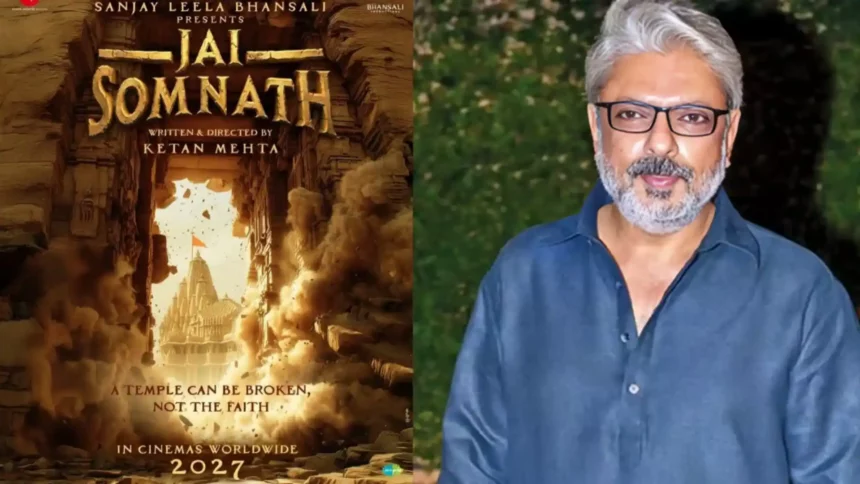
The legendary filmmaker Sanjay Leela Bhansali, in collaboration with director Ketan Mehta, is set to bring to the silver screen a grand historical epic titled Jai Somnath, slated for release in 2027. The film seeks to dramatize one of the most significant events in Indian history, tracing back to 1025–1026 CE, when the infamous Mahmud of Ghazni invaded Gujarat and attacked the iconic Somnath Temple. Marking a thousand-year milestone since this fateful assault, the film aims not only to depict historical events but also to celebrate the indomitable spirit of India, resilience in the face of adversity, and the enduring faith of its people. By combining Bhansali’s cinematic grandeur with Ketan Mehta’s historical narrative expertise, Jai Somnath promises to present a compelling story that intertwines history, culture, and patriotism while resonating with audiences worldwide. The project is being produced under the banners of Bhansali Productions and Maya Movies, reflecting a union of visionary filmmaking and meticulous storytelling.
Portraying a Millennium of Faith, Valor, and Resilience
The narrative of Jai Somnath is set against the backdrop of a pivotal moment in India’s history—the attack on Somnath Temple by Sultan Mahmud of Ghazni in 1026 CE. This act of plunder was part of repeated foreign incursions intended to disrupt India’s centers of culture, learning, and faith. However, the story of Somnath is far more than one of destruction; it is a testament to the resilience, courage, and unyielding spirit of the people who refused to let their cultural and religious heritage be extinguished. The temple’s repeated reconstruction over centuries exemplifies the triumph of creation over annihilation, symbolizing a nation’s refusal to bow in the face of external aggression. Through this cinematic retelling, the film intends to honor the heroes who defended India’s sovereignty, the warriors who laid down their lives, and the countless devotees whose unwavering faith kept the spirit of Somnath alive across generations. By situating the narrative within a historical and cultural framework, Jai Somnath seeks to emphasize how heritage, courage, and devotion intertwine to define the essence of India.
The film will depict not only the historical events of the Ghazni invasion but also the broader socio-political context of early medieval India, highlighting the cultural richness, valor, and traditions that persisted despite repeated attempts to undermine them. From the architectural magnificence of the temple to the stories of the guardians of faith, the narrative will bring to life a rich tapestry of heroism, devotion, and the challenges faced by a civilization under siege. The emphasis on these themes underscores Bhansali’s commitment to cinematic storytelling that combines aesthetic brilliance with historical gravitas, while Mehta’s direction ensures authenticity and narrative depth. The project promises a visual and emotional journey that honors the legacy of Somnath, conveying messages of resilience and faith that remain relevant even in contemporary times.
Crafting an Epic for Modern Audiences with Cinematic Grandeur
Jai Somnath is poised to be a landmark production in Indian cinema, reflecting Bhansali’s signature style of grand visuals, elaborate sets, and meticulous attention to detail. The film will employ state-of-the-art cinematography, immersive set designs, and large-scale recreations of historical battles to transport audiences to the era of medieval India. Beyond visual spectacle, the film aims to present deeply human stories—stories of devotion, sacrifice, leadership, and collective resolve—that echo the enduring principles of courage and unity. By focusing on the individuals who stood firm in the face of immense adversity, the narrative seeks to highlight the power of determination, the strength of belief, and the timeless relevance of India’s cultural and spiritual heritage.
In addition to its historical scope, the film will explore the philosophical and ethical dimensions of faith, power, and duty. It will reflect on the moral dilemmas faced by both rulers and defenders, offering a nuanced portrayal of heroism that goes beyond simplistic notions of victory and defeat. Bhansali’s approach ensures that every frame, every sequence, and every character serves to deepen the audience’s engagement with the story, combining emotional resonance with visual splendor. With Ketan Mehta at the helm as writer and director, the screenplay promises rigorous historical research paired with compelling dramatic arcs, balancing historical accuracy with cinematic storytelling.
The production of Jai Somnath also symbolizes the broader role of cinema in preserving and popularizing history. By bringing pivotal events such as the Ghazni invasion and the temple’s repeated reconstruction to a global audience, the film aims to foster a deeper appreciation for India’s resilience and cultural continuity. The collaboration between Bhansali Productions and Maya Movies reflects a shared commitment to producing content that is both historically grounded and universally engaging, ensuring that the story of Somnath reaches viewers across generations and geographies. Audiences can expect a rich auditory experience as well, with a soundtrack designed to evoke the grandeur, devotion, and emotion inherent in the narrative, complementing the epic visual scope of the film.
Ultimately, Jai Somnath aspires to be more than a historical drama; it is intended as a cinematic celebration of faith, culture, and national pride. By retelling the story of one of India’s most iconic temples and the challenges it has endured over a millennium, the film offers audiences an opportunity to reflect on the power of resilience, the importance of cultural preservation, and the enduring spirit of a civilization that has survived repeated trials. The combination of Bhansali’s creative vision, Mehta’s directorial expertise, and the historical significance of the subject promises to make Jai Somnath one of the most anticipated cinematic events of 2027, a film that will resonate not only with Indian audiences but with viewers worldwide who appreciate stories of courage, perseverance, and unwavering faith.