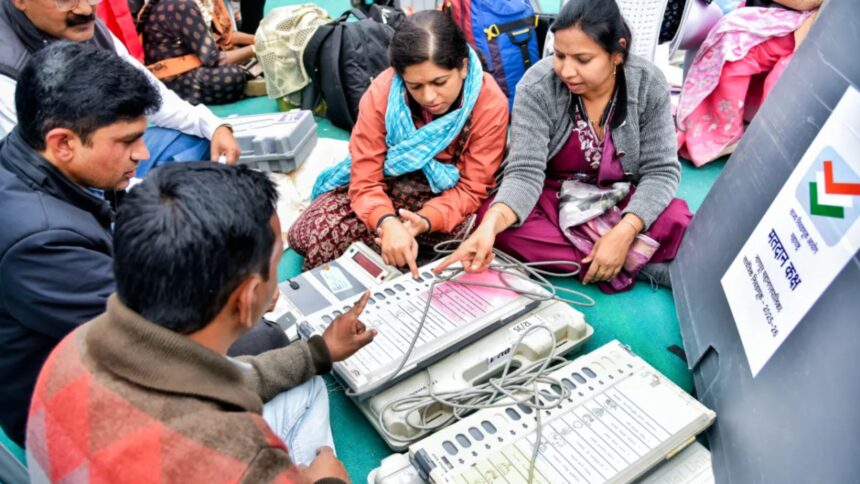
Local body elections commenced across multiple districts of Maharashtra, drawing large participation under tight security arrangements.
voting begins across districts with heavy turnout expected
Polling for twelve zilla parishads and 125 panchayat samitis began early Saturday across twelve districts of Maharashtra, marking an important phase in the state’s grassroots democratic process. Voting started at 7.30 am and will continue until 5.30 pm, with security forces deployed extensively to ensure a smooth and peaceful exercise. More than two crore eligible voters are expected to cast their ballots during the day.
The elections cover the zilla parishads of Raigad, Ratnagiri, Sindhudurg, Pune, Satara, Sangli, Solapur, Kolhapur, Chhatrapati Sambhajinagar, Parbhani, Dharashiv, and Latur, along with panchayat samitis functioning under their administrative jurisdictions. These local bodies play a crucial role in rural governance, overseeing development, welfare schemes, and essential public services.
A total of 7,438 candidates are contesting the elections, competing for 731 zilla parishad seats and 1,462 panchayat samiti seats. Of these, 2,624 candidates are vying specifically for zilla parishad positions, reflecting intense political competition at the grassroots level. Authorities stated that polling stations were adequately staffed and equipped to handle the expected voter turnout.
The election process is being conducted under the model code of conduct, which will remain in force until the completion of counting. Election officials indicated that all necessary arrangements, including security checks and voter facilitation measures, were put in place ahead of polling day to prevent disruptions and ensure transparency.
rescheduled polls follow mourning period and reserved seats shape contest
The polls were originally scheduled to be held earlier but were postponed following the death of Deputy Chief Minister Ajit Pawar in an air crash, after which the state observed three days of mourning. The postponement led to an extended campaign period, allowing candidates additional time to reach voters across rural constituencies.
Seat reservations are playing a significant role in shaping the contest. Among the 731 zilla parishad seats, 369 have been reserved for women, reinforcing the emphasis on gender representation in local governance. Additionally, 83 seats are reserved for Scheduled Castes, 25 for Scheduled Tribes, and 191 for Other Backward Classes, reflecting the state’s commitment to inclusive political participation.
Election authorities confirmed that vote counting will take place on February 9, starting at 10 am, after which the model code of conduct will be lifted. The results are expected to provide insight into political trends at the grassroots level and influence future alignments ahead of larger electoral battles in the state.
With rural development, resource allocation, and local leadership at stake, the outcome of these elections is being closely watched by political parties and observers alike. The scale of participation and the diversity of candidates underline the continuing importance of local self-governance institutions in Maharashtra’s political landscape.