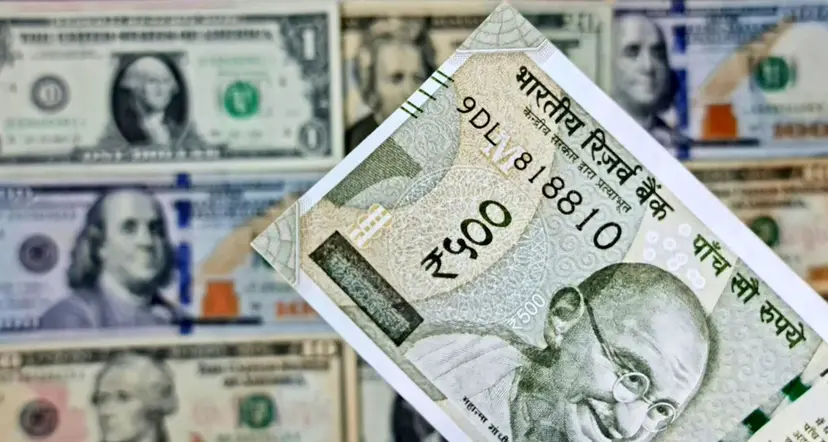
The Indian rupee plunged to its weakest level ever against the U.S. dollar on Thursday, touching an unprecedented 96.14 before settling at a fresh lifetime low, as rising crude oil prices, global uncertainty, and sustained dollar strength intensified pressure on India’s currency markets.
The sharp fall has triggered concern among investors, importers, businesses, and policymakers because the rupee’s depreciation directly impacts fuel costs, inflation, overseas travel expenses, and the broader economy.
Currency traders and market analysts described the decline as one of the most significant pressure phases for the rupee in recent years, especially as the Indian currency has now emerged as Asia’s weakest-performing currency over the past several weeks.
The latest fall comes amid escalating geopolitical tensions, elevated global crude prices, and increasing demand for the U.S. dollar in international markets. These developments have combined to create heavy pressure on emerging-market currencies, with India facing particular challenges because of its dependence on imported crude oil.
Rupee Slides to Historic Levels
The rupee opened under pressure during Thursday’s trading session and continued weakening throughout the day before touching the historic 96.14 mark against the dollar for the first time ever.
Although the currency recovered slightly from intraday lows, it still settled at a record closing level, reflecting persistent weakness in market sentiment.
Foreign exchange dealers said strong dollar demand from oil importers, global risk aversion, and rising crude prices contributed heavily to the rupee’s decline.
The U.S. dollar has strengthened globally in recent weeks as investors moved toward safer assets amid geopolitical uncertainty and concerns surrounding global economic stability.
A stronger dollar typically places additional pressure on emerging-market currencies because investors shift funds toward dollar-denominated assets considered safer during uncertain periods.
Analysts noted that the rupee’s recent weakness has become particularly sharp compared to several other Asian currencies, increasing concerns about imported inflation and economic management challenges.
Rising Crude Prices Add Massive Pressure
One of the biggest reasons behind the rupee’s continued decline is the surge in international crude oil prices.
India imports a significant majority of its crude oil requirements, meaning any rise in global oil prices directly increases the country’s import bill. When oil companies need more dollars to purchase crude from international markets, demand for the U.S. currency rises sharply, putting additional downward pressure on the rupee.
Geopolitical tensions in West Asia and uncertainty around global energy supply routes have further fuelled crude price volatility.
Concerns surrounding maritime security, shipping disruptions, and supply risks in strategically important regions such as the Strait of Hormuz have intensified market nervousness.
Economists warn that persistently high crude prices combined with a weakening rupee could significantly increase inflationary pressure in India because fuel costs influence transportation, manufacturing, logistics, and consumer prices across sectors.
The government’s recent decision to increase petrol and diesel prices by ₹3 per litre is also being viewed as part of broader efforts to manage rising energy-related fiscal stress and control excessive fuel demand.
Asia’s Weakest-Performing Currency
Market data now shows the rupee has emerged as one of Asia’s weakest-performing currencies in recent weeks.
The Indian currency has weakened by more than 90 paise within just a few trading sessions, reflecting the intensity of pressure currently affecting financial markets.
Currency experts say the speed of the rupee’s decline has become a major concern because rapid depreciation can create panic among investors and increase uncertainty in financial markets.
Foreign institutional investors often become cautious when currency volatility rises sharply, especially in emerging markets.
A weaker rupee also increases the cost of servicing foreign debt for companies and institutions with dollar-denominated liabilities.
Import-heavy sectors such as oil, electronics, aviation, pharmaceuticals, and manufacturing are likely to face additional financial strain if the rupee continues to weaken further.
However, some export-oriented sectors including information technology and software services could temporarily benefit because a weaker rupee increases the value of dollar earnings when converted into Indian currency.
RBI Faces Growing Pressure
The Reserve Bank of India is now under increasing pressure to stabilise currency markets and manage volatility.
Although the central bank has not officially commented on specific intervention measures, traders believe the RBI may continue using foreign exchange reserves to smooth excessive fluctuations in the rupee.
The RBI has historically intervened during periods of extreme volatility by selling dollars in the market to support the rupee.
However, analysts say defending a currency becomes increasingly difficult when global market pressures remain strong for extended periods.
Financial experts believe the central bank will likely focus on preventing disorderly market movements rather than defending any specific exchange rate level.
The RBI’s future policy decisions will also depend heavily on crude oil trends, capital flows, U.S. Federal Reserve actions, and geopolitical developments.
Impact on Common Citizens
The rupee’s fall is expected to affect ordinary Indians in several ways.
One immediate impact is likely to be higher fuel prices because India depends heavily on imported oil. Rising transportation costs could eventually push up prices of food, consumer goods, logistics, and essential commodities.
Foreign travel, overseas education, and international purchases may also become significantly more expensive as the rupee weakens further against the dollar.
Students studying abroad and families paying tuition fees in foreign currencies could face increased financial burdens.
Businesses importing machinery, electronic goods, industrial components, and raw materials are also expected to experience rising costs.
Economists warn that if currency weakness persists alongside elevated crude prices, inflation management could become more challenging for policymakers.
Global Uncertainty Continues to Drive Markets
International markets remain highly sensitive because of ongoing geopolitical tensions and concerns regarding global growth.
Investors across the world are increasingly moving funds toward safe-haven assets such as the U.S. dollar, U.S. Treasury bonds, and gold.
This global trend has weakened several emerging-market currencies, although the rupee’s decline has been sharper than many regional peers.
Analysts say continued uncertainty surrounding energy markets, trade flows, and geopolitical conflicts could keep pressure on currencies and financial markets in the coming weeks.
The performance of the rupee will likely remain closely tied to developments in global crude oil prices and international risk sentiment.
Long-Term Economic Concerns Emerging
The rupee’s historic fall has also reignited broader debates about India’s economic vulnerabilities and dependence on imported energy.
Experts argue that long-term currency stability requires stronger export growth, reduced import dependence, higher foreign investment inflows, and stable macroeconomic conditions.
India’s rapidly growing economy continues attracting global investment, but external pressures such as oil price shocks and global financial volatility can still significantly affect currency stability.
Market observers believe policymakers may increasingly focus on strengthening energy security, diversifying trade partnerships, and encouraging domestic manufacturing to reduce vulnerability to global shocks.
For now, however, the immediate focus remains on stabilising the rupee and containing inflationary risks triggered by rising global energy costs.
Key Highlights
The Indian rupee touched a historic low of 96.14 against the U.S. dollar amid rising crude oil prices and global market uncertainty.
Analysts say the rupee has become Asia’s weakest-performing currency in recent weeks due to strong dollar demand and geopolitical tensions.