The ongoing language dispute between Tamil Nadu’s ruling DMK and the NDA-led central government has taken a new turn in Uttar Pradesh, with Rashtriya Lok Dal (RLD), an ally of the BJP, accusing the Samajwadi Party (SP) and the Congress of remaining silent while “insults are being thrown at Hindi.” The RLD has strongly criticized its political rivals for not taking a stand against the DMK’s opposition to Hindi in the context of the National Education Policy (NEP) 2020.
In a significant show of protest, eight RLD MLAs staged a demonstration in front of former Prime Minister Chaudhary Charan Singh’s statue outside the Uttar Pradesh Assembly. The protest was aimed at demanding respect for Hindi and supporting the NEP 2020, while also condemning the DMK’s continuous opposition to the language. The RLD leaders questioned why the Samajwadi Party and the Congress had not spoken against the recent controversial remarks made by DMK leaders regarding Hindi.
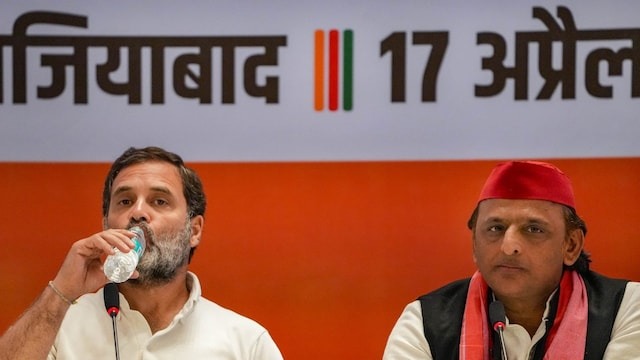
Cabinet Minister Anil Kumar directly attacked the opposition, stating, “SP’s best friend, MK Stalin, is openly opposing Hindi. Why are SP chief Akhilesh Yadav and Congress MP Rahul Gandhi silent on this issue?” The RLD leadership further accused the opposition of ignoring the sentiments of the 24 crore Hindi speakers in Uttar Pradesh who deserve to know the stance of their leaders on the matter.
The Tamil Nadu government has been vocal in its opposition to the three-language formula under NEP 2020, claiming it could lead to the forced teaching of Hindi in the state. Chief Minister MK Stalin reaffirmed that Tamil Nadu would continue resisting any move to impose Hindi, emphasizing that the state follows a two-language formula—Tamil and English—in government-run schools. The Centre has repeatedly dismissed DMK’s claims, clarifying that the three-language formula does not mandate Hindi and could include any language alongside Tamil and English.
RLD leader Bhupender Chaudhary said the party was pressing the SP and Congress for answers, arguing that DMK’s allegations about Hindi dominating other dialects were misleading. He emphasized that standardization of languages occurs across India and accused the DMK of creating divisions that threaten national unity.
The controversy escalated further when MK Stalin claimed that the push for Hindi had led to the extinction of nearly 25 native North Indian languages over the past century. The BJP quickly dismissed this statement as “silly” and accused Tamil political leaders of twisting facts for electoral gains ahead of the 2026 assembly elections.
Union Minister of State for Education Jayant Singh also criticized the DMK’s position, asserting that those raising concerns about Hindi imposition were themselves guilty of imposing their political views. He highlighted that the NEP 2020 explicitly emphasizes the use of the mother tongue and local languages as mediums of instruction in classrooms.
The issue of language has long been a sensitive topic in Tamil Nadu, where Dravidian parties, including both the DMK and AIADMK, have historically opposed Hindi imposition. Massive anti-Hindi agitations in the past have even led to self-immolations by pro-Tamil activists. However, the BJP and RLD insist that the current policy does not impose Hindi on any state but instead provides flexibility for regional languages.
As the debate intensifies, the RLD’s vocal opposition to the DMK’s stance and its criticism of the Congress and SP for their silence indicate that language politics is set to become a major flashpoint ahead of upcoming elections.