New Delhi, December 22, 2025
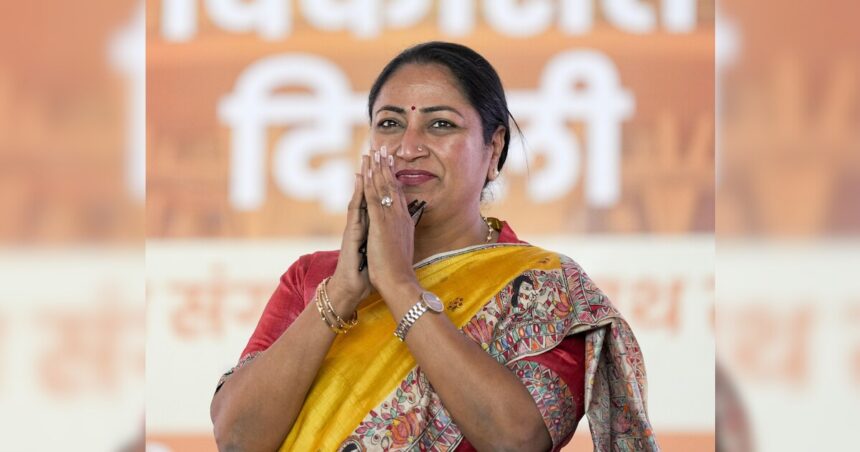
In a decisive move to tackle rising air pollution in the national capital, Chief Minister Rekha Gupta on Monday announced a series of stringent measures, making it clear that her government will follow a zero-tolerance policy against pollution-related violations. Chairing a high-level review meeting at the Delhi Secretariat, the Chief Minister outlined steps ranging from strict enforcement of Pollution Under Control (PUC) norms to restructuring public transport and regulating e-rickshaws across the city.
The meeting was attended by Environment Minister Manjinder Singh Sirsa and senior officials from the environment, transport and public works departments, the Delhi Pollution Control Committee, and Delhi Traffic Police. Officials said the decisions are part of a broader strategy to curb vehicular emissions, ease traffic congestion and improve overall air quality in Delhi and the NCR.
No relief on PUC challans
Taking a firm stand on enforcement, the Chief Minister directed that no leniency be shown to vehicles found operating without valid PUC certificates. Under existing rules, vehicles violating pollution norms face a fine of ₹10,000. Rekha Gupta noted that in many cases, vehicle owners manage to get these fines reduced substantially through Lok Adalats, which weakens the deterrent effect of the penalty.
She categorically stated that PUC challans will no longer be waived under any circumstances. If required, the government will approach the courts to ensure strict implementation of the law. Emphasising that the objective is not revenue collection, the Chief Minister said the primary goal is to ensure cleaner air for Delhi’s residents and compel citizens to maintain pollution-free vehicles.
Exploring pooled and shared e-bus services
As part of efforts to reduce the number of private vehicles on roads, the Delhi government will initiate discussions with mobility companies such as Ola and Uber to explore the possibility of running pooled and shared electric or pollution-free buses in Delhi-NCR. Officials said such services could significantly cut down traffic volume while offering an environmentally friendly commuting option.
The Chief Minister said encouraging private participation in clean mobility solutions is essential to achieving the long-term goal of zero emissions in the capital. If implemented, the initiative is expected to strengthen last-mile connectivity and complement existing public transport systems.
New guidelines for e-rickshaws
Addressing traffic congestion, Rekha Gupta acknowledged that unregulated movement of e-rickshaws has become a major cause of traffic jams in several parts of the city. Prolonged congestion leads to excessive fuel consumption and higher emissions, directly contributing to air pollution.
To address this, the government will soon issue new e-rickshaw guidelines. These will define operational zones and rationalise routes to ensure smoother traffic flow and reduce bottlenecks. Officials said the aim is to balance livelihoods linked to e-rickshaws with the need for disciplined and efficient traffic management.
Rationalisation of DTC bus routes
The government also announced a plan to rationalise routes of Delhi Transport Corporation buses to improve coverage and efficiency. The Chief Minister said DTC buses must reach every part of the city, including inner neighbourhoods and underserved areas.
According to officials, scientifically planned routes will enhance last-mile connectivity, making public transport a more attractive option and reducing dependence on private vehicles. Improved accessibility is expected to play a crucial role in lowering vehicular emissions over time.
Directing all departments to work in close coordination, Rekha Gupta ordered that the decisions taken in the meeting be implemented with immediate effect. She said the Delhi government is fighting a comprehensive and multi-pronged battle against pollution and will not hesitate to take tough decisions to protect the environment.
Reiterating her commitment, the Chief Minister said her government is focused on modernising public transport, enforcing environmental laws strictly and taking legal action against violators, with the larger aim of making Delhi cleaner, greener and more livable.