In her visit to China, UK Chancellor Rachel Reeves has emphasized her commitment to improving the economic situation for working people in Britain. This visit, marked by discussions on trade and investment opportunities, has garnered significant attention amid growing concerns over the UK’s rising borrowing costs and the depreciation of the pound. Despite criticisms regarding her decision to make the trip, the Treasury has affirmed that the Chancellor’s focus remains on promoting growth and raising living standards across the UK.
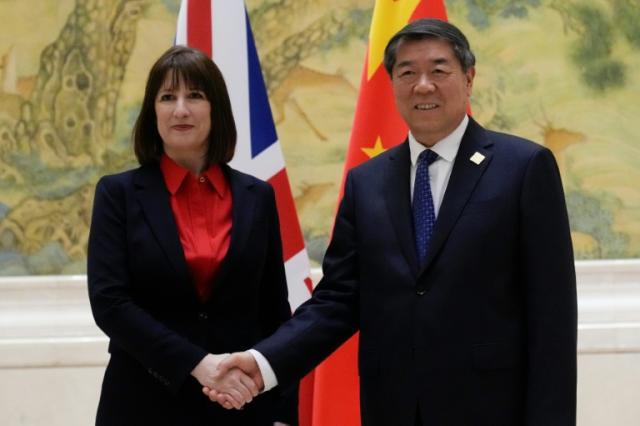
Reeves met with Chinese Vice-Premier He Lifeng in Beijing, where the two discussed strengthening economic ties, with a specific focus on opportunities to boost trade and investment between the two nations. This is part of the UK government’s broader efforts to grow the economy and improve the livelihoods of British citizens. The visit, however, has been overshadowed by the latest market turbulence, with UK borrowing costs hitting a 16-year high and the pound falling below $1.22. These developments have sparked criticism, particularly from Conservative figures, who accuse Reeves of fleeing to China amid domestic economic challenges.
While in Beijing, Reeves visited the UK bike maker Brompton’s store, where she reiterated her stance on the UK’s economic strategy, affirming that she would not alter her fiscal plans despite the market volatility. “Growth is the number one mission of this government,” she said, stressing the importance of economic stability for long-term prosperity. She also reaffirmed the government’s fiscal rules, stating that they were non-negotiable and would remain in place, despite the pressure from rising borrowing costs.
The ongoing increase in UK borrowing costs, which recently reached the highest level in a decade, presents a challenge for Reeves as she attempts to adhere to her fiscal rules. The Chancellor has committed to avoiding borrowing for day-to-day spending and to reducing national debt as a percentage of GDP by the end of the current parliament. However, the recent economic turbulence, coupled with stagnant economic growth in the UK, poses a significant hurdle to these goals.
The Chancellor’s visit to China aligns with a broader diplomatic effort to strengthen economic cooperation between the UK and China, two of the world’s largest economies. China, the UK’s fourth-largest trading partner, is central to the UK’s strategy of diversifying its economic relations, especially as the country seeks new trading partners post-Brexit. According to the Treasury, UK exports to China supported over 455,000 jobs in 2020, underlining the importance of the relationship. Reeves’ trip is part of an ongoing commitment by UK Prime Minister Sir Keir Starmer to expand economic ties with China, as agreed upon in a meeting with Chinese President Xi Jinping last year.
During her time in Beijing, Reeves not only focused on economic cooperation but also pledged to raise “difficult issues” with the Chinese leadership. One of the primary concerns for the UK is China’s ongoing support for Russia’s war against Ukraine. Reeves is expected to press Chinese officials to cease their material and economic backing for Russia, calling for a resolution to the ongoing conflict. Additionally, the Chancellor will address human rights issues, particularly the treatment of people in Hong Kong and the ongoing concerns over the suppression of freedoms in the region.
Reeves also underscored the need for a pragmatic relationship with China, saying that such relationships are in the UK’s national interest. “We need to make sure we have a pragmatic and good relationship with countries around the world. That is in our national interest,” Reeves remarked. The Chancellor further emphasized that fostering strong economic relations with China will benefit British businesses and help them expand overseas.
In addition to boosting the trade of financial services, particularly in Shanghai, discussions during the visit are expected to focus on reducing barriers faced by British businesses in the Chinese market. Reeves is joined by a delegation of senior representatives from key UK financial institutions, including Bank of England Governor Andrew Bailey and Financial Conduct Authority Chief Executive Nikhil Rathi, as well as executives from some of Britain’s largest financial services firms.
However, the visit occurs in a politically sensitive context, as MPs have recently raised concerns over Chinese-founded fashion retailer Shein. Allegations of forced labor and human rights violations in Shein’s supply chains have attracted significant attention, with the company denying the claims. In particular, questions have been raised about whether Shein sources cotton from the Xinjiang region, an area in which China has been accused of subjecting Uyghur Muslims to forced labor. The ongoing controversy around Shein has added another layer of complexity to the diplomatic engagement between the UK and China.
Despite the challenging backdrop, Reeves remains committed to strengthening the UK’s economic position in the global arena and fostering closer ties with China, all while navigating the intricate issues surrounding human rights and geopolitical tensions.