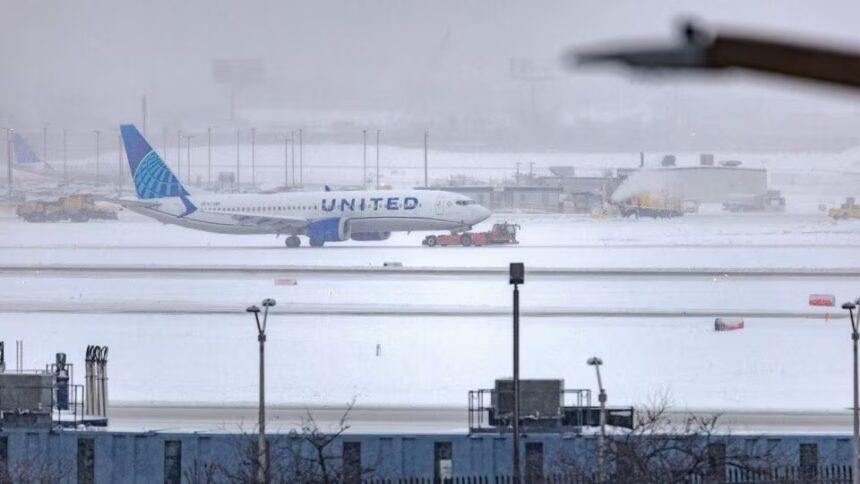
The storm, which intensified rapidly over the Atlantic before slamming into densely populated coastal regions, delivered more than a foot of snow across eight states, shattering previous snowfall records in several areas. While snowfall began to taper off by Tuesday, the aftermath continues to disrupt daily life for millions of residents across the region. Weather warnings had stretched along a vast corridor of the eastern seaboard and extended into parts of Canada, highlighting the scale and severity of the system.
Air travel was among the hardest-hit sectors. Through Tuesday, more than 11,000 flights were grounded, creating ripple effects across domestic and international routes. Major hubs in Boston, New York and Washington experienced extensive cancellations and delays as snow accumulation and high winds made runways unsafe. Airlines scrambled to rebook passengers, while airport authorities worked around the clock to clear snow and restore normal operations.
Power outages compounded the crisis. Over 500,000 homes and businesses were left without electricity as heavy, wet snow weighed down power lines and strong winds toppled trees. Utility companies deployed emergency crews across affected states, warning that restoration efforts could take several days in the hardest-hit areas. The combination of low temperatures and widespread outages raised concerns about heating access, particularly for vulnerable populations.
In Massachusetts, authorities imposed travel restrictions in some regions, urging drivers to stay off roads to allow snowplow crews to clear highways and local streets. Whiteout conditions along the state’s south coast severely reduced visibility, leading to hazardous driving conditions and multiple minor accidents. Coastal towns such as Scituate witnessed boats and docks buried under thick layers of snow, creating striking winter scenes while complicating cleanup efforts.
Emergency management officials described the storm as one of the most intense in recent years for parts of the northeast. The rapid accumulation of snow, coupled with sustained winds, disrupted rail services and forced temporary closures of schools and government offices. Public transportation systems in major metropolitan areas operated on reduced schedules, while local authorities urged residents to limit non-essential travel.
Meteorologists noted that the storm’s strength was fueled by a collision of cold Arctic air with moist Atlantic systems, a pattern that can generate heavy snowfall and strong coastal winds. Although snowfall totals varied by location, the storm’s breadth ensured that millions experienced significant impact. Northern states bore the brunt of accumulation, while southern portions of the warning zone dealt with a mix of snow and icy conditions.
The economic impact is expected to extend beyond immediate travel disruptions. Businesses across retail, hospitality and logistics sectors reported closures or delayed operations. With flights canceled and highways partially blocked, supply chain delays may persist into the coming days. Insurers are also preparing for claims related to property damage from collapsed roofs, fallen trees and frozen pipes.
As skies gradually clear, attention turns to recovery efforts. Municipal crews continue clearing streets and restoring critical infrastructure, while airlines work to reposition aircraft and crews stranded by the cancellations. Weather officials caution that melting snow followed by freezing temperatures could create additional hazards in the days ahead, including icy roadways and black ice.
The storm serves as a stark reminder of the vulnerability of densely populated regions to extreme weather events. With climate patterns contributing to more intense and unpredictable storms, authorities are emphasizing preparedness and coordinated response strategies to mitigate future disruptions.