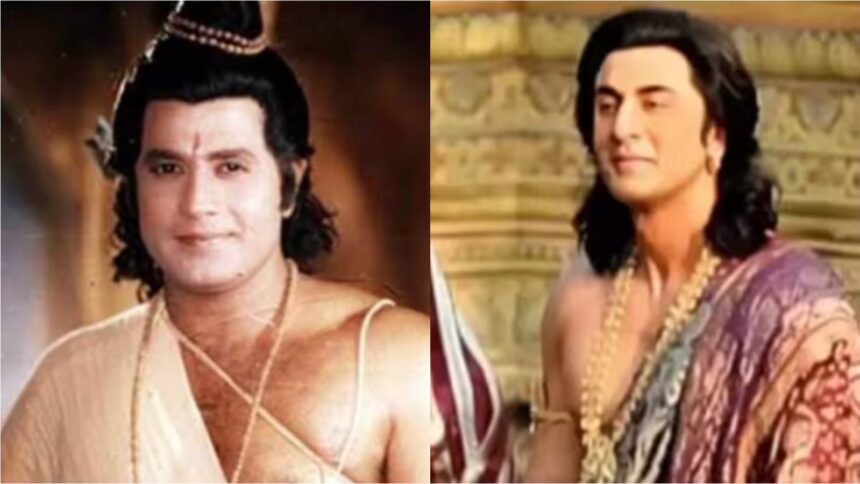
Veteran actor Arun Govil, forever associated with the image of Lord Ram through the iconic television series Ramayan, has voiced strong support for the casting of Ranbir Kapoor in Nitesh Tiwari’s upcoming film Ramayana, stressing that the new adaptation should be judged on its own creative vision rather than compared with past cinematic attempts.
Speaking about the renewed interest in mythological storytelling on screen, Arun Govil made it clear that every retelling of the epic carries its own sensibility, context and responsibility. He urged audiences to approach the new film with an open mind, particularly in light of the criticism and controversy that surrounded earlier adaptations. According to Govil, comparisons with films like Adipurush are neither fair nor productive, as each project is shaped by different creative intentions, technologies and narrative approaches.
Arun Govil on Ranbir Kapoor and the essence of Lord Ram
Arun Govil’s endorsement of Ranbir Kapoor has drawn significant attention, given Govil’s own enduring legacy as Lord Ram. For many viewers, Govil’s portrayal in Ramayan remains the definitive screen depiction of the deity, making his opinion particularly influential. Govil said Ranbir Kapoor is “absolutely fit” for the role, both in terms of appearance and inner qualities.
According to Govil, portraying a divine figure like Lord Ram requires more than technical acting skill. He explained that the actor’s personality, aura and sense of humility play a crucial role in making the portrayal believable and respectful. He described Ranbir Kapoor as not only a talented performer but also a good human being, adding that such qualities are essential when an actor is tasked with embodying a character who represents righteousness, compassion and moral strength.
Govil elaborated that once an actor becomes a benchmark for a particular role, comparisons are inevitable, but they should not be viewed negatively. Instead, he believes that each generation deserves its own interpretation of epic characters, shaped by contemporary sensibilities. He noted that when audiences see Lord Ram on screen, they should instinctively feel that the portrayal aligns with their imagination of divinity, grace and strength. In his view, Ranbir Kapoor’s look and screen presence appear to meet that expectation.
He also praised the visible effort being put in by the filmmakers, stating that the scale, detailing and seriousness reflected in early glimpses of the film indicate a sincere attempt to honour the epic. Govil emphasised that mythological cinema demands deep cultural sensitivity and dedication, and from what he has observed, the team behind Ramayana seems committed to that responsibility.
No comparison with Adipurush and evolving mythological cinema
Addressing the tendency to compare every new Ramayana adaptation with previous films, Govil said it is not right to judge a project even before it reaches audiences. He stressed that Nitesh Tiwari’s Ramayana should be evaluated independently, without the baggage of earlier cinematic interpretations. According to him, the controversy surrounding Adipurush should not define the fate of future mythological films.
Govil pointed out that cinema, like society, evolves with time. Advances in visual effects, storytelling techniques and audience expectations naturally influence how epics are presented on screen. While television adaptations like the Ramayan of the late 1980s relied heavily on dialogue, music and performance, modern films operate in a different visual and narrative space. This difference, he said, should be understood rather than criticised.
He also noted that filmmakers today face greater scrutiny, especially when dealing with religious and cultural subjects. Social media amplifies reactions instantly, often before a film is fully understood. Govil cautioned against premature judgments and urged audiences to allow creators the space to present their complete vision.
Talking about the cast, Govil acknowledged that assembling a strong ensemble is crucial for a story as expansive as the Ramayana. Alongside Ranbir Kapoor as Lord Ram, the film features Yash as Raavan, a casting choice that has generated significant curiosity. Govil said the role of Raavan demands intensity, intelligence and commanding presence, qualities that Yash is known for on screen.
The casting of Sai Pallavi as Sita has also been widely discussed. Govil remarked that Sita is a symbol of strength, dignity and resilience, and portraying her requires emotional depth rather than overt dramatics. He believes Sai Pallavi’s naturalistic acting style could bring sincerity to the role.
Other key roles include Sunny Deol as Hanuman and Ravi Dubey as Lakshman. Govil said that characters like Hanuman and Lakshman are central to the emotional and moral core of the epic, and strong performances in these roles are essential to balance the narrative.
Govil further reflected on the cultural impact of mythological storytelling in India, noting that epics like the Ramayana are not just stories but living traditions that shape values across generations. He said filmmakers must approach such material with reverence, understanding that audiences connect with these characters on a deeply personal level.
He expressed optimism that the new Ramayana would encourage younger audiences to reconnect with the epic, especially if it succeeds in blending emotional authenticity with modern cinematic techniques. According to Govil, respectful reinterpretation is not a threat to tradition but a way of keeping it alive in changing times.
As discussions around the film continue, Govil’s comments have added a note of reassurance for fans who remain cautious after recent controversies. His message remains consistent: judge the film for what it is, not for what previous adaptations were, and allow each creative effort the dignity of standing on its own.