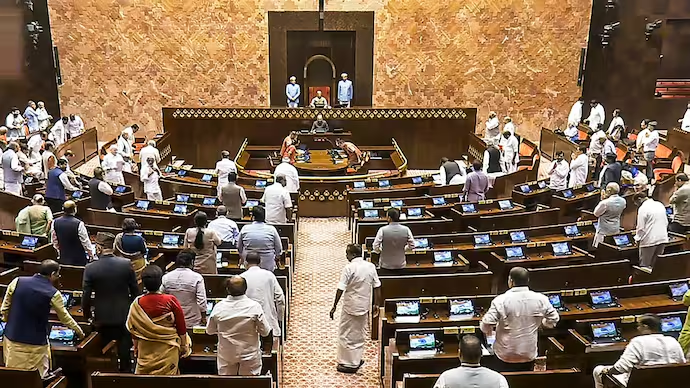
India is witnessing an important phase in its parliamentary process as voting for the biennial Rajya Sabha elections is being held for 37 seats across 10 states. The elections are taking place in Maharashtra, Odisha, Tamil Nadu, West Bengal, Assam, Bihar, Chhattisgarh, Haryana, Himachal Pradesh and Telangana. While 26 seats are likely to be filled without contest in seven states due to the absence of opposing candidates, voting will be required for the remaining seats in states where political competition is intense. The elections have drawn national attention because they could slightly alter the numerical strength of political alliances in the Upper House of Parliament. The National Democratic Alliance currently holds a strong position in the Rajya Sabha and is expected to improve its numbers further after the results.
Political contest intensifies in Bihar
Bihar has emerged as one of the most closely watched states in the current Rajya Sabha elections. Five seats from the state are up for election, and the ruling National Democratic Alliance has fielded several prominent candidates. Among them are Chief Minister Nitish Kumar from the Janata Dal (United), Bharatiya Janata Party leader Nitin Nabin and Rashtriya Lok Morcha chief Upendra Kushwaha. The NDA has expressed confidence that it will secure all five seats due to its numerical strength in the state assembly. Union minister Ram Nath Thakur, also from the JD(U), is attempting to win a third consecutive term in the Upper House. Another candidate from the BJP, Shivesh Kumar, is also contesting the election. Leaders from the ruling alliance have said they are confident of a clean sweep in Bihar. Meanwhile, the opposition Rashtriya Janata Dal is making efforts to consolidate support among allied parties. The RJD has sought backing from the All India Majlis-e-Ittehad-ul-Muslimeen, which holds five MLAs in the Bihar assembly. RJD leader Tejashwi Yadav has been actively engaging with party leaders and allies to secure votes for the party’s candidate Amrendra Dhari Singh. According to opposition leaders, secular parties have united to support the RJD candidate in the election.
Dramatic developments in Odisha elections
The Rajya Sabha elections in Odisha have witnessed intense political activity and dramatic developments. Four seats from the state are up for election, and the contest has turned into a high-stakes political battle among major parties. The Congress party issued a show-cause notice to one of its MLAs after he reportedly went missing ahead of the crucial vote. At the same time, two individuals from Odisha were arrested in Bengaluru for allegedly attempting to bribe legislators staying at a resort. According to reports, the accused approached some MLAs with a blank cheque in an attempt to influence their votes. Congress leaders alleged that certain individuals had offered huge sums of money to legislators in exchange for cross-voting during the Rajya Sabha election. When the offer was rejected, the individuals allegedly issued threats. The incident triggered strong reactions from political parties and raised concerns about attempts to influence the democratic process. Meanwhile, the Bharatiya Janata Party moved its MLAs to the port town of Paradip for what it described as a training session on Rajya Sabha voting procedures. Senior BJP leaders including the chief minister oversaw preparations and ensured that party MLAs were ready to cast their votes together. The Biju Janata Dal leadership also held meetings with its legislators to prevent cross-voting and maintain party discipline.
Tight contest expected in Haryana
Another key battleground in the Rajya Sabha elections is Haryana, where two seats are up for election. The contest in the state has attracted significant attention because of the narrow margins involved. Three candidates are contesting the seats: BJP’s Sanjay Bhatia, Congress leader Karamvir Singh Boudh and BJP-backed independent candidate Satish Nandal. Each candidate requires 31 votes to secure a seat in the Upper House. In an effort to ensure unity among its legislators, the Congress party moved its MLAs to resorts in Himachal Pradesh ahead of the voting day. The lawmakers were first taken to Kufri and later shifted to Kasauli under tight security arrangements. Party leaders said the move was necessary to prevent attempts at poaching or cross-voting. Meanwhile, BJP leaders expressed confidence that their candidates would secure the required support. The political manoeuvring in Haryana highlights the strategic importance of Rajya Sabha elections, where even small shifts in legislative support can determine the outcome.
Several states set to elect candidates unopposed
While intense contests are unfolding in some states, many Rajya Sabha seats across the country are set to be filled without voting. In Maharashtra, all seven candidates including those from the ruling alliance and NCP leader Sharad Pawar are expected to be elected unopposed. Similarly, in Tamil Nadu six candidates from different political parties will be elected without contest due to the absence of rival nominations. In Telangana, senior Congress leader Abhishek Manu Singhvi and party candidate Vem Narender Reddy have already been elected unopposed. In Himachal Pradesh, Congress candidate Anurag Sharma is also set to enter the Rajya Sabha unopposed. In Chhattisgarh and Assam, candidates from the BJP and allied parties are also expected to secure seats without voting. In West Bengal, however, a competitive contest is underway with several prominent candidates in the fray including Trinamool Congress leaders and BJP representatives. The Rajya Sabha elections are a crucial part of India’s parliamentary system as they determine the composition of the Upper House. With several political alliances aiming to strengthen their presence, the outcome of these elections will play an important role in shaping legislative dynamics in the coming years.