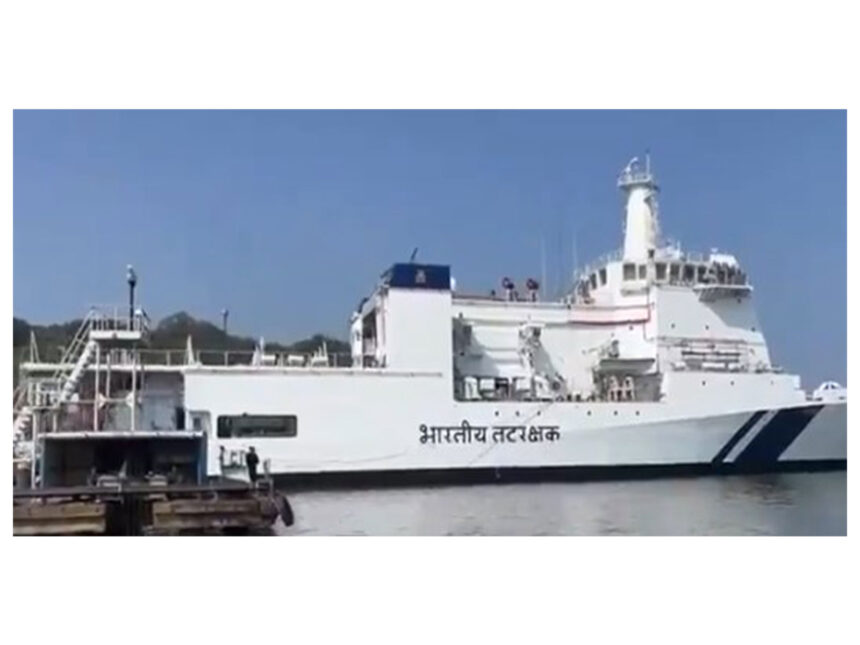
The commissioning of samudra pratap signals india’s advancing maritime self-reliance and a decisive shift toward indigenous defence capability.
India’s maritime security framework is set to achieve a significant milestone with the commissioning of the indian coast guard’s first indigenously built patrol vessel, samudra pratap, by defence minister Rajnath Singh on january 5. The induction of this vessel marks a defining moment in india’s long-standing effort to strengthen coastal security through homegrown platforms while reducing reliance on foreign defence equipment. Beyond its immediate operational value, samudra pratap symbolises a broader strategic vision that links national security, industrial capability, and technological self-reliance in an increasingly contested maritime environment.
Indigenous shipbuilding and the evolution of india’s maritime security
The commissioning of samudra pratap reflects the steady evolution of india’s defence manufacturing ecosystem, particularly in the maritime domain. For decades, india depended heavily on imported vessels and technology to meet the operational needs of its maritime forces. While such acquisitions helped bridge capability gaps, they also highlighted vulnerabilities related to supply chains, costs, and strategic autonomy. The decision to prioritise indigenous shipbuilding emerged from this experience, gradually reshaping policy and investment priorities within the defence sector.
Samudra pratap stands as a tangible outcome of this shift. Designed and constructed within india, the vessel demonstrates the growing maturity of domestic shipyards and their ability to deliver platforms that meet stringent operational and safety requirements. The process of building a patrol vessel indigenously involves far more than assembling a hull. It requires the integration of navigation systems, propulsion technology, communication networks, and mission-specific equipment, all tailored to the demanding conditions of maritime operations. Achieving this level of integration domestically reflects the depth of expertise that indian industry has developed over time.
From a strategic perspective, the induction of an indigenously built patrol vessel strengthens india’s ability to respond independently to maritime challenges. The indian coastline stretches over thousands of kilometres and borders one of the world’s busiest sea lanes. Ensuring effective surveillance, rapid response, and sustained presence in these waters is essential not only for national security but also for economic stability, given india’s reliance on maritime trade. Patrol vessels like samudra pratap play a critical role in this context, acting as the first line of defence against a wide range of threats, from smuggling and illegal fishing to more complex security challenges.
The commissioning also aligns closely with the broader policy emphasis on self-reliance in defence manufacturing. Indigenous platforms reduce long-term costs associated with imports and maintenance, while also allowing for greater flexibility in upgrades and modifications. When vessels are built at home, design improvements can be incorporated more seamlessly based on operational feedback. This adaptability is particularly important in a rapidly changing security environment, where new threats and technologies continuously reshape maritime operations.
Equally significant is the impact of indigenous shipbuilding on the domestic economy. Projects like samudra pratap generate employment, foster specialised skills, and encourage collaboration between public and private sector enterprises. Over time, this ecosystem contributes to a virtuous cycle in which technological capability and industrial capacity reinforce each other. For the indian coast guard, the availability of domestically produced vessels ensures that fleet expansion and modernisation can proceed with greater predictability and strategic confidence.
Operational role of samudra pratap and its strategic implications
As a patrol vessel, samudra pratap has been designed to enhance the operational reach and effectiveness of the Indian Coast Guard across multiple mission profiles. The coast guard’s responsibilities extend far beyond traditional maritime security, encompassing search and rescue operations, environmental protection, disaster response, and the enforcement of maritime law. A modern patrol vessel must therefore be versatile, capable of operating in varied sea states, and equipped to handle both routine patrols and emergency situations.
Samudra pratap is expected to significantly augment the coast guard’s capacity for coastal surveillance and monitoring of india’s exclusive economic zone. With maritime activity increasing in the indian ocean region, the ability to maintain constant vigilance has become more important than ever. Patrol vessels serve as mobile platforms that can deter unlawful activities through their presence alone, while also providing the capability to respond swiftly when incidents occur. In this sense, samudra pratap contributes not only to enforcement but also to prevention.
Search and rescue is another area where the vessel’s capabilities will be critical. India’s waters witness frequent maritime traffic, including commercial shipping, fishing vessels, and passenger boats. Accidents at sea can escalate rapidly, particularly during adverse weather conditions. A well-equipped patrol vessel with modern navigation and communication systems can make the difference between timely rescue and tragedy. By strengthening the coast guard’s fleet, samudra pratap enhances india’s ability to fulfil its humanitarian obligations at sea.
The vessel also plays a role in protecting marine resources and the maritime environment. Illegal fishing and pollution pose serious threats to coastal ecosystems and the livelihoods of coastal communities. Patrol vessels enable enforcement agencies to monitor activities, conduct inspections, and respond to environmental incidents. In this way, samudra pratap supports sustainable maritime governance alongside security objectives.
From a strategic standpoint, the commissioning of samudra pratap sends a clear signal about india’s priorities in the maritime domain. The indian ocean region has gained prominence as a theatre of geopolitical competition, with multiple powers seeking to expand their presence and influence. For india, maintaining a credible and capable maritime force is essential to safeguarding national interests and contributing to regional stability. While the coast guard operates primarily in a law enforcement and humanitarian capacity, its effectiveness complements the role of the navy, creating a layered maritime security architecture.
The symbolism of the commissioning ceremony itself should not be underestimated. When the defence minister formally inducts an indigenously built vessel into service, it reinforces the political commitment to self-reliance and highlights the tangible progress achieved under indigenisation initiatives. Such events also serve to boost morale within the armed forces and inspire confidence among industry stakeholders involved in defence manufacturing.
Over time, the successful operation of samudra pratap is likely to influence future procurement and design decisions. Operational feedback will inform the development of subsequent vessels, allowing designers and builders to refine features and incorporate new technologies. This iterative process is central to building a resilient and future-ready maritime force. As more indigenous platforms enter service, the coast guard’s fleet will increasingly reflect india’s own technological strengths and strategic priorities.
The commissioning of samudra pratap thus represents more than the addition of a single vessel to the fleet. It marks a step forward in india’s journey toward maritime self-reliance, operational readiness, and strategic autonomy. In an era when maritime security challenges are becoming more complex and interconnected, the ability to design, build, and deploy effective platforms at home is a critical advantage. Samudra pratap stands as a testament to that capability, reinforcing india’s resolve to secure its maritime frontiers through indigenous strength and innovation.