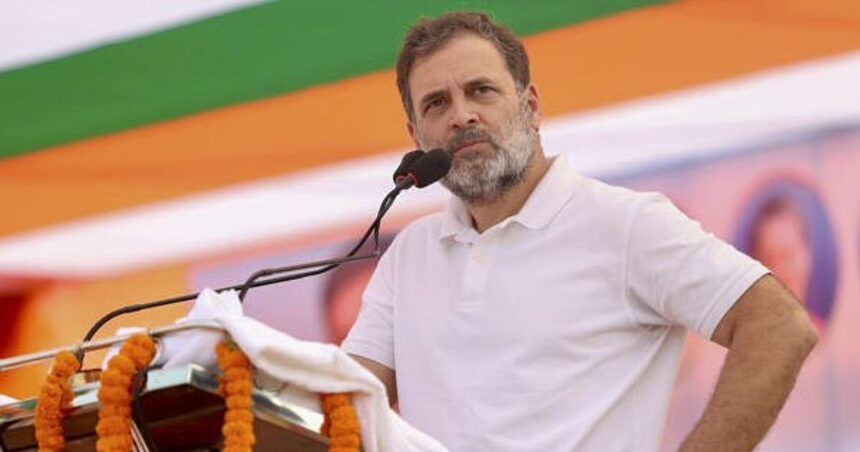
Rahul Gandhi defamation case hearing postponed due to Ram Navami holiday, court to resume proceedings on March 28 amid political attention.
The hearing in a defamation case involving Rahul Gandhi has been deferred, with the next date now scheduled for March 28. The adjournment came as courts remained closed due to the festival of Ram Navami, resulting in a temporary pause in proceedings.
The case is being heard in a special MP/MLA court in Sultanpur, Uttar Pradesh, and has drawn considerable political and legal attention due to the high-profile individuals involved. The matter relates to alleged remarks made by Rahul Gandhi during an earlier election campaign, which were claimed to be defamatory towards Amit Shah.
With the next hearing scheduled, both legal teams are expected to present their arguments, making the upcoming proceedings significant in determining the direction of the case.
Hearing Deferred Due to Holiday, Proceedings to Resume Soon
The court was expected to hear arguments in the defamation case on the scheduled date, but the proceedings could not take place due to the Ram Navami holiday. As a result, the case has been adjourned to March 28.
Such adjournments are common in the judicial system when hearings coincide with public holidays. While the delay may appear procedural, it also extends the timeline of a case that has already seen multiple stages of legal examination.
The MP/MLA court handling the case is specifically designated to deal with matters involving elected representatives, ensuring that such cases are given priority. However, despite this structure, procedural delays, documentation requirements, and scheduling constraints can impact the pace of proceedings.
With the next hearing date confirmed, legal representatives on both sides are expected to come prepared with arguments, evidence, and submissions that may shape the future course of the case.
The adjournment also means that public and political attention remains focused on the matter, as it continues to unfold within the judicial framework.
Background of the Defamation Case and Allegations
The case originates from statements allegedly made by Rahul Gandhi during a political rally in 2018, during the Karnataka Assembly election campaign. The remarks were claimed to be directed at Amit Shah and were subsequently challenged as defamatory by a BJP leader who filed the complaint.
According to the complainant, the statements made by Rahul Gandhi were not only misleading but also damaging to the reputation of Amit Shah. The complaint argues that such remarks, made in a public and political setting, have the potential to influence public perception and harm an individual’s image.
Rahul Gandhi, through his legal team, has denied the allegations and maintained that his statements were made in a political context. His defence has emphasised that political speeches often involve criticism and commentary, which should be viewed within the broader framework of democratic discourse.
The case has also involved discussions around evidence, including audio and video recordings of the alleged statements. Verification of such evidence is a critical aspect of the proceedings, as it helps establish the authenticity and context of the remarks.
Over time, the case has progressed through various stages, including appearances by Rahul Gandhi in court, submissions by both parties, and procedural hearings. Each stage has contributed to shaping the legal narrative surrounding the matter.
Legal Framework and Key Issues in Defamation Cases
Defamation cases in India are governed by both civil and criminal laws, making them complex in nature. The central issue in such cases is whether a statement has caused harm to an individual’s reputation and whether it was made with intent or negligence.
In the present case, the court will need to examine several key factors. These include the content of the alleged statement, the context in which it was made, and whether it can be proven to be false or misleading.
Another important aspect is intent. The court must determine whether the statement was made with the intention to harm reputation or whether it falls within the scope of permissible political speech.
Freedom of speech is a fundamental right in India, but it is subject to reasonable restrictions, including those related to defamation. This creates a delicate balance between protecting individual reputation and allowing open political debate.
In cases involving political leaders, this balance becomes even more significant, as public figures are often subject to criticism and scrutiny. Courts must carefully assess whether the remarks cross the line into defamation or remain within acceptable limits of political expression.
The outcome of such cases can have broader implications, influencing how political speech is interpreted and regulated in the future.
Political Context and Broader Implications
The defamation case involving Rahul Gandhi is not just a legal matter but also a political one. It reflects the ongoing rivalry between major political parties in India, particularly the Congress and the BJP.
Legal cases involving prominent leaders often attract significant public attention, as they intersect with political narratives and public perception. In this case, the involvement of Rahul Gandhi and Amit Shah adds to the significance of the proceedings.
The case also highlights the increasing use of legal mechanisms in political disputes. Defamation suits have become a common tool for addressing alleged misconduct or statements made during campaigns.
From a political perspective, such cases can influence public opinion, either by reinforcing existing narratives or by bringing new issues into focus. They can also become part of broader campaign strategies, with parties using them to highlight their positions.
At the same time, the judicial process remains independent, focusing on legal principles and evidence rather than political considerations. This distinction is crucial in ensuring that justice is delivered impartially.
Role of Evidence and Court Proceedings
As the case moves forward, the role of evidence will be critical in determining the outcome. Audio and video recordings, witness statements, and other forms of documentation will be examined to establish the facts.
The process of verifying evidence is often time-consuming, as it involves technical analysis and legal scrutiny. However, it is essential for ensuring that the court’s decision is based on accurate and reliable information.
Court proceedings will also involve arguments from both sides, with legal representatives presenting their interpretations of the law and the facts. The judge will consider these arguments before making any decisions.
The upcoming hearing on March 28 is expected to focus on advancing these discussions, potentially bringing the case closer to resolution.
What Lies Ahead
With the next hearing scheduled, the case is set to resume its course in the judicial system. The proceedings will likely involve detailed arguments, examination of evidence, and consideration of legal principles.
Depending on the progress of the hearing, the case may move towards a conclusion or require further hearings. Legal cases of this nature often involve multiple stages, each contributing to the final outcome.
Observers will be closely watching the developments, given the high-profile nature of the case and its potential impact on political discourse.
The deferral of Rahul Gandhi’s defamation case hearing to March 28 marks a temporary pause in an ongoing legal process that carries both legal and political significance. While the adjournment was due to a holiday, the case itself continues to remain in focus.
As proceedings resume, the emphasis will be on examining evidence, interpreting the law, and ensuring a fair outcome. The case serves as an example of how legal and political dynamics intersect in India’s democratic system.
The final outcome will not only determine the fate of the case but may also influence broader discussions on defamation, political speech, and accountability in public life.