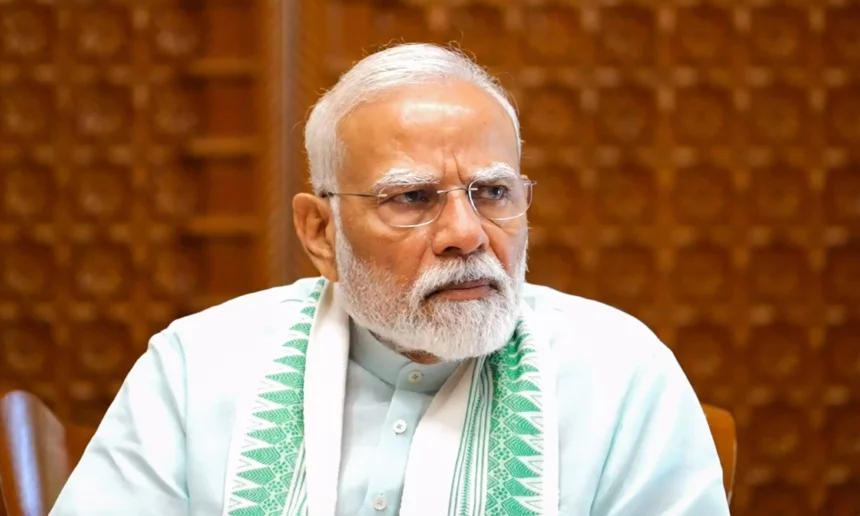
Prime Minister Narendra Modi has taken a decisive stand against Pakistan’s aggression through military actions as part of Operation Sindoor. This strategic move follows the escalating tensions between India and Pakistan, where PM Narendra Modi responded firmly to provocations, including terrorist strikes and missile attacks. His actions, which included two major military strikes in early May, have made it clear that India will no longer tolerate cross-border terrorism and threats. Narendra Modi’s message to Pakistan is unequivocal—terrorism will be met with force, and there will be no tolerance for provocations.
On May 7, PM Narendra Modi ordered a targeted strike against the terror headquarters in Bahawalpur and Muridke, Pakistan, in retaliation for the April 22 Pahalgam strike. The strike, which wiped out key terrorist leaders, was a bold move to dismantle the terror infrastructure across the border. This was followed by another major escalation on May 10, when India targeted multiple Pakistani airbases, including the crucial ones in Rawalpindi and Islamabad. This attack came after Pakistan launched ballistic missiles aimed at Indian military bases, including those in Punjab and Haryana.
Narendra Modi’s Clear Stand on Terrorism
Despite international pressure, including calls from US Vice-President JD Vance for a ceasefire, PM Narendra Modi stood firm, refusing to offer Pakistan any off-ramp. He made it clear that any continued aggression would invite devastating retaliation. This firm stance forced Pakistan to reconsider, leading to an offer of a ceasefire from their Director General Military Operations (DGMO) on May 10. However, the ceasefire was conditional and remained under review, with Pakistan continuing to send drones into Indian territory.
In response to Pakistan’s actions, India executed a groundbreaking military operation, utilizing advanced Brahmos missiles and Rafale jets with SCALP and HAMMER missiles, striking key air bases in Pakistan. The operation destroyed critical military infrastructure, including air bases in Rawalpindi and Islamabad, sending a powerful message of India’s resolve. The attack not only decimated Pakistan’s military installations but also showcased India’s military capabilities, signaling a shift in the dynamics of the India-Pakistan conflict.
The confrontation exemplifies PM Narendra Modi’s approach to dealing with cross-border terrorism. He has consistently prioritized national security, and his firm decisions on the international stage reflect a commitment to protecting India from external threats. His stance is clear: if Pakistan continues its acts of aggression, it will face the full wrath of India’s military power, with no diplomatic concessions on Kashmir or other matters. The airstrikes, including the attacks on Srinagar, Amritsar, and Chandigarh airports, mark a turning point in the ongoing conflict.