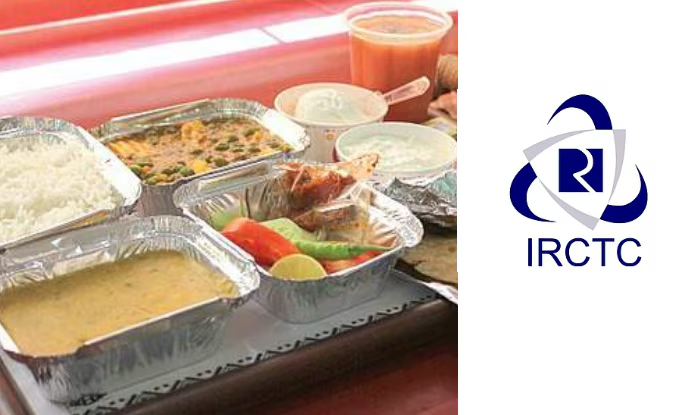
In a concerning revelation about onboard catering services, the Indian Railways received over 6,600 complaints from passengers about poor-quality food in 2024–25 alone. While the Railway Ministry insists that corrective actions have been taken—including issuing fines, warnings, and advisories—this growing trend has once again spotlighted persistent concerns about food safety and transparency in India’s train services. From routine passenger journeys to premium trains like Vande Bharat, the catering system continues to struggle with quality assurance, prompting public scrutiny and political questions in Parliament.
Thousands of complaints, but is quality improving?
Railway Minister Ashwini Vaishnaw, in a written reply to the Rajya Sabha, disclosed that a total of 6,645 complaints were registered during the financial year 2024–25 concerning the poor quality of food served on trains. Among these, 1,341 cases led to fines being imposed on the catering agencies responsible. Additionally, 2,995 complaints resulted in official warnings, and 1,547 cases were met with suitable advisories. For the remaining 762 incidents, other corrective measures were undertaken.
The sharp rise in complaints isn’t new. In 2023–24, the Indian Railways logged 7,026 such grievances, which followed a consistent pattern over previous years—4,421 in 2022–23 and 1,082 in 2021–22. This upward trajectory indicates an urgent need for sustained reform in the catering system across all classes of trains.
In response to concerns raised by CPI(M) MP John Brittas, the Railway Minister laid out the punitive steps taken when unhygienic or adulterated food is found. These include not just monetary penalties but also disciplinary action, counselling of food handlers, and immediate intervention by officials. However, critics argue that punitive steps alone are not enough and that systemic improvements in food procurement, preparation, and delivery are essential to restore public trust.
Transparency and tendering under scrutiny
The debate took another turn when MP Brittas questioned the transparency of the IRCTC’s catering contract awards. Specifically, he raised concerns about whether multiple railway routes, including Vande Bharat and long-distance trains, had been awarded to a single corporate group using affiliate entities. In reply, Mr. Vaishnaw assured the House that IRCTC follows a transparent and competitive bidding process.
According to the minister, contracts for train clusters are awarded to the highest bidders based on the terms laid out in the tender documents. Presently, 20 separate entities hold catering contracts, and details of these Letters of Award (LOAs) are publicly available on the IRCTC’s website. The Minister emphasized that no favoritism is involved and that standard government procedures are followed for all awards.
While the data may show procedural adherence, critics and passengers alike believe there’s a wide gap between policy and on-ground execution. Reports of cold meals, stale items, unhygienic packaging, and even bugs in the food continue to flood social media and customer service portals.
Steps taken to improve food quality
To address these issues more systematically, the Railways has implemented a number of operational reforms aimed at enhancing food hygiene and quality. Meals are now increasingly being sourced from designated Base Kitchens equipped with modern infrastructure. Some of these kitchens have been upgraded with CCTV cameras for better monitoring.
Moreover, the use of branded and verified raw materials has been mandated for meal preparation. Food Safety Supervisors are being deployed at Base Kitchens to oversee hygiene practices and ensure compliance with safety standards. The IRCTC has also made it compulsory for service providers to train their staff in food handling and sanitation procedures.
In a bid to ensure traceability and accountability, digital monitoring tools are also being explored. These systems can allow passengers to view the origin of their meals, time of packaging, and kitchen conditions. Such transparency measures are seen as crucial in building trust among passengers, especially on long-haul trains.
Despite these efforts, the recurring surge in complaints signals that much work remains to be done. While the introduction of Base Kitchens and branded ingredients marks a positive shift, the scale of operations, diversity of routes, and the involvement of multiple contractors make consistent quality control a formidable challenge.