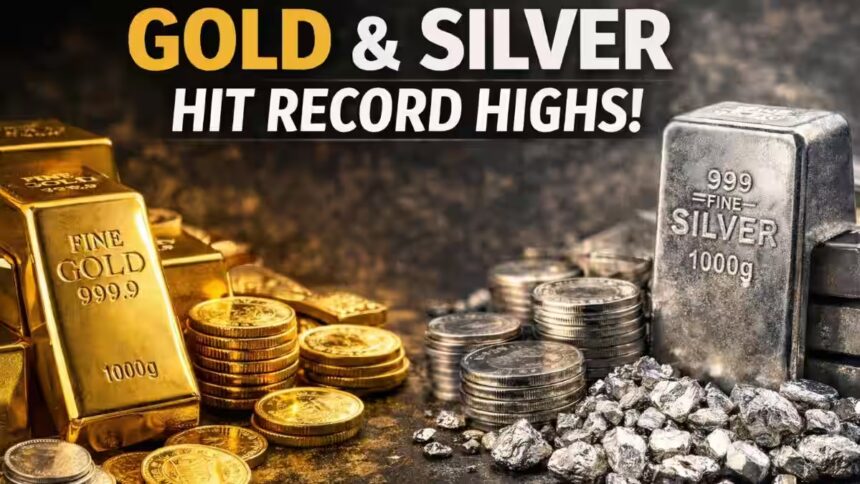
The prices of precious metals in India have surged dramatically this year, with gold reaching unprecedented levels and silver also rallying strongly, reflecting a powerful shift in investor sentiment, global economic uncertainty, and growing demand for safe-haven assets that protect wealth amid market volatility and geopolitical tensions.
Gold’s historic ascent reflects safe-haven demand and investment shifts
Gold prices have climbed steadily and aggressively in recent months, culminating in a remarkable surge that pushed the yellow metal to record levels in the Indian market. Investors, traders, and market watchers have been closely tracking this rise, noting that gold’s price movement is not just a short-term fluctuation but part of a broader trend driven by uncertainty and risk aversion. Gold’s appeal as a store of value increases when economic growth prospects dim, currencies fluctuate, or conflicts and policy unpredictability dominate headlines worldwide.
The latest figures showed gold rising by significant amounts on multiple fronts. In local Indian markets, gold rose by approximately ₹4,300 in a single session, bringing its price to levels far above previous peaks and drawing attention from both retail buyers and institutional investors. This remarkable move marked another milestone in gold’s long-term trajectory, which has been steadily climbing as global investors hedge against inflation, currency depreciation, and financial market instability.
Gold prices are influenced by a complex mix of domestic and international factors. On the global stage, uncertainties about interest rates, currency strength, geopolitical tensions, and demand from central banks have all contributed to the metal’s allure as a safe haven. In India, traditional demand for gold in weddings, festivals, and cultural savings practices continues to underpin consumption, even as price movements reach historically high levels.
The run-up in gold prices has prompted discussions among financial analysts about future directions for the market. Some see gold continuing its climb as long as global uncertainties persist, while others caution that sharp price levels could also deter some buyers or lead to profit-taking by investors who purchased earlier at lower levels. Regardless of near-term fluctuations, gold’s role as a financial hedge remains central to its appeal, particularly in markets where currency movements and inflation expectations influence savings behavior.
Gold’s extended rally has also been mirrored in international markets, where bullion continues to attract strong interest from traders seeking assets less correlated with equities and bonds. That trend reflects broader concerns about macroeconomic stability and the ability of traditional financial instruments to protect wealth during turbulent times. As cheap money policies, central bank actions, and political shifts affect financial markets, gold remains a cornerstone of diversified investment strategies.
While the headline figures for gold are impressive, they tell only part of the story. Behind the rising prices lies a network of demand dynamics, changing investor preferences, and responses to global economic signals that shape precious metal markets daily. In an environment where news headlines can turn markets on a dime, gold’s recent performance stands out as a defining feature of investor psychology and strategic asset allocation.
Silver’s robust surge underscores widening precious metal rally
Silver, often described as the more volatile counterpart to gold, has also experienced a historic rally that has captured attention across commodity markets. Traditionally prized for both its industrial uses and investment appeal, silver has seen pricing momentum that parallels its yellow metal cousin, but with even sharper peaks on occasion.
Prices of silver in India climbed significantly, with increases amounting to tens of thousands of rupees per kilogram, pushing the white metal into territory rarely seen before. This rise represented a major shift from previous pricing levels and underscored the expanding investor interest in silver as both a hedge and a diversified asset within precious metals portfolios.
The causes of silver’s surge are multifaceted. Investors often turn to silver as a safe haven in times of economic uncertainty, similar to gold, but the metal’s industrial demand also plays a role. With technology, manufacturing, renewable energy sectors, and electronics relying on silver, demand fundamentals add an additional layer of support to pricing. As global industrial activity fluctuates amid supply chain complexities and shifting demand patterns, silver’s dual identity as both an industrial and financial asset adds to its attractiveness.
Domestically, silver’s rise has been notable as prices crossed significant psychological thresholds in the Indian market. The sharp climb over the course of the year has brought silver into the conversation among investors who might traditionally have focused primarily on gold, emphasizing that precious metal investment strategies now frequently include both metals as complementary holdings.
In addition to demand from physical buyers and jewelers, financial instruments and exchange-traded funds that track silver prices have seen increased participation. Market sentiment has favored silver’s inclusion in diversified portfolios, particularly for investors looking to balance the relative stability of gold with silver’s potential for higher percentage gains.
The rally in silver prices has also spurred debate among market analysts about the sustainability of such rapid increases. Some argue that silver’s relatively smaller market size compared with gold makes it more susceptible to abrupt price changes, while others view the rally as a reflection of long-term shifts in supply and demand dynamics. Silver’s industrial importance means that developments in manufacturing, renewable energy adoption, and global economic activity could all influence future pricing trends.
At the heart of the silver surge is a combination of investor psychology, global economic indicators, and tangible demand from industries that rely on the metal. As markets evolve and financial uncertainty remains a defining theme, silver’s performance stands alongside gold as a key indicator of sentiment in metals markets and a critical component of many investment strategies.
Across both gold and silver markets, the broader precious metals rally reflects a convergence of factors that extend far beyond simple price charts. Rising concerns about inflation, currency devaluation, geopolitical tensions, and shifting monetary policy have strengthened the case for metals that historically retain value even as traditional financial markets fluctuate. As such, the remarkable climb in both metals this year is emblematic of investor priorities in times of uncertainty.
The dynamic interplay between supply constraints, industrial demand, investment flows, and global economic conditions creates a precious metals landscape that is both complex and vibrant. While gold continues to attract interest for its historic role as a store of value, silver’s ascent underscores the growing recognition of its multifaceted importance. Together, these metals illustrate how market sentiment and macroeconomic forces can drive sustained rallies that capture the attention of investors, consumers, and policymakers alike.