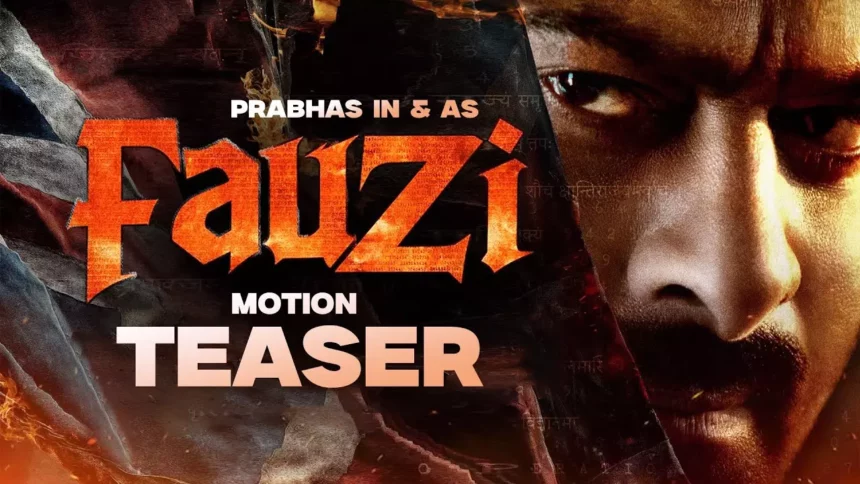
The leak of unauthorized images from the sets of Fauzi has sparked concern among the filmmakers, prompting a strong response from the production team of Fauzi starring Prabhas. As the visuals began circulating widely across social media platforms, the makers issued a stern warning, emphasizing that any further sharing or distribution of leaked content would invite strict legal action. The incident has once again brought into focus the growing challenge filmmakers face in safeguarding their work in the digital age, where even a single leak can disrupt months, if not years, of creative effort and planning.
Makers issue strict warning as leaks threaten cinematic integrity
The production house behind Fauzi took to social media to directly address the situation, making it clear that the unauthorized circulation of images from the film’s set would not be tolerated. In their statement, they urged users to refrain from sharing such content, warning that all offending accounts would be reported and appropriate legal measures would be pursued. The tone of the message reflected both frustration and urgency, highlighting the seriousness with which the makers are treating the breach.
For filmmakers, such leaks are not merely about lost control over promotional material but about protecting the carefully crafted experience intended for audiences. The creators of Fauzi stressed that these early glimpses, often incomplete and taken out of context, can distort the narrative and diminish the impact of key moments when the film eventually releases. The concept of a “cinematic experience” goes beyond visuals, encompassing storytelling, pacing, sound design, and emotional buildup, all of which can be compromised when fragments of the film are exposed prematurely.
Director Hanu Raghavapudi also made a heartfelt appeal to fans, urging them not to participate in spreading leaked material. He emphasized that the team has invested immense passion and dedication into the project and requested audiences to respect that effort by allowing the film to be experienced as intended in theatres. His message underscored a growing trend in the industry, where filmmakers increasingly rely on audience cooperation to combat leaks and piracy.
Anticipation builds around Fauzi and Prabhas’s expanding film slate
Despite the controversy, excitement around Fauzi remains strong. The film is expected to be a major release, with reports suggesting a festive launch around Dussehra, a period often associated with high-profile cinematic debuts in India. While the official release date is yet to be confirmed, the buzz generated by the project continues to grow, driven in part by its star-studded cast and the reputation of its lead actor.
Alongside Prabhas, the film reportedly features Imanvi in a prominent role, adding a fresh dynamic to the narrative. Veteran actors Jaya Prada and Mithun Chakraborty are also expected to play significant roles, further elevating the film’s appeal across different audience segments. This blend of established talent and new faces suggests a story that aims to balance mass appeal with nuanced performances.
At the same time, Prabhas continues to maintain a packed and ambitious lineup of projects. He is set to appear in the sequel to Kalki 2898 AD, a film that has already generated massive interest for its futuristic storytelling and scale. Another major project in his pipeline is Spirit, directed by Sandeep Reddy Vanga and co-starring Triptii Dimri. Scheduled for release in 2027, Spirit is expected to further expand Prabhas’s range as an actor, offering a different narrative tone compared to his previous works.
The leak incident surrounding Fauzi serves as a reminder of the delicate balance between audience excitement and content security in today’s entertainment landscape. While anticipation often drives fans to seek early glimpses, filmmakers continue to advocate for preserving the integrity of their work until its official release. As the industry evolves, the relationship between creators and audiences becomes increasingly crucial in ensuring that cinematic storytelling retains its intended impact.