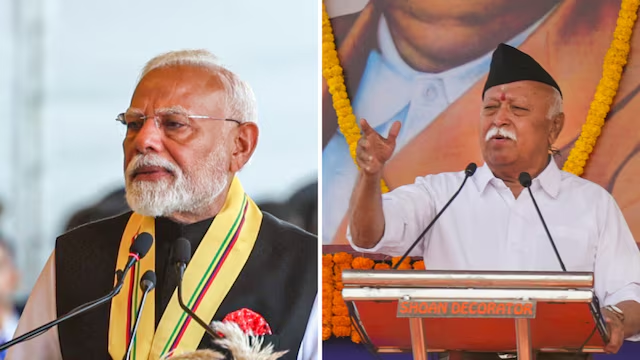
Prime Minister Narendra Modi is set to visit Nagpur on the occasion of Gudi Padwa, which falls on March 30. During his visit, he will share the stage with Rashtriya Swayamsevak Sangh (RSS) chief Mohan Bhagwat, marking a significant event in the political landscape ahead of the upcoming elections. This visit is expected to attract considerable attention, given the historical and political context surrounding Narendra Modi’s engagements with the RSS.
The last time Prime Minister Narendra Modi and RSS chief Mohan Bhagwat shared a public platform was during the Ram Mandir consecration ceremony. Prior to that, the two leaders had a notable one-on-one meeting in 2014, when Narendra Modi was serving as the Chief Minister of Gujarat. Their association has remained significant, shaping the broader ideological framework of the Bharatiya Janata Party (BJP) and reinforcing its links with the RSS. Modi’s visit to Nagpur comes at a time when his public endorsement of the RSS has been more pronounced than usual, as he has praised the organization in recent public addresses. Notably, he acknowledged the RSS’s contributions during a Marathi language celebration event in Delhi on February 21 and reiterated similar sentiments in a recent podcast. This consistent engagement with the RSS underscores the deep-rooted ideological connections and strategic alignments between the ruling party and its parent organization.
The timing of this visit holds immense significance, as 2025 marks the centenary year of the RSS. The organization, founded in 1925, has played a crucial role in shaping the socio-political fabric of India, with its influence extending into various spheres, including governance, policy-making, and grassroots mobilization. As the BJP gears up for key electoral battles in the coming months, Narendra Modi’s association with the RSS is expected to bolster the party’s position among its core support base.
Additionally, the visit is generating speculation about potential political announcements, particularly in the context of the BJP’s leadership structure. With discussions around the party’s national presidency gaining momentum, Narendra Modi’s presence in Nagpur—home to the RSS headquarters—adds another layer of significance to the event. The visit is expected to witness high-profile engagements, reinforcing the ideological and strategic synergy between the BJP and the RSS. As the political landscape evolves, this visit is likely to be a focal point in shaping future political narratives and electoral strategies, particularly as India moves closer to its next major electoral cycle.