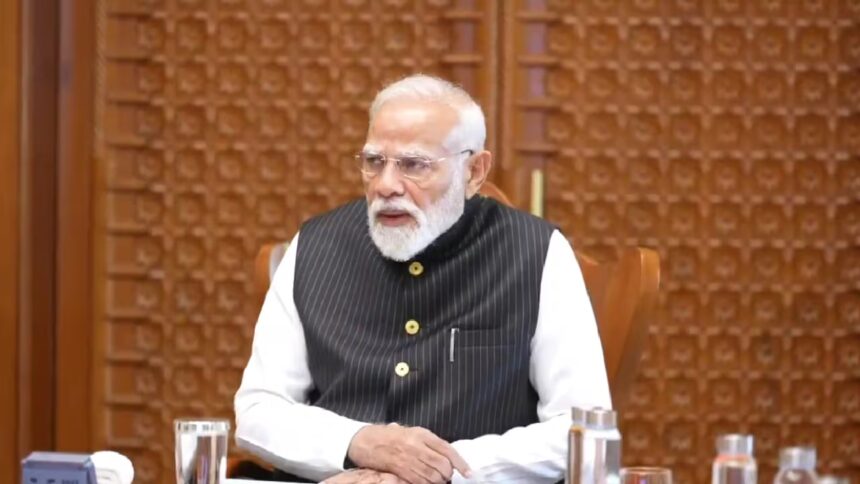
Prime Minister Narendra Modi chaired a second high-level meeting of the Cabinet Committee on Security (CCS) to assess India’s preparedness amid the ongoing West Asia crisis. Held at his residence in New Delhi, the meeting focused on reviewing measures taken by various ministries and planning further steps to shield the country from potential economic and supply disruptions caused by the conflict.
The Prime Minister emphasized the need to safeguard citizens from the ripple effects of the crisis, while ensuring that essential supplies remain stable. A key priority discussed was maintaining the availability of critical commodities, including fertilisers, especially in view of upcoming agricultural cycles such as the Kharif and Rabi seasons.
Government focuses on energy security, fertiliser supply and inflation control
During the meeting, extensive discussions were held on ensuring uninterrupted supply chains across sectors such as agriculture, fertilisers, shipping, aviation, logistics, and MSMEs. The government reviewed strategies to diversify sources of essential imports like LPG and LNG, aiming to reduce dependence on conflict-affected regions.
Special attention was given to maintaining stable fuel prices and ensuring adequate power supply during peak summer demand. Measures such as boosting coal availability at thermal power plants and supporting gas-based power generation were assessed to prevent any electricity shortages.
Officials also confirmed that domestic LPG prices have remained unchanged, while strict enforcement actions are underway to prevent hoarding and black marketing. Additionally, efforts to expand Piped Natural Gas connections are being accelerated to improve long-term energy accessibility.
The Cabinet Secretary briefed the committee on steps taken to secure petroleum supplies and ensure consistent availability of LNG and LPG. These measures are part of a broader strategy to cushion the Indian economy from global volatility triggered by the crisis.
Monitoring prices and global logistics as tensions impact trade routes
The government has set up dedicated control rooms to monitor prices of essential commodities and coordinate with states and union territories. Continuous tracking of agricultural products, vegetables, and fruits is being carried out to prevent sudden inflationary spikes.
A major concern discussed was the security of global shipping routes, particularly through the Strait of Hormuz, a critical corridor for energy supplies. India is actively engaged in international efforts to ensure safe passage of vessels through this region, given its importance for oil and gas imports.
The Prime Minister also stressed the importance of transparent and timely communication with the public to curb misinformation and rumours during uncertain times. Ministries have been directed to provide accurate updates and respond swiftly to emerging challenges.
The meeting highlighted India’s proactive approach in dealing with global crises by strengthening domestic preparedness, diversifying supply chains, and maintaining economic stability despite geopolitical uncertainties.