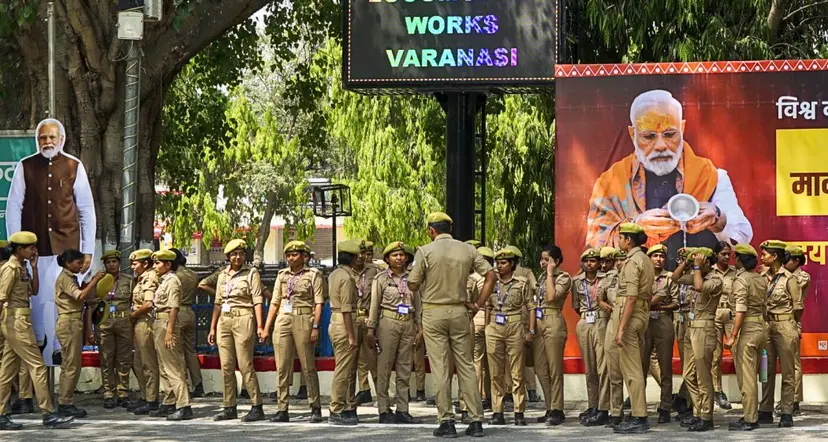
Prime Minister Narendra Modi has commenced a significant two-day visit to Uttar Pradesh, marking another major push toward infrastructure development and regional growth. The visit begins in Varanasi, the Prime Minister’s parliamentary constituency, where he is set to inaugurate and lay the foundation stone for projects worth approximately ₹6,350 crore across multiple sectors.
The visit holds strategic importance, not only in terms of development but also in reinforcing the government’s focus on improving connectivity, public services, and urban infrastructure in one of India’s most populous states.
During the first phase of the visit, Narendra Modi is scheduled to participate in a Mahila Sammelan in Varanasi. The event is expected to highlight women’s empowerment and the role of women in nation-building, aligning with the government’s broader initiatives aimed at gender inclusion and socio-economic development.
A major highlight of the visit is the launch of infrastructure projects spanning railways, road networks, healthcare facilities, water supply systems, tourism development, and urban planning. These projects are designed to enhance the quality of life for residents while boosting economic activity in the region.
Among the key initiatives, the Prime Minister will flag off two new Amrit Bharat Express trains, aimed at improving long-distance rail connectivity. These trains are part of a broader effort to modernize India’s railway network and provide affordable and efficient travel options.
In addition, Modi will lay the foundation stone for the Varanasi–Pandit Deen Dayal Upadhyaya Junction third and fourth railway line project. This project includes the construction of a rail-cum-road bridge over the Ganga River, which is expected to significantly ease congestion and improve transportation efficiency in the region.
The railway expansion is particularly important for freight and passenger movement, as the corridor serves as a critical link in eastern India’s transport network. Improved connectivity is expected to facilitate trade, reduce travel time, and support regional development.
The projects being launched also focus on strengthening urban infrastructure in Varanasi. Investments in water supply and sanitation systems aim to ensure reliable access to essential services, while healthcare projects are expected to improve medical facilities and accessibility for residents.
Tourism development is another key component of the initiatives. Varanasi, being one of the oldest living cities in the world and a major spiritual destination, attracts millions of visitors each year. Enhancing infrastructure in the city is expected to boost tourism and create employment opportunities.
On the second day of the visit, the Prime Minister will perform darshan and pooja at the Shri Kashi Vishwanath Temple, one of the most revered religious sites in India. The visit underscores the cultural and spiritual significance of Varanasi in the national landscape.
Following this, Narendra Modi will travel to Hardoi, where he will inaugurate the ambitious Ganga Expressway project. This six-lane, access-controlled greenfield expressway spans approximately 594 kilometres and has been developed at a cost exceeding ₹36,000 crore.
The Ganga Expressway is one of the largest infrastructure projects in the country and is expected to transform connectivity across Uttar Pradesh. By linking western and eastern parts of the state, the expressway will reduce travel time, enhance logistics efficiency, and promote economic integration.
The project is also expected to attract investments, boost industrial development, and create job opportunities. Improved road connectivity plays a crucial role in facilitating trade and commerce, making such projects vital for long-term economic growth.
The Prime Minister’s visit reflects the government’s continued emphasis on infrastructure as a driver of development. By investing in transportation, healthcare, and urban services, the aim is to create a comprehensive ecosystem that supports sustainable growth.
Uttar Pradesh, being a key state in terms of population and economic potential, has been a major focus of development initiatives. Projects like the Ganga Expressway and railway expansions are expected to have a lasting impact on the state’s growth trajectory.
The Mahila Sammelan and other public engagements during the visit also highlight the importance of community participation in development efforts. Empowering citizens, particularly women, is seen as essential for achieving inclusive growth.
From a broader perspective, the visit underscores the role of large-scale infrastructure projects in shaping India’s future. Investments in connectivity and public services not only improve living standards but also enhance the country’s competitiveness on a global scale.
The combination of economic, social, and cultural initiatives during the visit reflects a holistic approach to development. By addressing multiple aspects simultaneously, the government aims to create a balanced and sustainable growth model.
As the two-day visit progresses, the focus remains on delivering tangible outcomes that benefit both urban and rural populations. The projects launched during this period are expected to contribute significantly to the region’s development in the coming years.
In conclusion, Prime Minister Narendra Modi’s visit to Uttar Pradesh marks a major step in advancing infrastructure and development initiatives. With projects worth thousands of crores being launched, the visit highlights the government’s commitment to transforming key regions and improving the quality of life for citizens.